

Typhoid in Monsoon: How You Get It, What It Feels Like, and When to See a Doctor
Typhoid symptoms during monsoon in India follow a step-ladder fever pattern that's easy to mistake for an ordinary viral illness - here's the week-by-week progression, the tests that actually confirm it, and when waiting it out stops being safe.

A fever lasting more than 4 to 5 days during monsoon deserves an accurate test, not another round of guessing.
Typhoid symptoms during monsoon in India start the same deceptive way: a fever that feels like any other fever, until it does not go away. The cause is Salmonella typhi, a bacterium spread through contaminated food and water, not mosquitoes, which is exactly what makes monsoon the season when it peaks.
Why Monsoon Is Peak Typhoid Season in Kutch
Kutch's monsoon creates ideal conditions for that spread. Flooding pushes groundwater and surface water together, contaminated runoff overflows into open sewage drains, and the same first-flush effect that dirties drinking water sources across the district carries Salmonella typhi straight into hand pumps, borewells, and household taps that looked clean all summer. A single contaminated source can affect an entire neighbourhood within days.
The Step-Ladder Fever Pattern
The classic pattern is a step-ladder fever, rising in stages over 4 to 5 days until it plateaus between 103 and 104°F, rather than spiking suddenly the way a viral fever or dengue does. That slow climb is one of the clearest clues a doctor looks for early on.
Week-by-Week: How Typhoid Progresses
The illness moves through a fairly predictable week-by-week course when it is not caught and treated early. Week 1 brings a slow-rising fever, headache, fatigue, and loss of appetite - the part most easily mistaken for a routine viral illness. Week 2 brings the fever to its plateau, along with abdominal pain, constipation or diarrhea, and a finding doctors specifically check for: relative bradycardia, where the pulse rate is lower than what the fever would normally produce. Week 3, if treatment still has not started, can bring rose spots, a faint pink rash on the chest and abdomen, spleen enlargement, and the complications that make untreated typhoid genuinely dangerous.
Typhoid vs. Viral Fever
Recognizing the typhoid symptoms Indian families deal with every monsoon means knowing what separates it from an ordinary viral fever.
| Feature | Viral Fever | Typhoid |
|---|---|---|
| Duration | Typically resolves within a week | Persists beyond a week if untreated |
| Fever pattern | Spikes and fluctuates | Climbs in a step-ladder pattern |
| Abdominal involvement | Rare | Sustained pain, altered bowel habits |
| Pulse vs. fever | Pulse rises with fever as expected | Relative bradycardia - pulse lower than expected |
Getting the Diagnosis Right - and the Widal Test Myth
Diagnosing the typhoid symptoms monsoon brings across India depends on timing the right test correctly. An S. typhi antigen test coupled with a Typhidot IgM test is the most accurate option in the first few days of fever, when other tests are still unreliable. The Widal test only becomes meaningful from week 2 onward, and even then, a single Widal result is widely misused: one elevated titer reflects past exposure or vaccination as easily as active infection, and doctors look for a rising titer across two samples, not one number, before treating it as confirmatory. Blood culture remains the gold standard, identifying the bacterium directly, though it takes longer to return a result. Confirmed cases and unclear fevers are exactly the territory infectious disease care is built to handle.
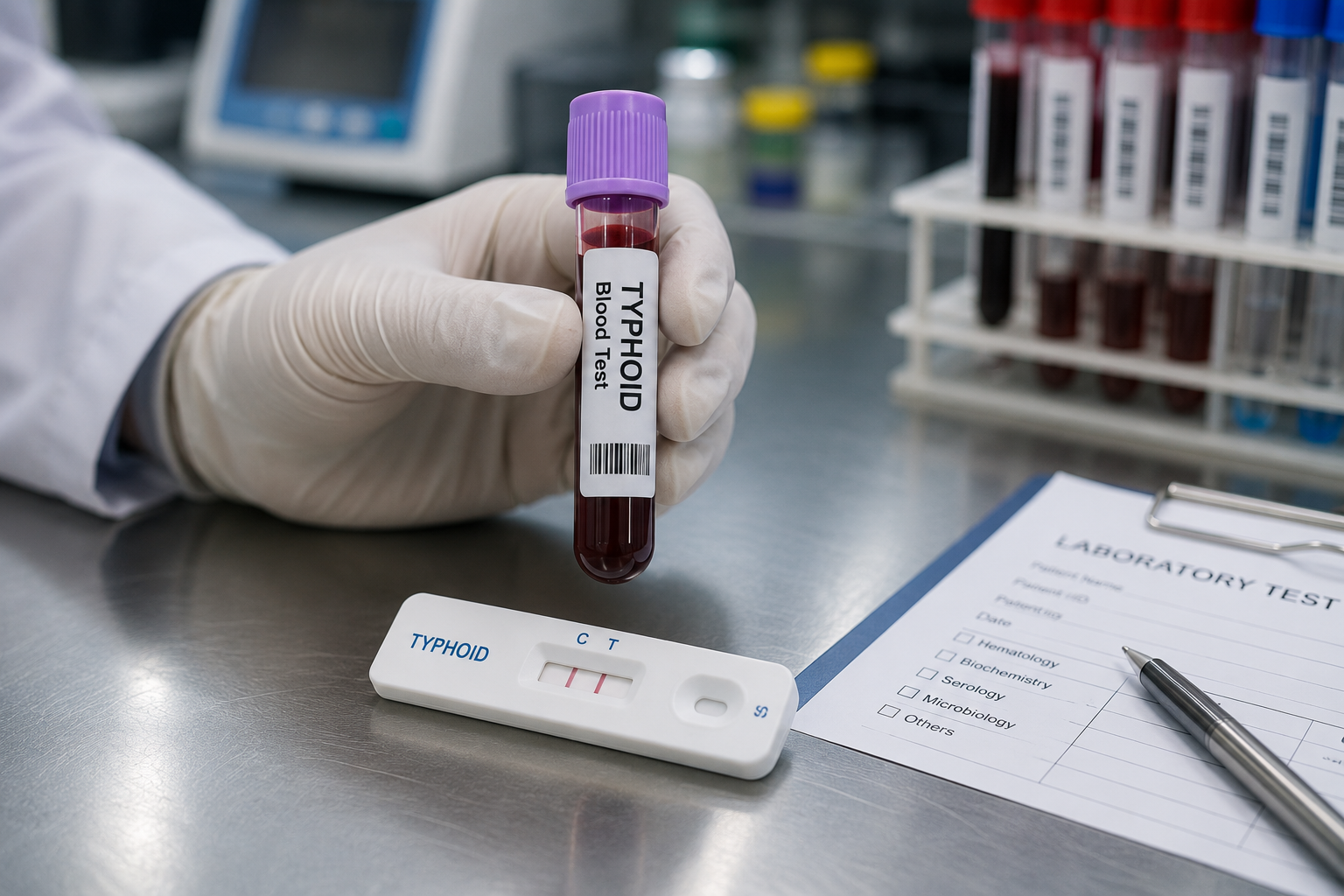
A single Widal result rarely confirms typhoid - doctors look for a rising titer across two samples instead.
Why Delayed Treatment Is Dangerous
Delayed treatment is what turns typhoid from manageable into life-threatening. Intestinal perforation, internal bleeding, and encephalopathy are the complications that make late-stage typhoid a surgical and intensive-care emergency rather than a fever managed at home with rest and fluids.
Higher-risk groups: children, pregnant women, the elderly, and patients managing diabetes or on long-term immunosuppressive treatment through rheumatology care tend to develop complications faster and should not wait out a prolonged fever before getting tested.
Treatment Once Typhoid Is Confirmed
Treatment itself, once confirmed, is usually straightforward. Ciprofloxacin and ceftriaxone are first-line choices, selected based on local resistance patterns, since Salmonella typhi resistance varies by region. Azithromycin works well for uncomplicated cases and is often preferred where fluoroquinolone resistance is common.
Red Flags for Immediate Hospitalization
Certain signs mean hospitalization should not wait for an outpatient appointment: severe abdominal pain or rigidity suggesting perforation, visible blood in stool or vomit, confusion or altered consciousness, persistent high fever despite treatment, or any sign of dehydration that is not responding to oral fluids.
Get Tested at the Right Time
Typhoid symptoms during monsoon season among Gandhidham residents rarely announce themselves clearly in the first few days, which is exactly why a fever lasting more than 4 to 5 days deserves an accurate test rather than another round of guessing. Swasthya Hospital offers typhoid diagnosis with accurate, correctly-timed testing, so treatment starts based on a confirmed result instead of a week of uncertainty.
Fever past 4 to 5 days? Get the right test at the right time instead of guessing.
Get Accurate Typhoid Testing in Gandhidham