
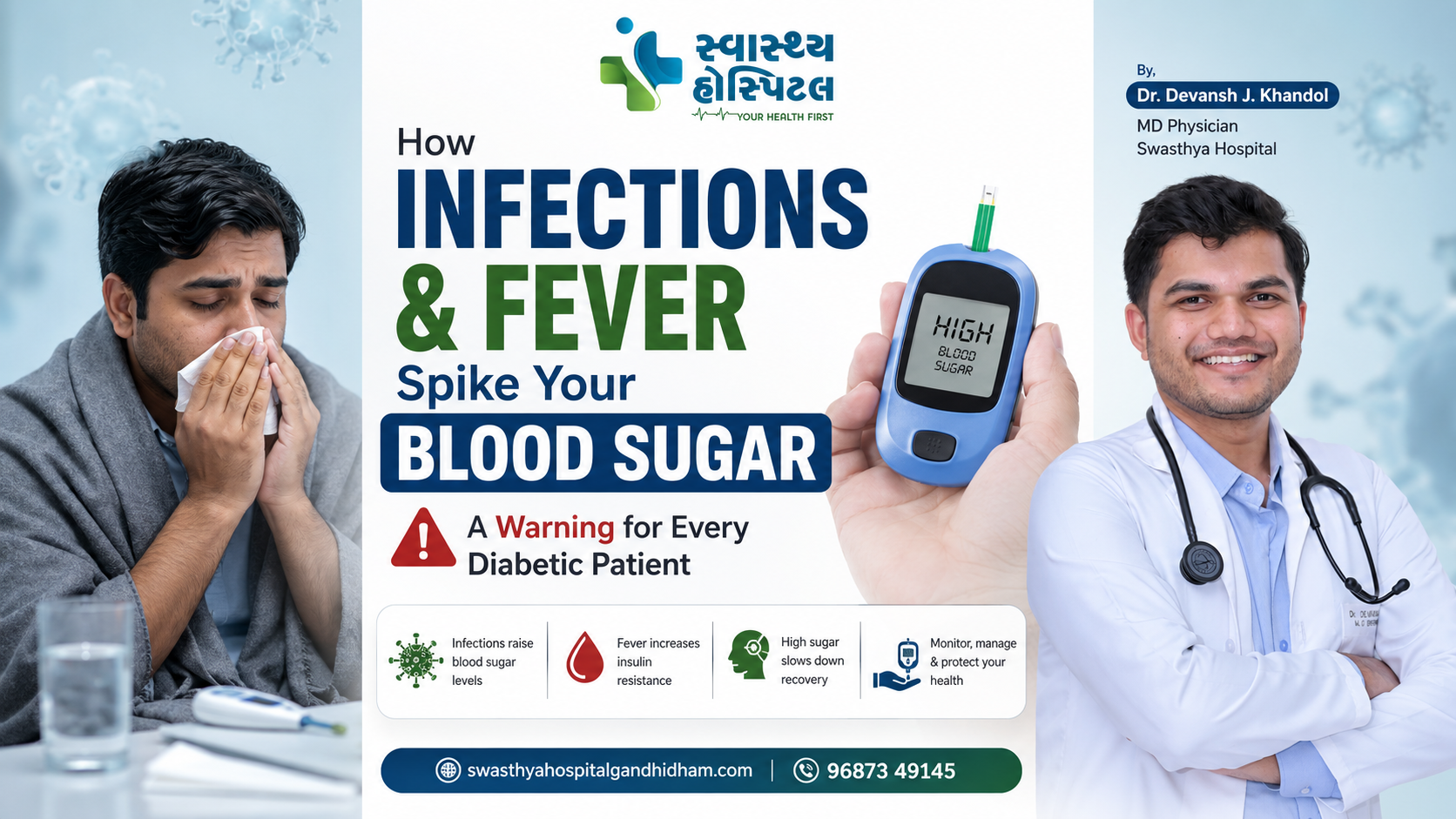
How Infections and Fever Spike Your Blood Sugar - A Warning for Every Diabetic Patient
Eating less while sick should mean lower blood sugar - for diabetic patients, infection often pushes it the opposite direction, and not knowing that can turn a routine illness into a medical emergency.
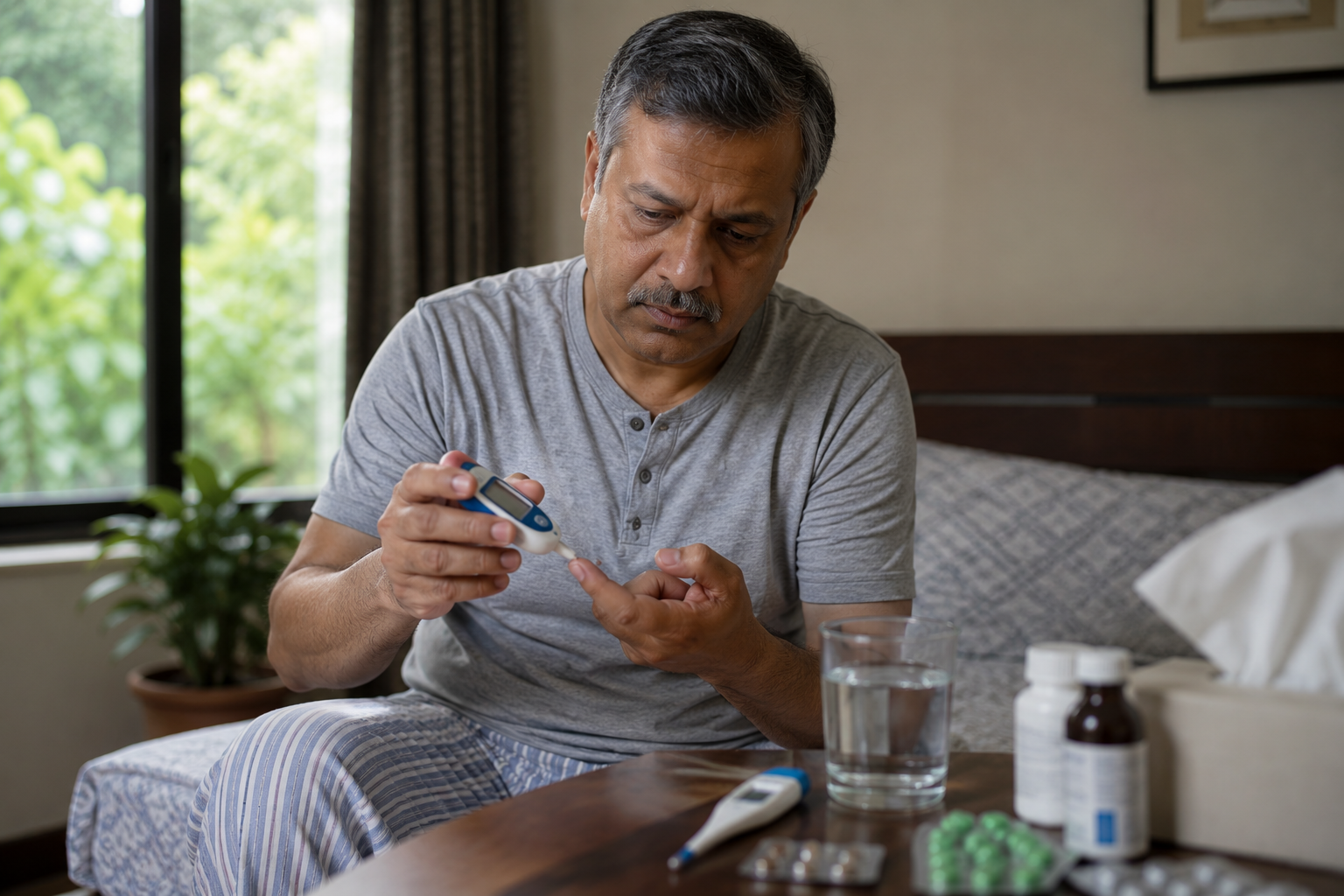
Stress hormones released during infection can raise blood sugar even when food intake drops.
The blood sugar patterns infection triggers in India's diabetic patients surprise a lot of people the first time they see it happen: a diabetic patient eating less than usual, sometimes barely eating at all, and watching their blood sugar climb anyway. The instinct to assume sugar should drop when food intake drops is exactly backwards during illness, and understanding why is what keeps a routine infection from turning into an emergency.
Why Sugar Rises Even When You're Not Eating
The mechanism behind it has nothing to do with food. Any infection triggers a stress response, releasing cortisol and adrenaline, and both hormones push the liver to produce glucose through a process called gluconeogenesis. Blood sugar rises because the body is manufacturing it internally, independent of whatever is or is not on a plate that day. "I'm not eating much, so my sugar should be low" is the single most common, and most dangerous, assumption diabetic patients make while sick.
Which Infections Cause the Biggest Spikes
Some infections produce sharper spikes than others. Respiratory infections, urinary tract infections, dengue, and typhoid all trigger a strong stress hormone response - the kind of fevers that fall squarely under infectious disease care. Skin infections deserve particular attention in Kutch's farming population, where cuts, blisters, and prolonged sun and water exposure create frequent entry points, and a skin infection that looks minor can still push blood sugar significantly higher. Kutch's monsoon adds urinary tract infections to that list too, since waterlogging and reduced access to clean toilets during heavy rain make UTIs noticeably more common across the district, and in a diabetic patient even a mild one can trigger the same stress hormone surge as a more serious illness.
The Two Emergencies - DKA and HHS
Two distinct emergencies sit behind unmanaged blood sugar spikes during infection in India's diabetic patients. Type 1 patients and insulin-dependent Type 2 patients who reduce or skip insulin while sick, often out of a mistaken belief that eating less means needing less insulin, risk diabetic ketoacidosis, a life-threatening buildup of ketones and acid in the blood. Type 2 patients, especially elderly patients, face a separate risk called hyperosmolar hyperglycaemic state, where extremely high blood sugar pulls dangerous amounts of fluid out of the body. Both are medical emergencies, and both are more common during infection than at any other time.
| Feature | Diabetic Ketoacidosis (DKA) | Hyperosmolar Hyperglycaemic State (HHS) |
|---|---|---|
| Most common in | Type 1 and insulin-dependent Type 2 patients | Type 2 patients, especially elderly patients |
| Typical trigger | Reducing or skipping insulin while sick | Extremely high blood sugar during infection |
| Core mechanism | Buildup of ketones and acid in the blood | Severe fluid loss from the body |
Danger Thresholds to Know
Clear danger thresholds make the decision easier than guessing. A blood sugar reading above 250 mg/dL during any infection means it is time to call a doctor. Above 350 mg/dL means the emergency room, not a phone call. These numbers apply specifically during illness, not as a general everyday threshold, and they hold regardless of how the patient otherwise feels, since a diabetic patient can look and feel reasonably fine even while sugar climbs into dangerous territory.
Danger threshold reminder: above 250 mg/dL during illness - call a doctor. Above 350 mg/dL - go to the emergency room.
How Monitoring Should Change While Sick
Monitoring needs to change while sick. Checking sugar once in the morning is not enough during an infection; testing every 4 to 6 hours catches a rapid rise before it becomes dangerous. Anyone on insulin, or with Type 1 diabetes, should also check ketones during illness, not just glucose, using a simple urine or blood ketone strip kept at home for exactly this situation. Urine output and hydration status matter just as much, since dehydration accelerates both DKA and hyperosmolar hyperglycaemic state, and reduced urination alongside high sugar is itself a warning sign worth calling a doctor about.
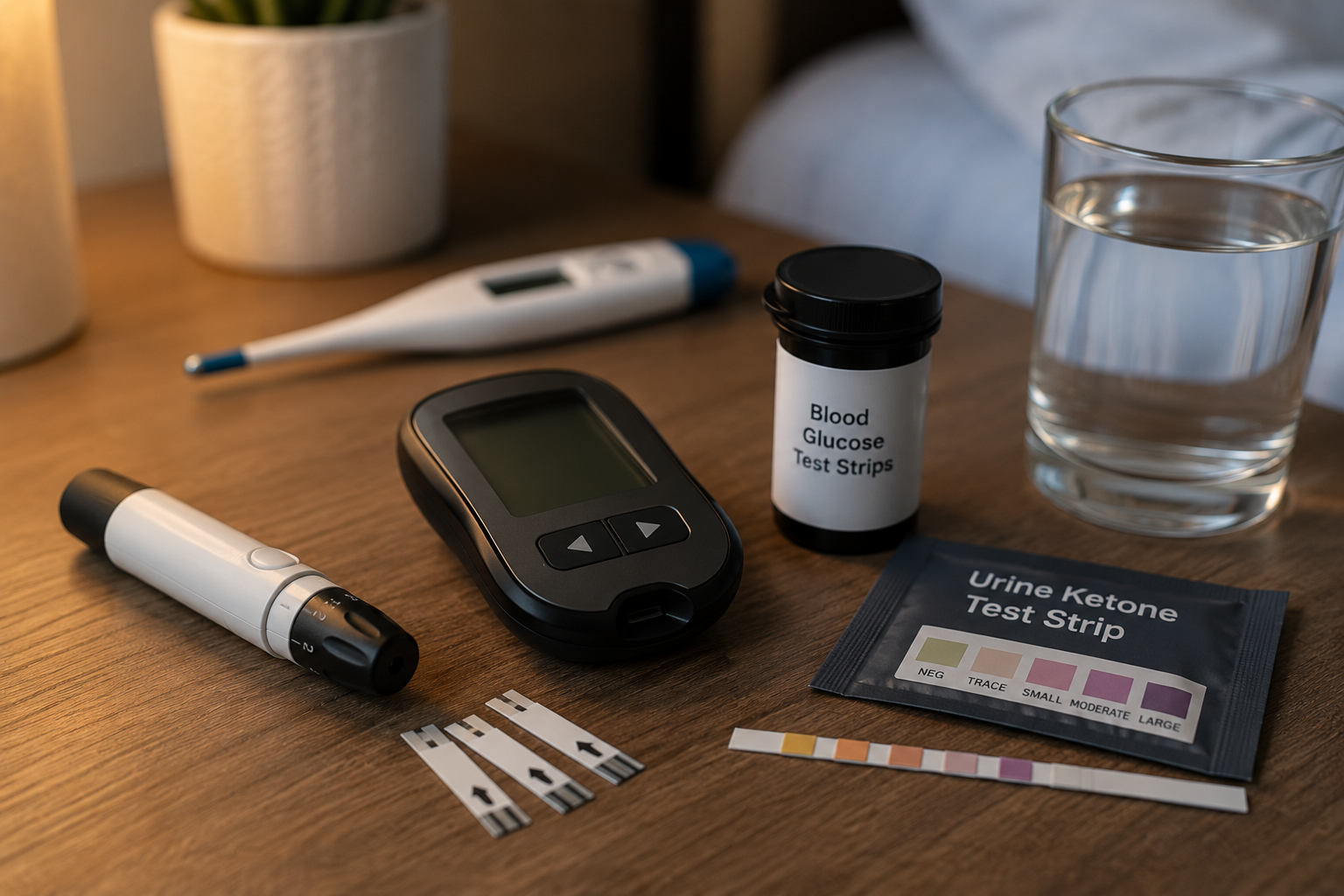
Testing both glucose and ketones every 4 to 6 hours during illness catches a dangerous rise early.
Medications That Complicate the Picture
Medications complicate the picture further. Certain antibiotics, particularly fluoroquinolones, can cause blood sugar to drop unexpectedly rather than rise, the opposite of what the infection itself is doing. Steroids, commonly used in treating dengue and other infectious illnesses, raise blood sugar dramatically and need close monitoring whenever they are prescribed to a diabetic patient - the same caution applies to diabetic patients already on long-term steroid therapy for chronic conditions managed through rheumatology care, where the combined effect needs closer tracking still.
Build a Monsoon Readiness Plan Before You Get Sick
Diabetic patients managing the blood sugar risk infection brings every monsoon need a plan in place before they get sick, not after. Knowing the danger thresholds, having a glucometer and ketone strips on hand, and understanding which symptoms mean "call the doctor" versus "go to the emergency room" turns a frightening situation into a manageable one.
A pre-monsoon diabetic health check through endocrinology care at Swasthya Hospital in Gandhidham is the right time to put an infection-season blood sugar readiness plan in place, reviewing current control, medication adjustments, and a clear illness-day protocol before the season's infections arrive.
Don't wait for an infection to find out your blood sugar plan doesn't hold up.
Book Pre-Monsoon Diabetic Health Check in Gandhidham