
Early Morning Sneezing in Gandhidham: Airborne Allergies, Dust & What To Do
5-6 sneezes every morning with no fever? Early morning sneezing in Gandhidham is usually dust allergy, not a cold. A local doctor explains triggers, relief, and when to get tested.
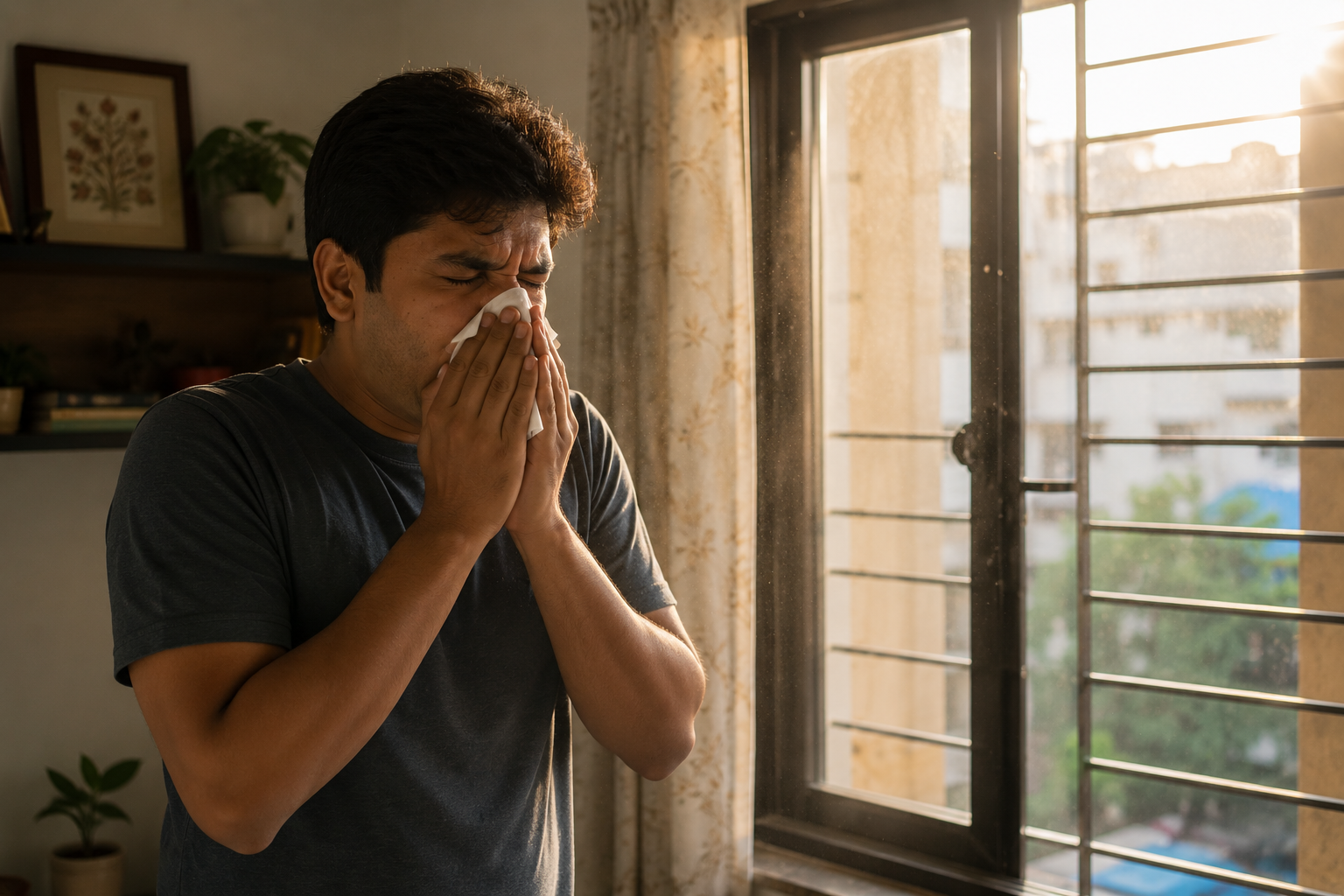
Repetitive morning sneezing without fever is rarely a cold - it's usually allergic rhinitis.
If you sneeze 5 to 6 times every morning without a fever, a cold, or any other symptom, the cause is rarely an infection. Morning sneezing among Gandhidham residents during almost every winter and pre-monsoon season is, in most cases, caused by dust allergy - more specifically, allergic rhinitis, a reaction, not an illness.
Early Morning Sneezing Gandhidham: Why the Geography Makes It Worse
Gandhidham's geography, sitting within the arid Kutch region, makes this almost unavoidable for a large share of residents. The area's arid, high-dust terrain generates desert wind particles loaded with particulate matter, pollen, and mold spores, and that load spikes noticeably in the pre-monsoon weeks and during seasonal wind shifts. The same wind that clears the sky also fills it with exactly what an irritated nose reacts to. The problem is particularly pronounced in Gandhidham because of its close proximity to Kandla Port, which adds industrial dust to an already allergen-heavy environment.
What's Actually Triggering It
A few specific sources do most of the damage. Prosopis juliflora, known locally as gando baval or congress grass, produces pollen considered one of the most aggressive allergens in India. Household dust mites, industrial particulate drifting from the Kandla and Mundra Port belt, and salt pan dust along the coastal stretches add to the load. As a result, most mornings in Gandhidham carry a measurable allergen burden before anyone even steps outside.
Why Mornings Are the Worst
Mornings take the worst of it for two compounding reasons. Lying down overnight lets allergens settle and concentrate in the nasal passage, so the body wakes up already primed to react. Outdoor air quality is also at its lowest at dawn in dust-heavy areas, which means the first breath outside is often the most allergen-rich breath of the day.
What Happens Inside Your Nose
What follows inside the nose is a fairly mechanical chain reaction. An allergen lands on the nasal lining, mast cells coated in IgE antibodies recognize it as a threat, and they release histamine. Histamine triggers inflammation, swelling, and extra mucus production, which the body experiences as sneezing, itching, and a runny nose. None of this requires a virus to be present.
Allergic Rhinitis vs. Cold vs. COVID/Flu
That overlap is exactly why allergic rhinitis gets mistaken for a cold or even COVID. The differences are consistent enough to use as a quick check.
| Feature | Allergic Rhinitis | Common Cold | COVID/Flu |
|---|---|---|---|
| Onset | Sudden, recurring | Gradual, one episode | Gradual, systemic |
| Fever | Never | Mild occasionally | Often |
| Sneezing | Frequent, repetitive | Present | Rare |
| Itchy eyes/nose | Yes - hallmark | No | No |
| Duration | Seasonal or chronic | 5 to 10 days | 7 to 14 days |
| Discharge colour | Clear, watery | Yellow or green after day 3 | Varies |
Managing It Day to Day
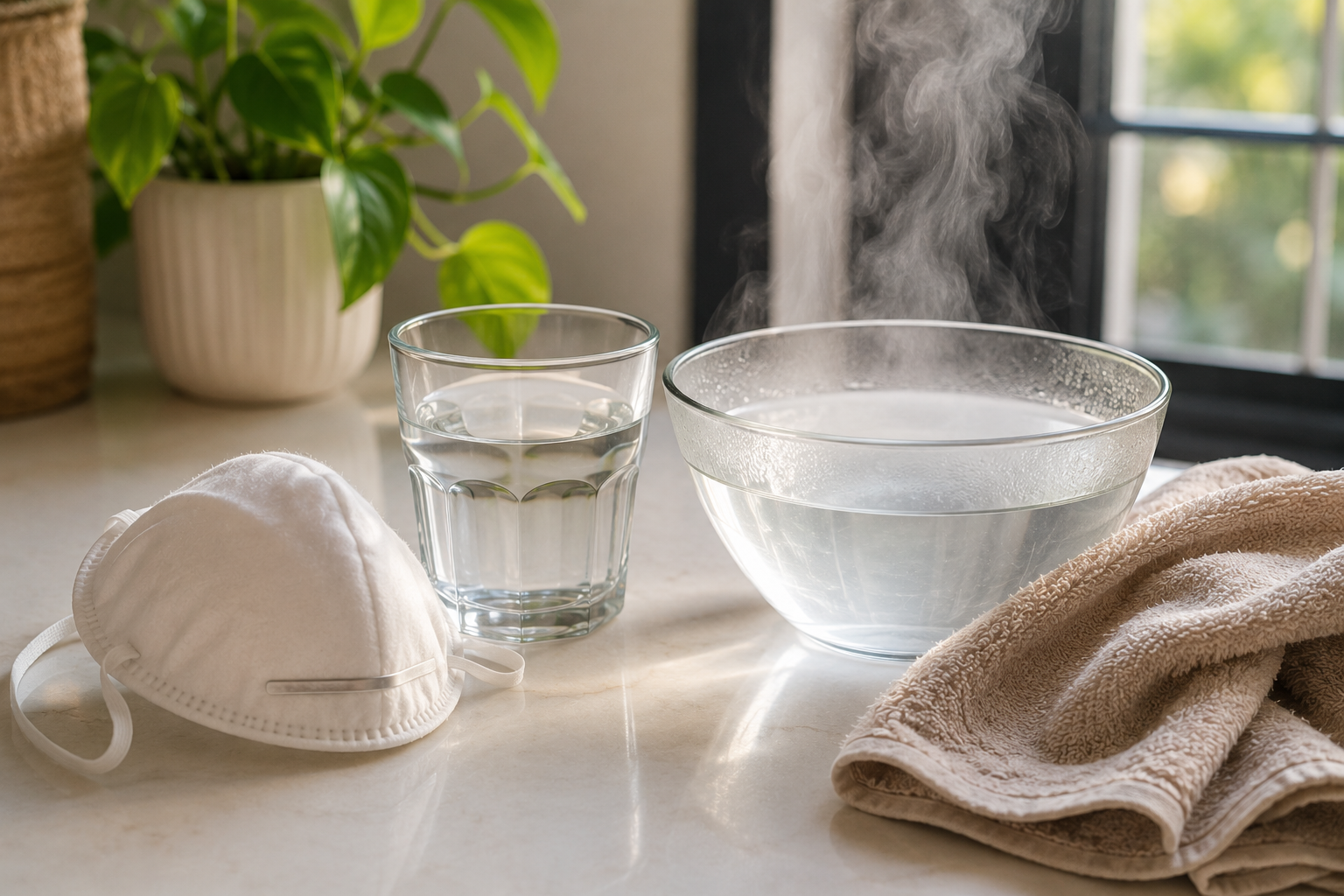
An N95 mask, not a surgical mask, is what actually filters fine dust and pollen.
A handful of daily habits manage most cases without medication. Wear an N95 mask outdoors during windy conditions - a surgical mask does not filter fine dust and pollen the way N95 fabric does. Plain steam inhalation for 10 to 20 minutes, twice a day, loosens congestion without medicated drops unless a doctor has prescribed them. Keep windows closed during peak morning wind hours, roughly 6 to 9 AM, and avoid line-drying clothes outdoors on dusty days, since fabric traps pollen efficiently. Over-the-counter antihistamines such as cetirizine or loratadine are a safe option for adults managing dust allergy and morning sneezing in Gandhidham. However, symptoms lasting more than 48 hours are a signal to stop self-treating.
When to See a Doctor
See a doctor if symptoms last beyond 48 hours, disrupt sleep, or come with breathlessness or wheezing, which can point to allergic asthma rather than simple rhinitis. Steroid nasal sprays help many patients but should only be started under medical guidance, since incorrect use can mask worsening symptoms.
Don't self-treat past 48 hours: persistent symptoms, disrupted sleep, breathlessness, or wheezing need medical evaluation - these can signal allergic asthma rather than simple rhinitis.
An Environmental Health Issue, Not Just a Personal One
This is not purely a personal health story either. Around World Environment Day, the same data keeps surfacing: air quality in Gandhidham is declining as industrial activity expands, and the rise in allergy cases tracks closely with it. Morning sneezing caused by dust allergy among Gandhidham residents is, in part, an early symptom of a regional air quality problem, not just an individual sensitivity.
Get Tested, Not Just Treated
If morning sneezing caused by dust allergy has been irritating you for more than a few days, Swasthya Hospital in Gandhidham offers allergy evaluation and specific allergy testing under Dr. Devansh Khandol, Consultant Physician and Rheumatologist.
Book Allergy Evaluation at Swasthya Hospital