
Monsoon Arthritis Flare: Why Your Joints Hurt and When to Worry
Most monsoon joint pain is harmless weather sensitivity. Here's how to tell when it's something more.
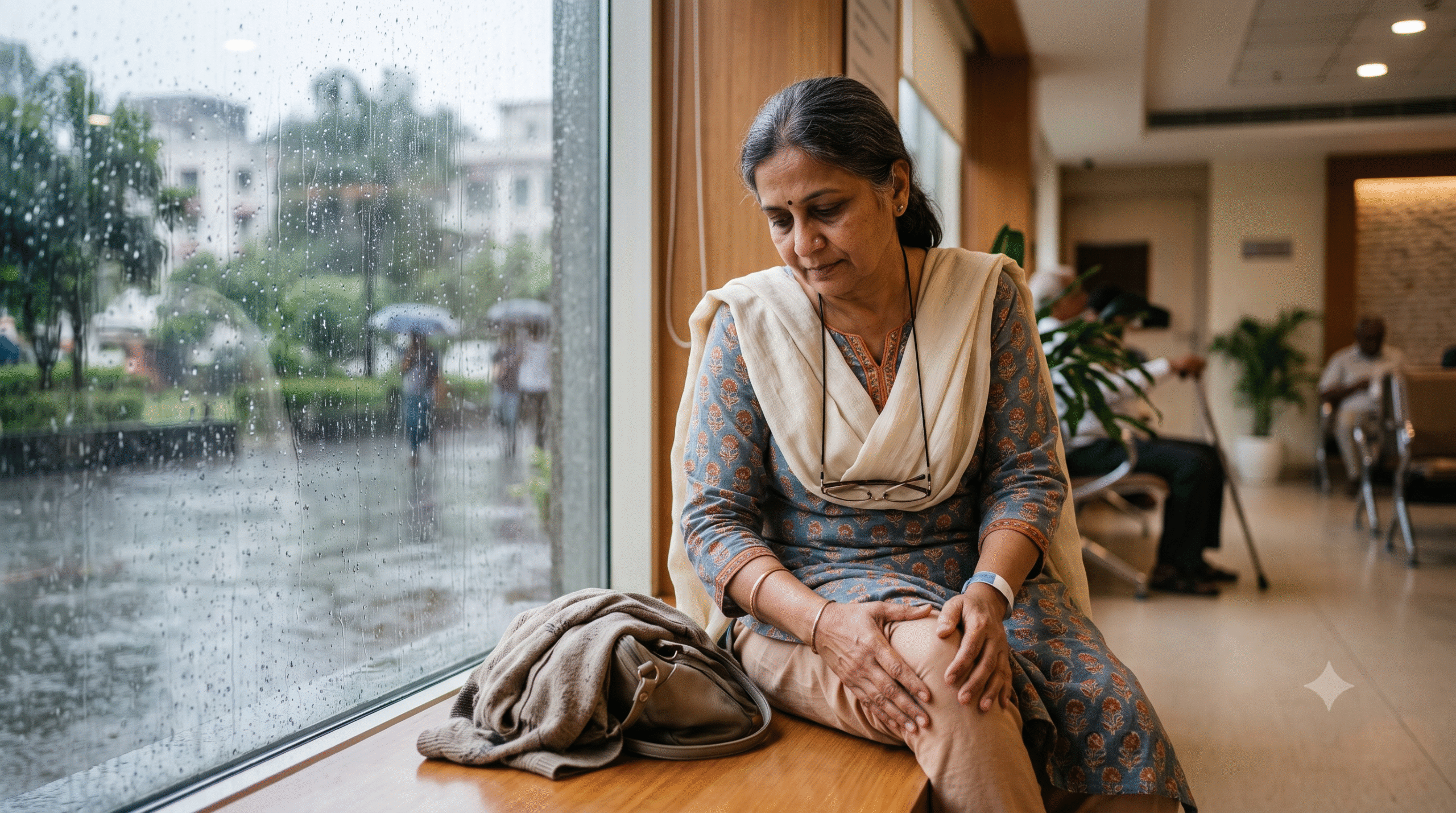
Almost everyone in Kutch notices stiffer joints once the rains set in, but for some people that ache is the early sign of a monsoon arthritis flare rather than ordinary weather sensitivity. The two can feel identical at first - dull pain, morning stiffness, a reluctance to move - which is exactly why so many people self-treat for weeks before getting checked. Knowing the difference early changes how the next few months go.
Why Monsoon Weather Actually Triggers Joint Pain
The link isn't folklore. As atmospheric (barometric pressure) pressure drops before and during rain, the pressure pushing in on joint tissues falls slightly, allowing tissues around the joint - including any already-inflamed synovium - to expand a little. In a healthy joint this is barely noticeable. In a joint with existing inflammation or cartilage damage, that small expansion stretches nerve endings and reads as pain. Rising humidity also affects blood viscosity and circulation, which can compound stiffness, especially in the morning.
Normal Monsoon Stiffness vs. a True Autoimmune Flare
Ordinary weather-related stiffness tends to ease within 10–20 minutes of moving around, stays mild, and affects the joints you've always felt weather changes in - usually knees or old injury sites. A true autoimmune flare behaves differently, and recognizing the pattern early matters for conditions like rheumatoid arthritis or lupus.
| Sign | Normal Weather Stiffness | Possible Autoimmune Flare |
|---|---|---|
| Morning stiffness duration | Eases in 10–20 minutes | Lasts 30+ minutes, sometimes an hour or more |
| Swelling / warmth | Rare, mild soreness only | Visible swelling or warmth around the joint |
| Pattern | Usually one joint (knee, old injury site) | Symmetrical - both hands or both knees together |
| Fatigue | None or minimal | Fatigue out of proportion to the joint pain |
| Fever | Absent | Low-grade fever may be present |
Any of the signs in the right-hand column warrant a rheumatologist's evaluation rather than another week of wait-and-see.

Managing a Monsoon Arthritis Flare at Home
While you arrange a proper evaluation, a few measures genuinely help. Keep joints warm and dry - damp, cold joints stiffen faster, so change out of wet clothes quickly and consider a warm compress on affected areas. Move gently and often; complete rest worsens stiffness, while light stretching or short walks keep synovial fluid circulating. Stay hydrated, since dehydration thickens joint fluid and can intensify aching. If you're on a prescribed anti-inflammatory or DMARD, take it at the same time each day - inconsistent timing is a common reason flares feel worse than they should.
The Common Mistake: Painkillers Without a Workup
The most frequent error during monsoon is reaching for over-the-counter painkillers and stopping there. Painkillers mask the ache but don't tell you whether the underlying cause is weather sensitivity or an active autoimmune process quietly damaging joint tissue. Months of self-medicating can delay a rheumatoid arthritis or lupus diagnosis until joint damage is already underway. If stiffness or swelling returns every monsoon, or paracetamol stops helping within a season, that's a signal for blood work and a rheumatology evaluation - not a stronger dose.
Who Should Be Most Cautious This Monsoon
Patients already diagnosed with rheumatoid arthritis, lupus, or other autoimmune joint conditions are far more likely to experience a genuine flare during pressure and humidity swings than the average person with occasional weather aches. Elderly patients and those with existing cartilage damage should also treat any prolonged morning stiffness seriously rather than attributing it to "just the rain." This is precisely the population Dr. Devansh J. Khandol's rheumatology department monitors most closely during the monsoon months.
Don't Wait Out a Monsoon Arthritis Flare
If your joint pain doesn't ease with rest, involves visible swelling, or keeps returning every rainy season, it's worth ruling out an autoimmune cause early. Dr. Devansh J. Khandol, Kutch's only full-time rheumatologist, sees exactly these cases at Swasthya Hospital's rheumatology department.
Book a Rheumatology Consultation