
Dengue Platelet Count: What Every Number Means and When to Panic
Tracking dengue platelet counts means knowing more than just whether the number is low - it means knowing which threshold calls for home monitoring, hospital admission, or an immediate transfusion.
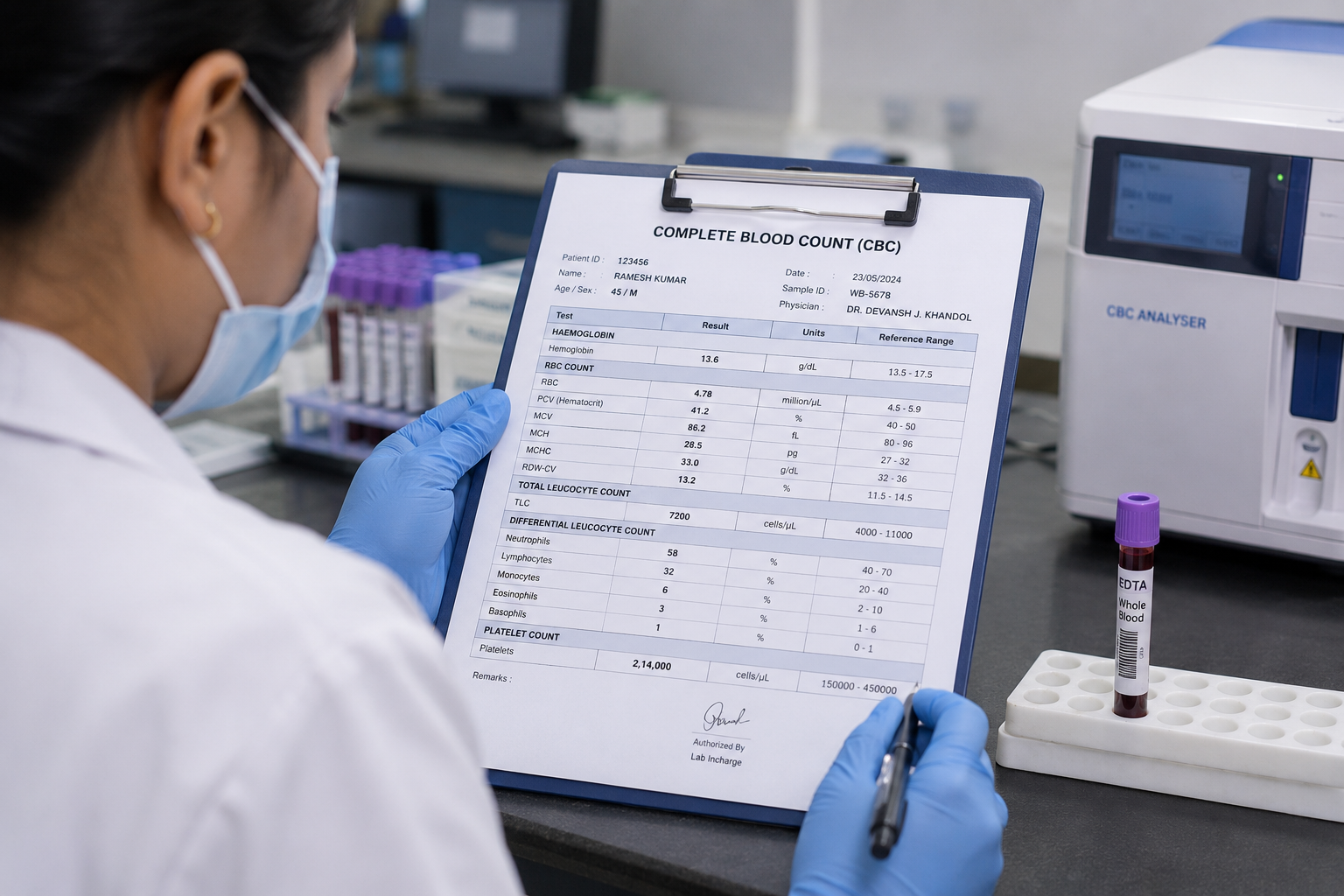
Daily CBC tracking, not a single reading, is what reveals how fast a dengue platelet count is falling.
The dengue platelet count that patients across India track most closely during illness is the number that decides whether a fever stays a home-care situation or becomes a hospital admission. A normal platelet count sits between 1,50,000 and 4,50,000 per microliter, and dengue's defining feature is how fast it can push that number down.
Why Dengue Drops Platelet Counts
Two combined mechanisms drive the drop. Dengue suppresses bone marrow production of new platelets during the acute phase of infection, while at the same time, viral proteins including NS1 cross-react with platelet surface proteins, triggering an immune-mediated response that clears existing platelets from circulation faster than normal. The result is a count that can fall meaningfully within a day or two, which is exactly why repeat testing matters more than a single reading.
The Platelet Danger Chart
| Platelet Count | Risk Level | Action |
|---|---|---|
| 1,00,000 – 1,50,000 | Mild drop | Monitor daily, home care with diet |
| 50,000 – 1,00,000 | Moderate | Daily hospital monitoring, activity restriction |
| 20,000 – 50,000 | High risk | Hospital admission required |
| Below 20,000 | Critical | ICU consideration, platelet transfusion likely |
| Below 10,000 | Emergency | Immediate transfusion, risk of internal bleeding |
This platelet count chart for dengue patients in India is a useful guide, but it is not the only thing that matters. Certain bleeding signs require emergency care regardless of what the count says: gum bleeding, blood in urine or stool, a nosebleed that will not stop, bruising that spreads rapidly, or vomiting blood. A patient with a count of 80,000 and active bleeding needs urgent care faster than a patient with a count of 30,000 and no bleeding at all.
Bleeding overrides the number: gum bleeding, blood in urine or stool, a nosebleed that won't stop, rapidly spreading bruising, or vomiting blood all mean emergency care immediately - regardless of the platelet count on the report.
The Transfusion Myth
One persistent myth deserves direct correction: platelet transfusion is not always needed just because the number looks alarming. Most dengue patients with low counts and no active bleeding recover on their own as the marrow resumes production, typically within a week of the fever breaking. Transfusion is reserved for counts below roughly 10,000 to 20,000, active bleeding at any count, or before a procedure that carries bleeding risk. Giving platelets to a patient who does not need them carries its own risks without any benefit. Cases that fall into this grey zone are exactly where hematology care guides the decision between watchful monitoring and transfusion.

Papaya leaf extract, pomegranate, pumpkin, and spinach support the body's own platelet recovery during dengue.
Foods That Support Recovery
Diet supports recovery alongside medical monitoring. Papaya leaf extract, pomegranate, pumpkin, spinach, and vitamin C-rich foods are commonly recommended to support platelet recovery, working alongside the body's own bone marrow response rather than replacing medical care.
What Not to Take for Fever
What a dengue patient takes for fever matters as much as what they eat. Ibuprofen, aspirin, and naproxen all inhibit platelet function, and in a patient whose platelet count is already falling, that combination can cause catastrophic bleeding. Paracetamol is the only fever medication considered safe during dengue, and this rule applies from the first day of fever, before a platelet count is even known.
How Often to Retest
Repeat CBC testing is what makes all of this actionable. A complete blood count should be rechecked daily once fever begins, and twice daily once the platelet count drops below 50,000 or any bleeding sign appears, since the trend across several readings matters more than any single number in isolation.
Tracking dengue platelet counts closely in Gandhidham through Swasthya Hospital's monitoring protocol means the right action gets taken at the right threshold, whether that is home care, hospital admission, or transfusion, rather than guessing from one test result.
Don't wait on a single reading - get the trend tracked at the right intervals.
Get Dengue Platelet Monitoring in Gandhidham