

High Blood Pressure Has No Warning Signs - That Is Exactly Why It Is Killing Men in Their 30s
Hypertension does not hurt. It does not announce itself. The first sign is often a heart attack or stroke.

Hypertension in young men is not a condition that announces itself with chest pain, dizziness, or any other obvious alarm. Most men with dangerously elevated blood pressure feel completely normal - until they don't. In India, cardiovascular disease is increasingly hitting men in their 30s and early 40s, a demographic that almost never considers itself at cardiac risk. The reason is straightforward: high BP damages arteries, the heart, kidneys, and brain silently over years, and by the time a symptom appears, the damage is already significant.
What "Normal" Blood Pressure Actually Means for Men in Their 30s
A healthy blood pressure reading is below 120/80 mmHg. Readings between 120-139/80-89 mmHg are considered elevated - not yet hypertension, but the arterial wall is already under increased mechanical stress. Stage 1 hypertension begins at 140/90 mmHg and above, based on the blood pressure categories used by cardiology bodies.
Here is what most men in their 30s do not know: blood pressure at 150/95 mmHg produces zero symptoms. So does 160/100 mmHg. The body adapts, the person feels fine, and the arteries take the damage quietly for years. Normal blood pressure for men in their 30s should be checked at least once a year - not only when something feels wrong, because nothing will feel wrong until it is too late.
Why Hypertension in Young Men Is Rising
Several factors are driving this. Sedentary work combined with high-sodium diets - common among office workers, truck drivers, and shift workers in industrial Kutch - creates a reliable pathway to elevated BP by the mid-30s. Chronic stress raises cortisol, which elevates blood pressure independently. Alcohol use, disrupted sleep, and undiagnosed pre-diabetes or insulin resistance all compound the effect. And because young men rarely attend routine health checks, elevated BP accumulates undetected for years before it surfaces.
High BP Without Symptoms - What It Is Doing Inside
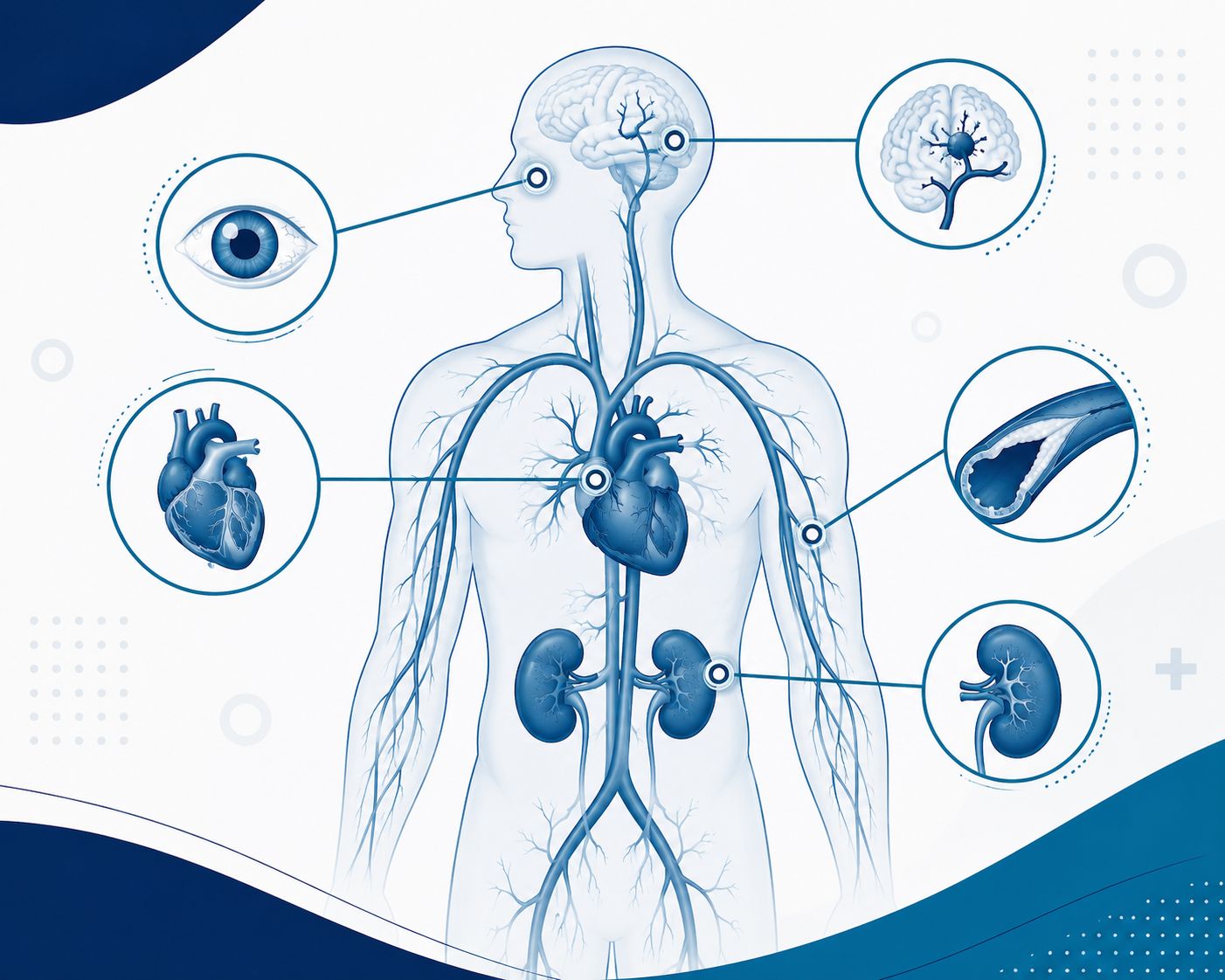
While you feel nothing, sustained high BP is doing the following:
| Organ System | What's Happening Silently |
|---|---|
| Heart | The heart has to push against higher resistance with every beat. Over years, the heart muscle thickens (left ventricular hypertrophy), becomes stiffer, and loses pumping efficiency - leading to heart failure or arrhythmia. |
| Arteries | Chronic pressure damages the inner lining of arterial walls, accelerating atherosclerosis - plaque buildup that narrows the vessel. A rupture of that plaque is an acute myocardial infarction (heart attack). |
| Kidneys | The kidney's filtering units are supplied by tiny arteries that are particularly vulnerable to sustained high pressure. Over time this causes chronic kidney disease - often discovered only when significant function has already been lost. |
| Brain | High BP is the leading cause of haemorrhagic stroke - a burst blood vessel in the brain. It also accelerates vascular dementia through gradual reduction in cerebral blood flow. Consult the neurology department if BP-related neurological symptoms appear. |
| Eyes | Retinal blood vessels reflect the same damage occurring elsewhere. A fundus examination can show hypertensive retinopathy before cardiac or renal symptoms emerge. |
Why Men Ignore High Blood Pressure - And Why That Logic Is Flawed
The most common reason men don't act on a high BP reading is that they feel fine. "If something was seriously wrong, I'd know" is the logic - and it is exactly the logic that high BP exploits. Other common reasons include time pressure (health checks feel like something to do later), dismissal ("it's just stress, it'll settle"), or a single normal reading years ago being treated as a lifetime clearance.
High blood pressure risks for young adults in India are not theoretical. A man who discovers a reading of 155/95 at 34 and does nothing is not making a calculated risk decision - he is making it without information. A five-minute BP check at a clinic gives that information.
The Diabetes and BP Connection Men Miss
Undiagnosed Type 2 diabetes and insulin resistance both independently raise blood pressure. In Kutch's working population - with diets high in refined carbohydrates and physical activity often low - the combination is common and often runs together undetected. If BP is elevated, blood sugar and HbA1c should be checked at the same time. Endocrinology and cardiology are not separate conversations for many men - they are the same one.
The Bottom Line
Hypertension does the most damage precisely because it asks nothing of you until the damage is done. Feeling well is not the same as being well - the only way to know your numbers is to check them.
Get Your BP Checked - Swasthya Hospital, Gandhidham
Hypertension in young men is common, treatable, and almost entirely silent before it causes serious harm. A blood pressure check takes under five minutes. Swasthya Hospital's Cardiology department in Gandhidham offers BP evaluation, cardiac risk assessment, and follow-up management without referral to another city.
Book a Cardiology Consultation