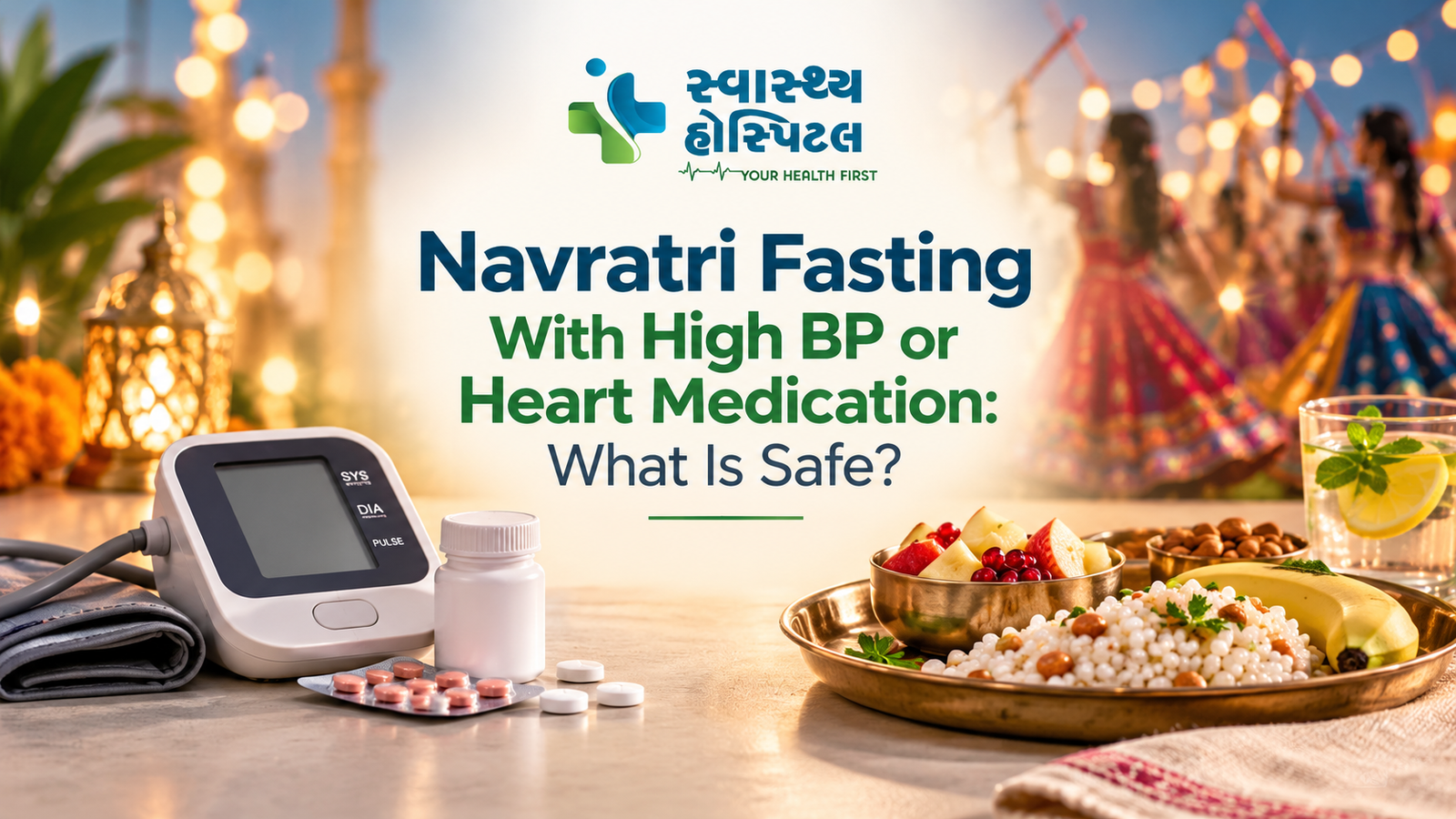
Navratri Fasting With High BP or Heart Medication: What Is Safe?
Many people with well-controlled blood pressure can fast with their doctor's agreement, but they must keep taking prescribed medicines and avoid dehydration and salty farali food.
Navratri fasting with high BP can be safe for many people whose blood pressure is well controlled, but only if you keep taking your prescribed medicines, avoid dehydration, and watch the salt in farali food. Never stop or skip heart or blood pressure tablets on your own because you are fasting. Some people, including those with recent heart problems, kidney disease or diabetes on insulin, should not fast without medical advice. This guide explains the principles, the hidden salt in fasting foods, and the signs that mean you should break the fast.
Is It Safe to Fast During Navratri With High Blood Pressure?
For many people with stable, treated blood pressure, yes, with a few precautions. But the honest answer is that there is no study of Navratri fasting itself on blood pressure.
The closest evidence comes from Ramadan, a very different fast. In a small 2001 study of 17 treated hypertensive patients, 24-hour blood pressure did not change significantly during Ramadan while they continued their once-daily medicines (Perk et al., 2001). A 2021 study from Imperial College London, which combined 85 people in London with an analysis of 33 earlier studies, found that Ramadan fasting appeared to lower blood pressure, at least temporarily (Imperial College London, 2021). These studies do not prove that Navratri fasting is safe for you. Many Navratri fasters eat several times a day, often salty fried foods, so the risks are different.
Speak to the doctor who treats you before fasting if you have high blood pressure, heart disease, diabetes, kidney disease, or take medicines every day.
Should You Take BP and Heart Medicines While Fasting?
Yes. Do not stop, skip or double any tablet on your own. The WHO advises taking blood pressure medicines as prescribed and keeping follow-up appointments (WHO, 2025). Stopping suddenly can push blood pressure up and, with some heart medicines, can trigger a heart problem.
If tablets need to be taken with food, or you are worried about taking them on an empty stomach, ask your doctor how to arrange it. A small, permitted snack may be the answer. This is a decision for the doctor who knows your medicines.
| Medicine type | Why fasting needs care | What to do |
|---|---|---|
| Regular BP tablets | Missing doses can let BP rise | Keep taking them; ask your doctor about timing |
| Water tablets (diuretics) | Can add to dehydration and low salt or potassium | Ask your doctor before fasting |
| Blood thinners and aspirin | Missing doses raises clot risk | Never skip; ask about timing with food |
| Heart failure medicines | Fluid and salt balance matters | Fast only with your cardiologist's approval |
| Diabetes medicines or insulin | Risk of dangerously low sugar | Do not fast without your doctor's plan |
This table lists principles, not instructions for your dose. Your own doctor decides.
Which Fasting Foods Quietly Raise Your Blood Pressure?
The risk during a fast is often not hunger but salt. Sendha namak (rock salt) is still sodium chloride. It is not "safe" in unlimited amounts. The WHO recommends under 5 g of salt a day (under 2,000 mg of sodium) for adults (WHO, 2026), and Indian dietary guidance also advises keeping added salt to about 5 g a day (ICMR-NIN, 2024).
| Farali food | The BP problem | A better choice |
|---|---|---|
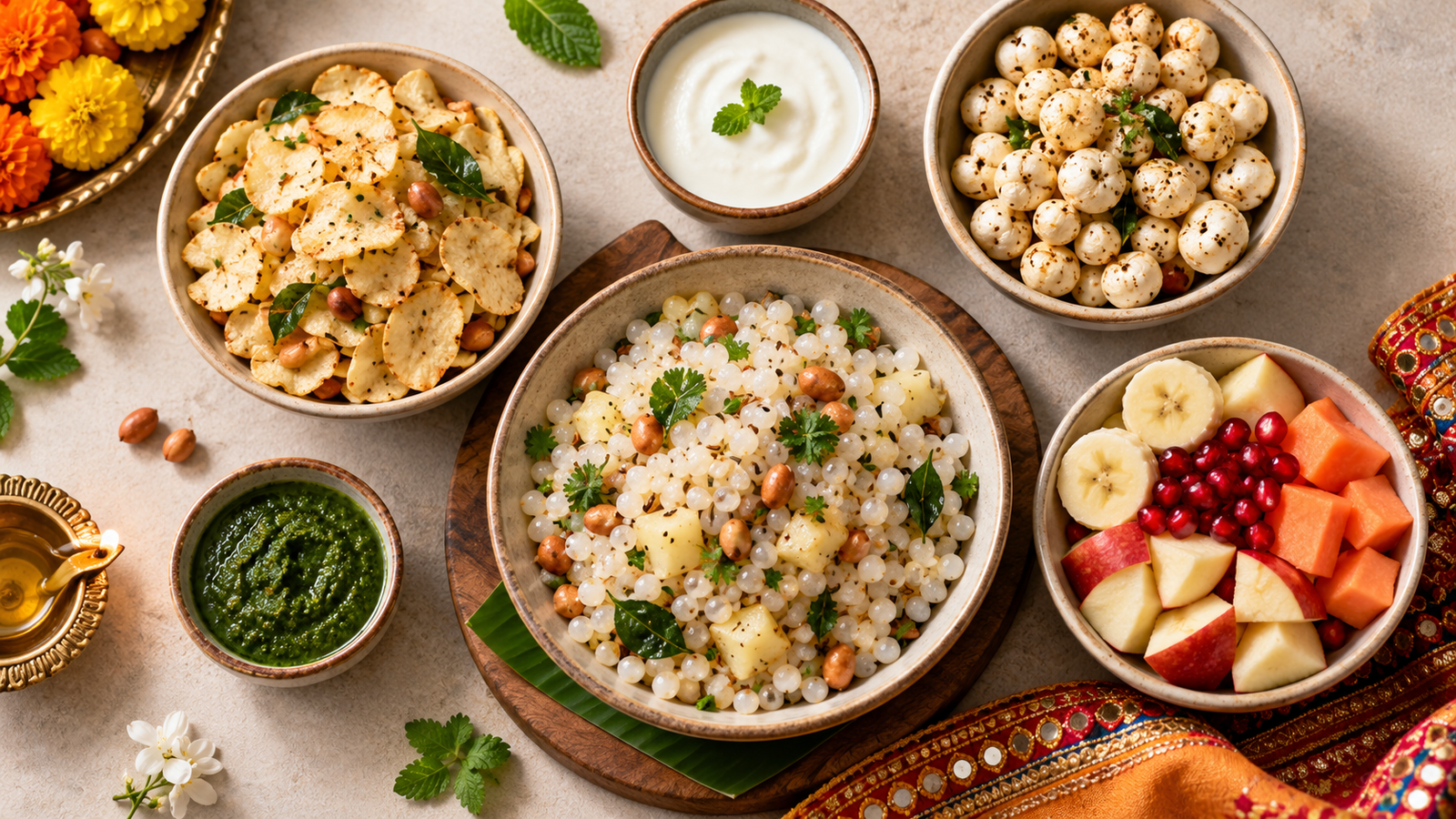
| Farali chivda, wafers, packaged snacks | Salt and frying | Roasted makhana or unsalted nuts |
| Sabudana khichdi or vada | Salt, oil and large portions | Smaller portion, less salt, add peanuts and vegetables |
| Kuttu or singhara puri/pakora | Frying and salt | Roti or chilla with little oil |
| Salted buttermilk, lassi with salt | Hidden sodium | Plain curd or unsalted buttermilk |
| Salted potato dishes | Salt and oil | Boiled or baked with minimal salt |
What Should You Eat and Drink While Fasting?
- Eat small meals more often instead of one or two large ones.
- Choose fruit, curd, roasted makhana, unsalted nuts and vegetables where your fast allows.
- Drink enough water through the day. Dehydration can cause dizziness and, with some medicines, a dangerous drop in blood pressure. Ask your doctor about coconut water or ORS if you take water tablets, have kidney disease or must limit salt or potassium.
- Cut back on tea, coffee and fried snacks.
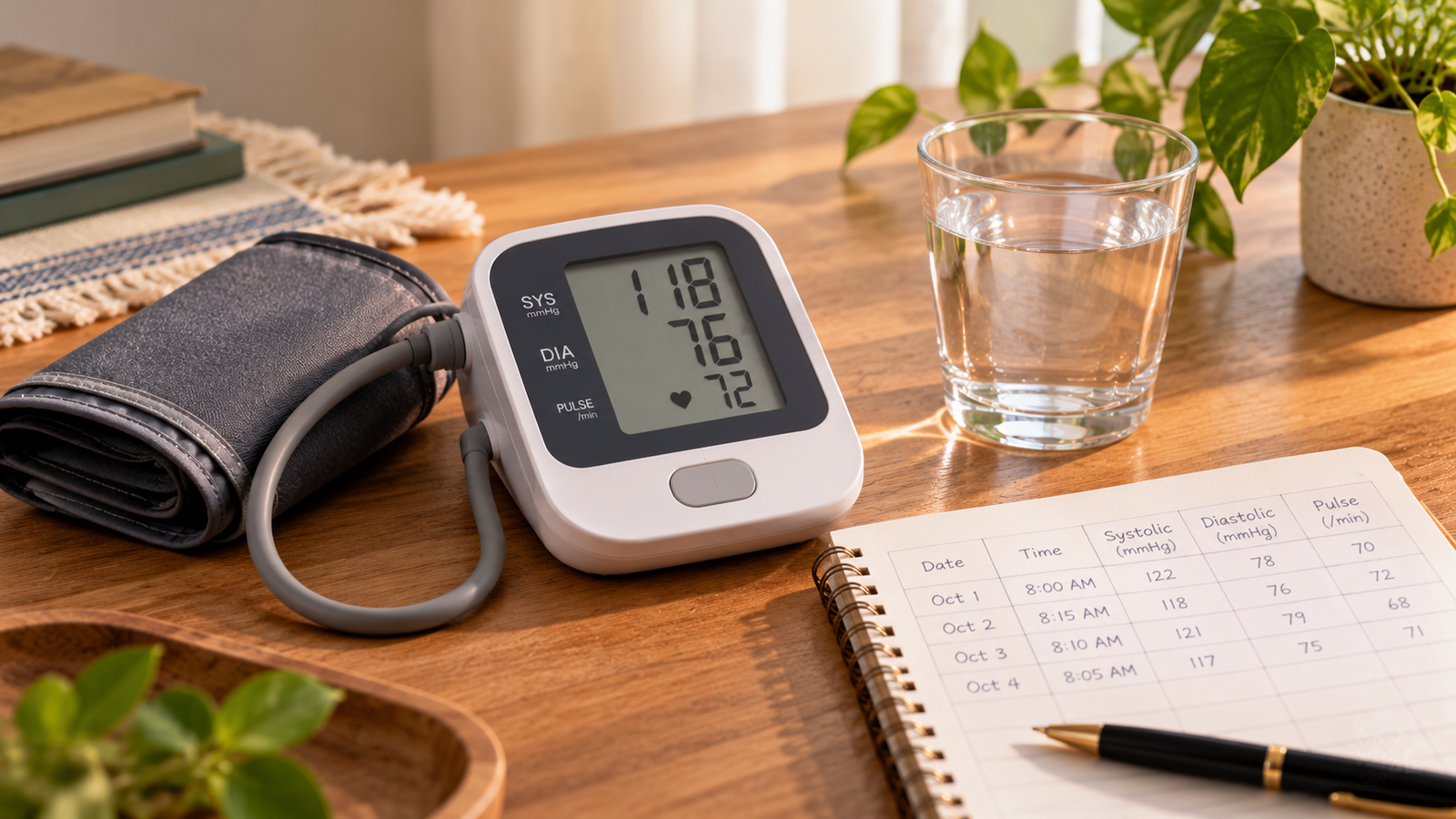
- Check your blood pressure at home at about the same time each day, if you have a home monitor, and note your readings for your doctor.
When Should You Break the Fast?
Break the fast and seek medical help if you have
- Chest pain, pressure or tightness, especially with sweating or breathlessness. Call emergency services (108 or 112). Do not drive yourself.
- Fainting, severe dizziness or confusion.
- A racing or irregular heartbeat that does not settle.
- A severe headache, weakness on one side of the body, or trouble speaking. These can be stroke signs; see our guide to stroke warning signs.
- Repeated vomiting or you cannot keep fluids down.
- A blood pressure reading much higher or lower than your usual, with symptoms.
Who Should Not Fast Without Medical Advice?
Talk to your doctor first, and do not fast on your own decision, if you:
- Have had a recent heart attack, stent or bypass, or have heart failure.
- Have kidney disease.
- Have diabetes on insulin or tablets that can cause low sugar.
- Are pregnant or breastfeeding.
- Are elderly, frail or unwell.
Fasting is an act of faith for many people. If your doctor advises against it, you can still mark the festival through prayer, charity or a lighter, partial observance. This is worth discussing with your family and, if you wish, your religious guide.
Frequently Asked Questions
Can I take my BP tablet in the morning if I am fasting?
Do not skip it. Ask your doctor how to take it safely, as some tablets are best taken with a little food.
Is rock salt (sendha namak) healthier than regular salt?
It is still mostly sodium chloride and raises blood pressure in the same way. The amount you eat matters more than the type.
Can fasting lower my blood pressure so I can stop my tablets?
No. Any lowering during a fast is temporary. Never stop medicines without your doctor's advice.
What if my BP reading is low while fasting?
If you feel dizzy, weak or faint, sit or lie down, drink fluids and seek medical advice. Do not take extra BP tablets.
Questions About Fasting and Your Medicines?
Discuss fasting with the doctor who prescribes your medicines. Our cardiology department can also advise. The hospital is open 24x7 in Gandhidham.
Contact the HospitalLearn more about our cardiology department. Related reading: high blood pressure in young men, and swollen feet and salt.
- World Health Organization. Hypertension (fact sheet), 25 September 2025. https://www.who.int/news-room/fact-sheets/detail/hypertension
- World Health Organization. Salt reduction (fact sheet), 11 May 2026. https://www.who.int/news-room/fact-sheets/detail/salt-reduction
- Perk G, Ghanem J, Aamar S, Ben-Ishay D, Bursztyn M. The effect of the fast of Ramadan on ambulatory blood pressure in treated hypertensives. J Hum Hypertens. 2001;15(10). doi:10.1038/sj.jhh.1001262. PMID: 11607803. https://pubmed.ncbi.nlm.nih.gov/11607803
- Imperial College London. Fasting during Ramadan may lower blood pressure, at least temporarily (news release on a study in the Journal of the American Heart Association), 11 October 2021. https://www.imperial.ac.uk/news/231056/fasting-during-ramadan-lower-blood-pressure
- ICMR-National Institute of Nutrition. Dietary Guidelines for Indians, 2024 edition. https://nutritionconnect.org/resource-center/dietary-guidelines-indians-2024-edition-icmr-nin