
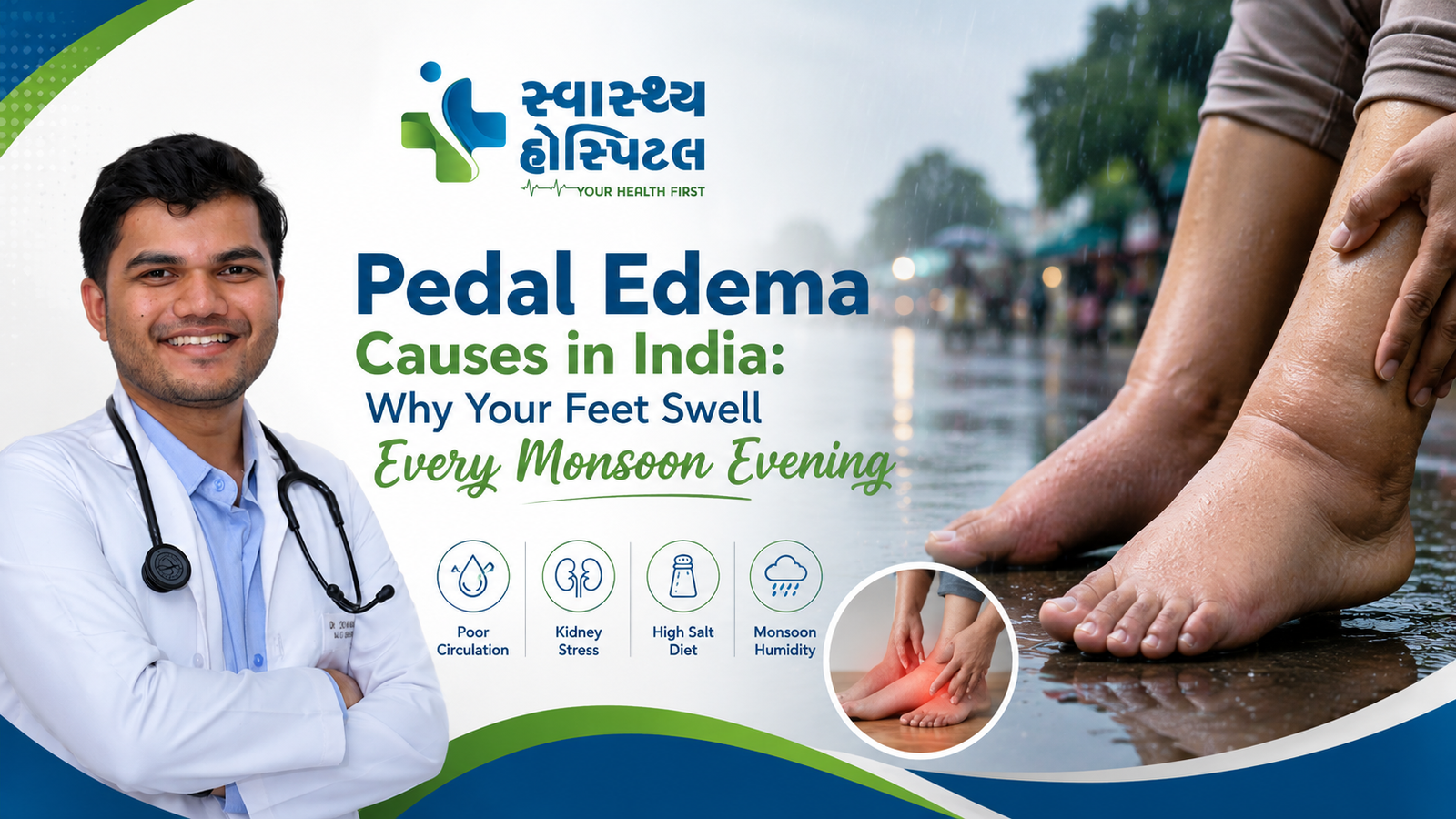
Pedal Edema Causes in India: Why Your Feet Swell Every Monsoon Evening
The swelling is usually harmless - but a few signs mean it isn't. Here's how to tell the difference.
Get Your Swelling Evaluated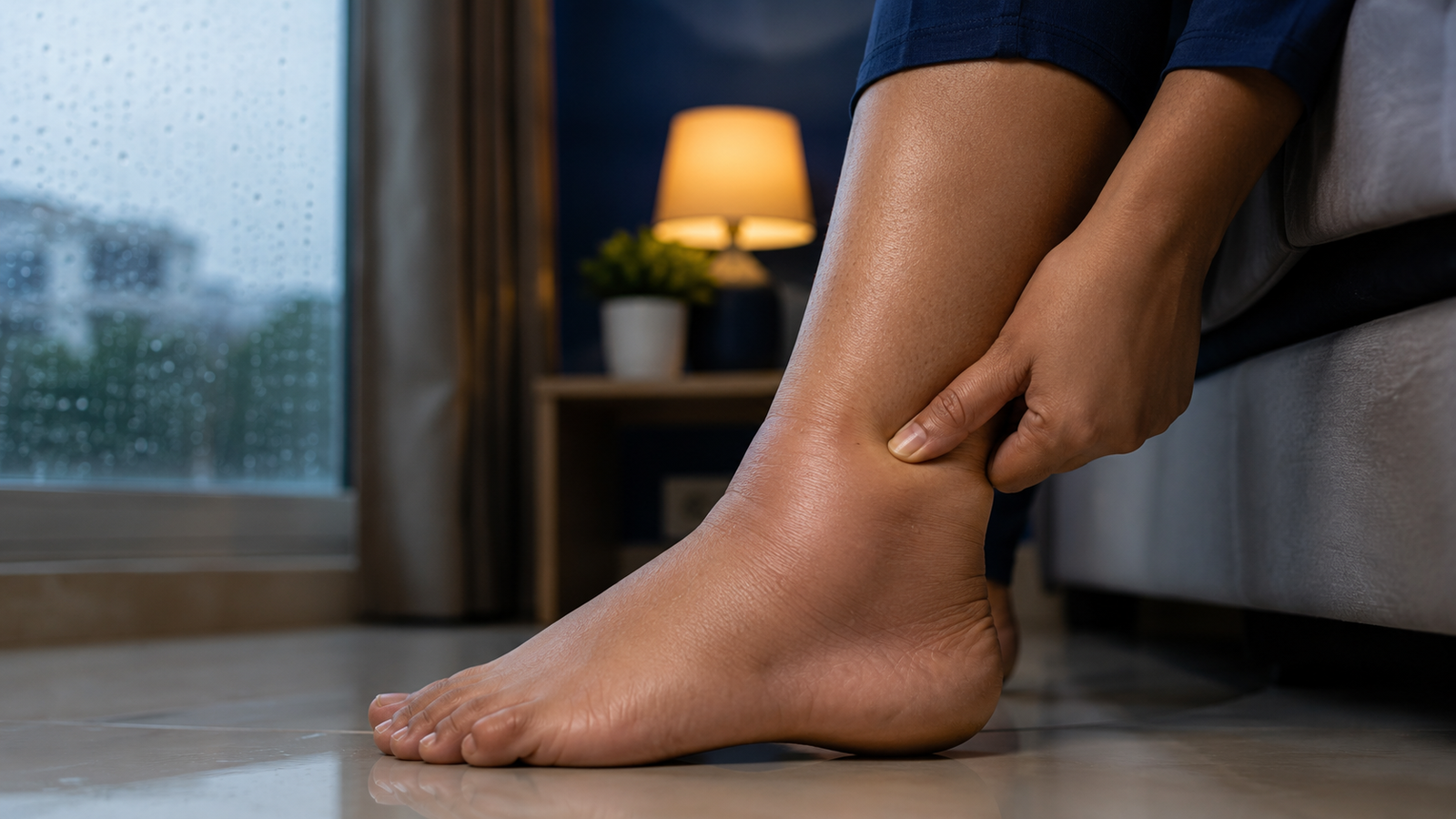
If your feet and ankles puff up by evening every monsoon, you're not imagining it, and you're not alone. This is pedal edema, and the causes of pedal edema in India tend to follow a clear, well-understood mechanism that gets worse in exactly the weather Kutch sees every July and August. Most of the time it's harmless and reverses overnight. Sometimes it's the first visible sign of a heart, kidney, or vein problem. This page walks through both, and where the line between them actually sits.
Why Monsoon Makes Your Feet Swell
Standing or sitting for long stretches in high humidity dilates the small blood vessels, or capillaries, in your legs - heat and vasodilation open them wider. Wider capillaries under standing pressure push fluid out into the interstitial tissue, the space between your cells, faster than your body can drain it back. That fluid pooling in your feet and ankles is pedal edema - a mechanical and circulatory event, not an infection.
Pedal Edema Causes in India That Are Specific to Monsoon
Three monsoon-specific factors stack on top of the basic mechanism. High humidity blocks your body's evaporative cooling, so capillaries stay dilated longer than they would in dry heat. The atmospheric pressure drop that comes with monsoon weather reduces the external compression on your leg veins, letting more fluid leak out. And the rain itself cuts down how much you walk, which matters because your calf muscles act as a pump pushing venous blood back up from your legs - less walking means a weaker pump and more fluid left sitting in your feet.
Who Gets It More
Some people see this every monsoon while others barely notice it. It shows up more in:
- People who stand or sit for long periods - teachers, shopkeepers, drivers, and desk workers
- Women, due to hormonal factors that affect fluid retention
- Anyone on amlodipine or another calcium channel blocker for blood pressure - swelling is a known, common side effect
- Patients with chronic venous insufficiency - varicose veins or leg vein valves that no longer close properly
The Pitting Test - Check This Before You Decide
Press firmly on the swollen area for five seconds, then let go. If an indent remains where your finger was, that's pitting edema, and it needs a medical evaluation to rule out heart, kidney, or liver disease - not because it always means something serious, but because pitting is the pattern those conditions produce. Non-pitting swelling that resolves overnight with rest is usually the benign, monsoon-mechanical kind described above.
Benign vs Concerning - The Split That Actually Matters
Use this to decide whether tonight's swelling is ordinary monsoon edema or something to get seen for:
| Benign Edema | Concerning Edema |
|---|---|
| Both legs equally | One leg only (raises DVT concern) |
| Improves overnight with leg elevation | Persists even after rest |
| No skin changes | Skin red, warm, or discolored |
| No pain | Pain, tenderness |
| No other symptoms | Breathlessness, chest pain |
| Improves with low salt and movement | Worsening progressively |
When Swelling Points to Something Else
Persistent, pitting, or one-sided swelling can trace back to a specific cause rather than the weather. Heart failure causes fluid to back up into the legs. Kidney disease can lower blood albumin until fluid leaks out of vessels, and liver disease works through a similar route. Deep vein thrombosis shows up as one painful, swollen leg - a same-day concern, not a wait-and-see one. Lymphedema causes a slower, more persistent pattern. None of these are diagnosed from a symptom list alone, which is why persistent or one-sided swelling needs an in-person look at Swasthya Hospital's Cardiology or Nephrology department rather than a home fix.
Medications That Cause Swelling - Tell Your Doctor
If you started a new medication before the swelling began, mention it at your next visit rather than assuming it's the monsoon. Common culprits include amlodipine and other blood pressure medications, NSAIDs (frequently used by arthritis patients, which is its own irony), gabapentin, steroids, and oral contraceptive pills. Swapping or adjusting a medication is a straightforward fix once identified - but only your doctor can make that call safely.
Managing It at Home
For swelling that fits the benign pattern, these steps genuinely help:
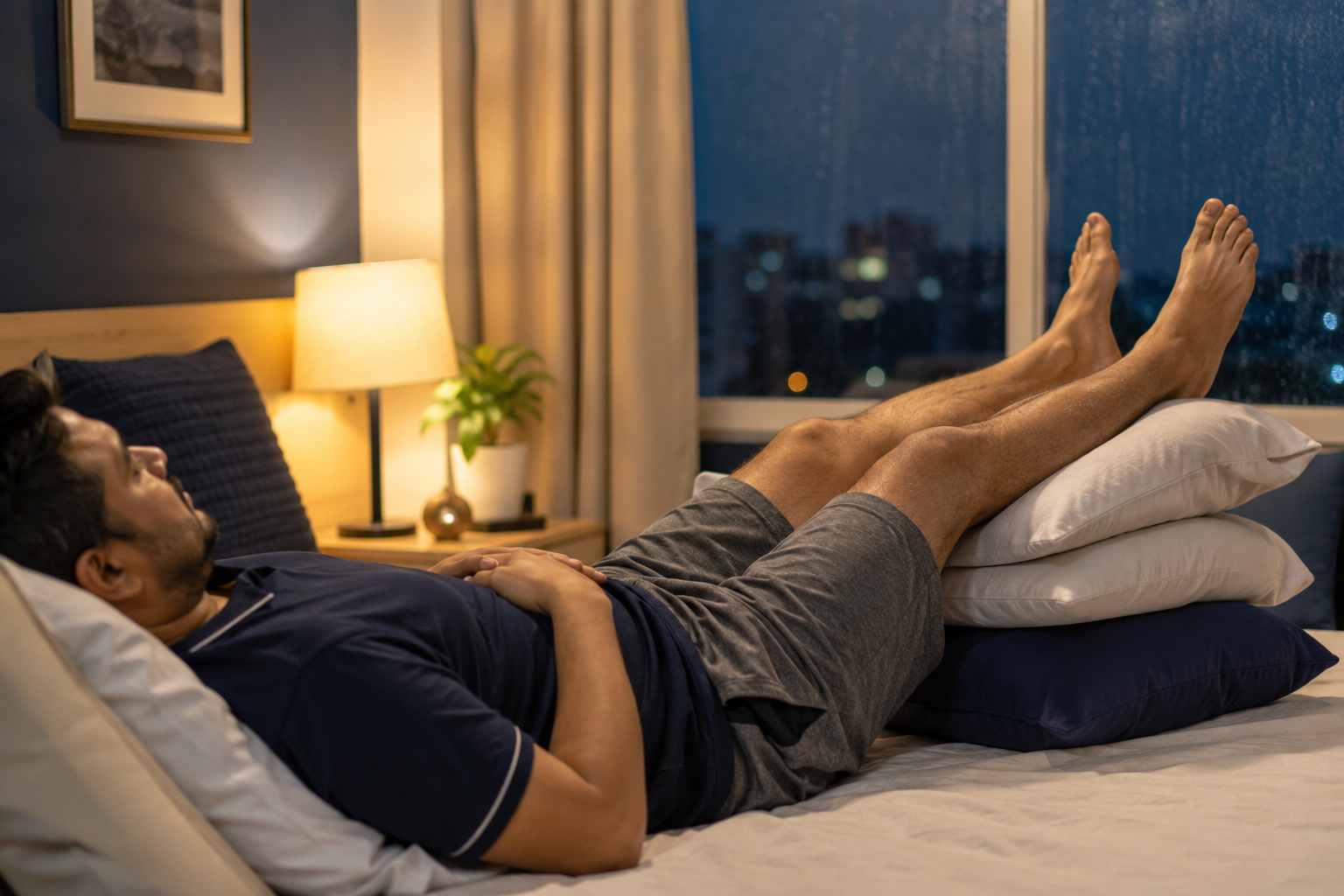
- Elevate your legs 15-20 cm above heart level while lying down - a couple of pillows under the calves works
- Cut evening salt intake toward under 5g a day - skip the farsan, papad, and pickles at dinner
- Wear Grade I compression stockings (15-20 mmHg) during the day if swelling is a regular pattern - available at most medical stores, removed at night
- Do calf exercises while seated - heel raises and ankle circles - to reactivate the muscle pump
- Break up long stretches of standing with a five-minute walk every hour
When to See a Doctor Urgently
Don't wait out swelling that comes with any of the following: sudden, severe swelling in one leg only; swelling with breathlessness; new swelling that started right after a new medication; or swelling with skin discoloration or an ulcer forming. Each of these is a same-day reason to get evaluated, not a wait-until-morning one.
Get Your Pedal Edema Causes Diagnosed, Not Guessed
Most monsoon swelling is harmless, but the only way to know which kind you have is a proper look at your heart, kidney, and vein function - not another night of elevating your feet and hoping. Dr. Devansh Khandol evaluates pedal edema and its underlying causes at Swasthya Hospital, Gandhidham, seven days a week.
Book an Edema EvaluationFrequently Asked Questions
Pairon mein soojan monsoon mein kyun hoti hai?
Monsoon humidity keeps your leg's blood vessels dilated for longer, and heavy rain cuts down how much you walk, weakening the calf muscle pump that normally pushes blood back up. Together these let more fluid collect in your feet by evening - usually harmless, but worth checking if it doesn't ease overnight.
Why do feet swell more in the rainy season than other times of year?
Humidity blocks your body's normal evaporative cooling, keeping leg capillaries dilated longer, while the monsoon's lower atmospheric pressure reduces the natural compression on your leg veins. Reduced walking during heavy rain removes the muscle pump that drains fluid back up, so all three effects stack together.
Is it dangerous if swelling is in one leg only during monsoon?
One-sided swelling is different from the usual two-sided monsoon pattern and can point to deep vein thrombosis, a blood clot in the leg. This needs same-day medical evaluation, especially if the leg is also painful, warm, or discolored.
Can amlodipine or other BP medicines cause ankle swelling?
Yes, ankle swelling is a well-known side effect of amlodipine and other calcium channel blockers used for blood pressure. Don't stop the medication on your own - mention the swelling to your doctor so the dose or drug can be reviewed safely.
Do compression stockings actually help with monsoon leg swelling in India?
Grade I compression stockings (15-20 mmHg) can meaningfully reduce daytime swelling for people who stand or sit for long hours. They should be worn during the day and removed at night, and are available at most medical stores without a prescription.
What is the pitting test and why does it matter?
Press firmly on the swollen area for five seconds - if an indent remains, that's pitting edema, a pattern linked to heart, kidney, or liver conditions rather than ordinary monsoon swelling. It's a simple first check, not a diagnosis, which is why a pitting result should lead to a proper evaluation.