
Dengue Vaccine in India: What's Approved and What's Not
India finally has an approved dengue vaccine, but approval doesn't mean it's simple. Here's exactly what's covered, who qualifies, and where the gaps still are.

What's Actually Approved: Qdenga
The Central Drugs Standard Control Organisation (CDSCO) has approved Qdenga, made by Takeda, as India's first dengue vaccine. It's a live attenuated tetravalent vaccine, meaning it's built to protect against all four dengue strains, DEN-1 through DEN-4, rather than just one. That matters because a second infection with a different strain is typically the more dangerous one.
Source: Press Information Bureau, Government of India - CDSCO approves India's first dengue vaccine
Who Can Get It and How
Qdenga is approved for people aged 4 to 60. It's given as two doses, three months apart - not a single shot. Completing both doses on schedule is part of what makes the vaccine effective; skipping or delaying the second dose isn't something to treat casually.
What the Vaccine Does Not Do
A few things worth being clear about: Qdenga doesn't replace mosquito-bite prevention, it isn't a single-dose vaccine, and it isn't yet part of India's government immunization program. That last point also means it currently sits outside routine, subsidized access - cost and availability are still things to check directly with a provider.
For general background on dengue transmission and prevention, the World Health Organization's dengue fact sheet is a reliable reference.
DengiAll: India's Homegrown Candidate, Still in Trials
Panacea Biotec's DengiAll, a single-dose candidate developed in India, is in final-stage trials but not yet approved. It's a name worth knowing, since a single-dose option would meaningfully change access and convenience if it clears trials. For now, though, Qdenga remains the only approved option in India.
Source: Press Information Bureau - ICMR and Panacea Biotec initiate Phase 3 trial of DengiAll
Who Should Seriously Consider Vaccination
Vaccination is worth a real conversation if you live in a high-transmission area, have already had dengue once (severe second infections are the real danger doctors watch for), or travel frequently to dengue-prone regions. These are the groups where the calculus tips most clearly toward getting vaccinated rather than waiting. This is especially relevant for people already managing a chronic condition - patients under rheumatology care or those with compromised immunity from conditions managed in hematology or endocrinology should factor dengue risk into their overall care plan.
Qdenga vs. DengiAll: Where Each One Stands
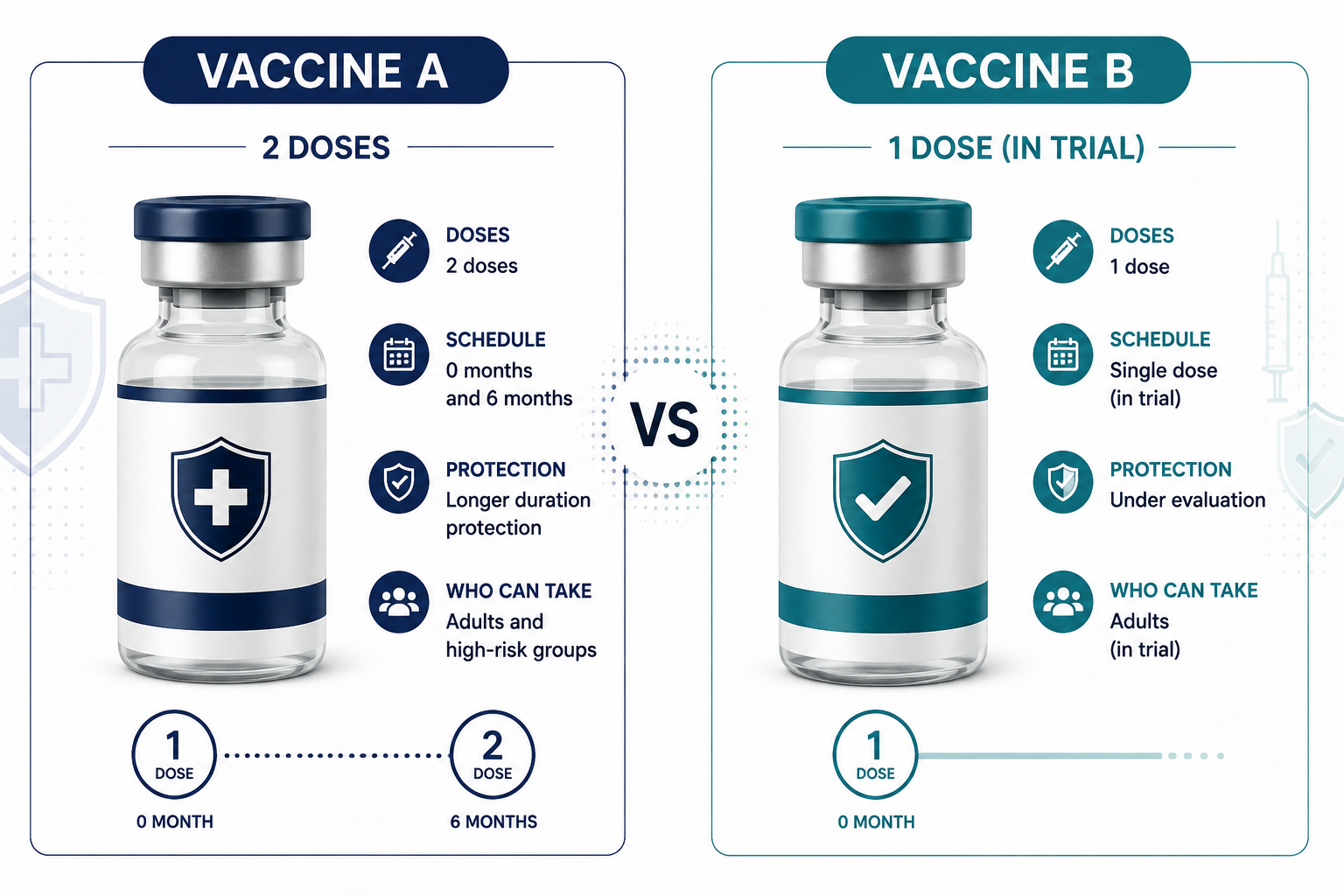
| Factor | Qdenga (Takeda) | DengiAll (Panacea Biotec) |
|---|---|---|
| Status in India | CDSCO approved | Final-stage trials, not approved |
| Strain coverage | All 4 (DEN-1 to DEN-4) | All 4 (DEN-1 to DEN-4), under trial |
| Dosing | 2 doses, 3 months apart | Single dose (candidate design) |
| Government program | Not yet included | Not applicable, unapproved |
| Availability | Through private providers | Not yet available |
A Vaccine Isn't Zero Risk, and It Isn't a Guarantee
Getting vaccinated doesn't mean the conversation stops there. Cost, availability timelines, and candidacy still need clinical evaluation on a case-by-case basis. Anyone with underlying conditions, prior severe dengue, or specific travel plans should have that conversation with a doctor rather than assume the vaccine fits everyone the same way. This is particularly true for patients already being monitored for cardiovascular risk through cardiology or chronic kidney concerns under nephrology, where vaccine timing should be coordinated with existing treatment.
Get Guidance You Can Actually Trust
Pharmacy counters and social media are not where this decision should get made. For an accurate read on eligibility, timing, and whether the dengue vaccine in India makes sense for your situation, speak with a specialist who can look at your health history directly. Swasthya Hospital's infectious disease team can walk you through what Qdenga does and doesn't cover, and whether DengiAll is worth watching for. If you've had dengue before or live in a high-transmission area, don't guess - book a consultation and get a clear answer.
Learn More About Swasthya HospitalFrequently Asked Questions
Is a dengue vaccine available in India?
Yes. CDSCO has approved Qdenga, a two-dose vaccine covering all four dengue strains, for ages 4 to 60. It isn't yet part of the government immunization program, so it's currently accessed through private healthcare providers.
Who should get the dengue vaccine first?
People in high-transmission areas, anyone who's already had dengue once, and frequent travelers to dengue-prone regions should prioritize it. A second dengue infection tends to be more severe, which makes prior cases a key factor.
Does the vaccine mean I can stop worrying about mosquito bites?
No. Qdenga doesn't replace mosquito-bite prevention. Vaccination and bite prevention work together, not as substitutes for each other, especially during peak transmission seasons.
Is DengiAll approved in India yet?
Not yet. Panacea Biotec's DengiAll, a single-dose candidate, is still in final-stage trials. Qdenga remains the only CDSCO-approved dengue vaccine in India right now.
How many doses does the approved vaccine require?
Two doses, given three months apart. Both doses need to be completed on schedule for the vaccine to work as intended, so skipping the second dose isn't advisable.
How do I know if the vaccine is right for me?
It depends on your health history, region, and risk level, which is why this isn't a decision to make from a pharmacy counter or social media post. A specialist consultation gives you a clear, personal answer.