
Is Joint Pain Just Age? Signs It Could Be Arthritis
Some stiffness is common as we age, but ageing alone does not explain swelling, long morning stiffness, several painful joints or pain that wakes you at night.
Is joint pain just age? Not always. Joint pain and age often go together, but "it's just age" is not always the right answer. Mild aches after a busy day, which ease with rest, are common as we get older. Swelling, stiffness that lasts for 30 minutes or more in the morning, pain in several joints, or pain at night are different, and they can signal arthritis that is treatable. Here is how to tell the two apart, which conditions can hide behind "just age", and when to see a rheumatologist.
Is Joint Pain a Normal Part of Ageing?
Joint wear does become more common with age, but the World Health Organization says osteoarthritis is not an unavoidable result of ageing. It is influenced by weight, past injuries, activity and other factors, and it can often be managed (WHO, 2023).
How common is it in India? A 2025 systematic review of 14 community studies found that about 47% of Indians aged 60 and above had knee osteoarthritis. The studies varied a lot, from 15% to 70%, so treat this as a rough guide and not an exact figure. Women had higher rates in the studies that reported by sex (Daniel et al., 2025).
So joint pain is common in later life. That does not mean it should be ignored or left untreated.
What Does Normal Wear and Tear Feel Like?
Typical wear-and-tear (osteoarthritis-type) pain has a mechanical pattern:
- It is worse with use (walking, stairs, standing for long) and better with rest.
- Morning stiffness is brief, usually under about 30 minutes.
- It affects one or a few joints, often the knees, hips, hands or spine.
- There may be a grinding or cracking feeling, but little obvious warmth or redness.
- It tends to change slowly, over months or years.
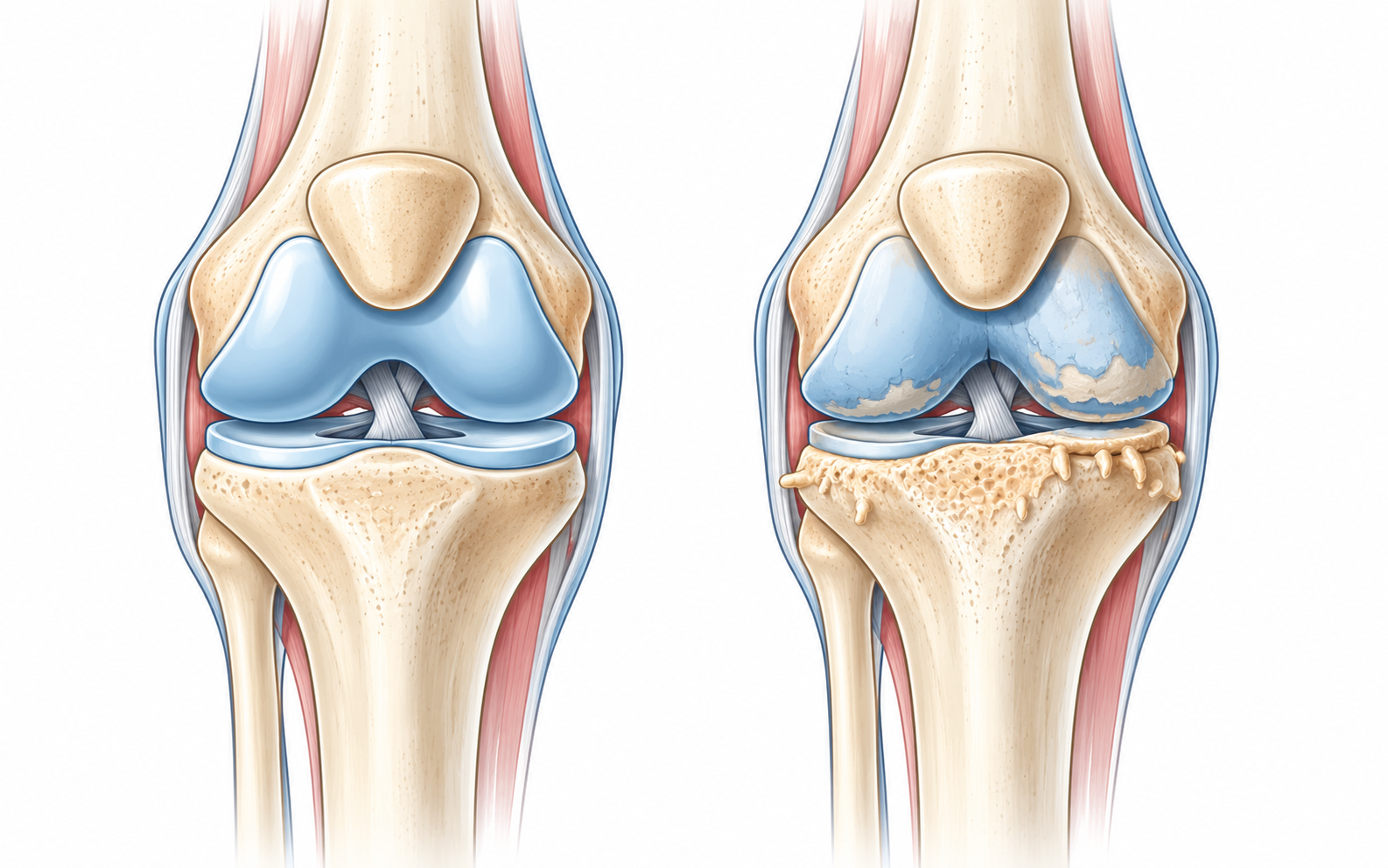
Illustration generated with AI.
Which Joint Pain Symptoms Mean It Is More Than Age?
Some features suggest inflammation or another cause that deserves a specialist's eye:
| Feature | Typical wear and tear | Warning sign worth checking |
|---|---|---|
| Morning stiffness | Under about 30 minutes | Longer than 30 to 60 minutes, easing with movement |
| Swelling | Occasional, mild | Visible, persistent, or warm to touch |
| Number of joints | One or a few | Several joints, or both sides (both hands or both knees) |
| Pain pattern | Worse with use, better with rest | Pain at rest or at night, waking you from sleep |
| Other symptoms | Usually none | Fatigue, low fever, rash, weight loss, dry eyes |
| Onset | Gradual over months or years | Over weeks, or sudden attacks |
One or two of these does not prove arthritis, and a normal result on a test does not always exclude it. But if several apply, or if the pattern is new, it is worth getting checked.
Which Conditions Can Hide Behind "Just Age"?
- Osteoarthritis: the common wear-and-tear arthritis. Treatable with exercise, weight management, medicines and, in some cases, surgery.
- Rheumatoid arthritis (RA): an autoimmune condition in which the body attacks the lining of the joints. It often affects the small joints of both hands and feet, and it causes prolonged morning stiffness.
- Gout: sudden, intensely painful, hot, swollen joints from uric acid crystals. It often affects the big toe, but can involve the knee or ankle.
- Psoriatic arthritis: joint inflammation linked to psoriasis, sometimes with swollen fingers or nail changes. See psoriasis and psoriatic arthritis.
- Other causes: low vitamin D, thyroid problems, nerve problems or medicines can also cause aches. A doctor looks for these too.
Weather and season can influence how joints feel, but they do not cause arthritis. Our guide to monsoon arthritis flares explains this in more detail.
Why Does Early Diagnosis Matter?
Inflammatory arthritis such as RA is usually treated more effectively when it is caught early, and untreated inflammation can damage joints over time. Even for osteoarthritis, an early plan of exercise, weight care and the right pain relief can keep you moving longer. Waiting because "it's just age" can cost months of pain you did not need to have.
What Happens at a Rheumatology Consultation?
- Questions about your symptoms, family history and medicines.
- Examination of your joints, spine, skin and nails.
- Tests when needed, such as blood tests (for example uric acid, markers of inflammation, rheumatoid factor or anti-CCP), and an X-ray or ultrasound.
- A plan: exercises, medicines, lifestyle changes and follow-up.
Can You Ease Joint Pain Yourself?
Yes, in many cases:
- Keep moving. Walking, cycling or swimming helps. A 2024 Cochrane review found that exercise likely reduces pain and improves function in knee osteoarthritis, though the certainty of evidence is low to moderate (Lawford et al., 2024).
- Manage your weight, since extra weight adds load to knees and hips.
- Wear supportive shoes.
- Be careful with painkillers. Taking anti-inflammatory tablets (NSAIDs) for weeks without advice can harm the stomach and kidneys and raise blood pressure. Speak to a doctor if you need them regularly.
- See a doctor if home measures are not enough. Read about knee pain after Navratri for a recent example of when overuse can reveal something more.
Illustration generated with AI.
Frequently Asked Questions
Is morning stiffness always a sign of arthritis?
No. Brief stiffness is common. Stiffness lasting longer than about 30 to 60 minutes, especially with swelling in several joints, is more suggestive of inflammatory arthritis.
Can young people get arthritis?
Yes. Rheumatoid arthritis, psoriatic arthritis and gout can start in young and middle-aged adults.
Do I need a blood test for joint pain?
Not always. A doctor decides after examining you. Tests help when inflammatory arthritis or gout is suspected.
Which doctor should I see first?
A general physician can start the assessment. A rheumatologist is the specialist for arthritis and autoimmune joint disease, particularly when several joints are involved or symptoms persist.
Questions About Joint Pain?
If joint pain or stiffness is persistent, our rheumatology department can assess it. The hospital is open 24x7 in Gandhidham.
Contact the HospitalLearn more about our rheumatology department. If you danced Garba this year, see also our guide to protecting your knees while dancing.
- World Health Organization. Osteoarthritis (fact sheet), 14 July 2023. https://www.who.int/news-room/fact-sheets/detail/osteoarthritis
- Daniel RA, Kalaivani M, Aggarwal P, Gupta SK. Prevalence of knee osteoarthritis among elderly persons in India: a systematic review and meta-analysis. J Family Med Prim Care. 2025;14(5):1675-1684. doi:10.4103/jfmpc.jfmpc_1254_24. PMID: 40547750. https://doi.org/10.4103/jfmpc.jfmpc_1254_24
- Lawford BJ, Hall M, Hinman RS, et al. Exercise for osteoarthritis of the knee. Cochrane Database of Systematic Reviews. 2024;(12):CD004376. doi:10.1002/14651858.CD004376.pub4. https://doi.org/10.1002/14651858.CD004376.pub4