
Psoriasis and Psoriatic Arthritis: When Skin Disease Becomes Joint Disease
Psoriasis can turn into psoriatic arthritis and damage joints permanently. Know the early signs and see a rheumatologist in Kutch before it progresses.
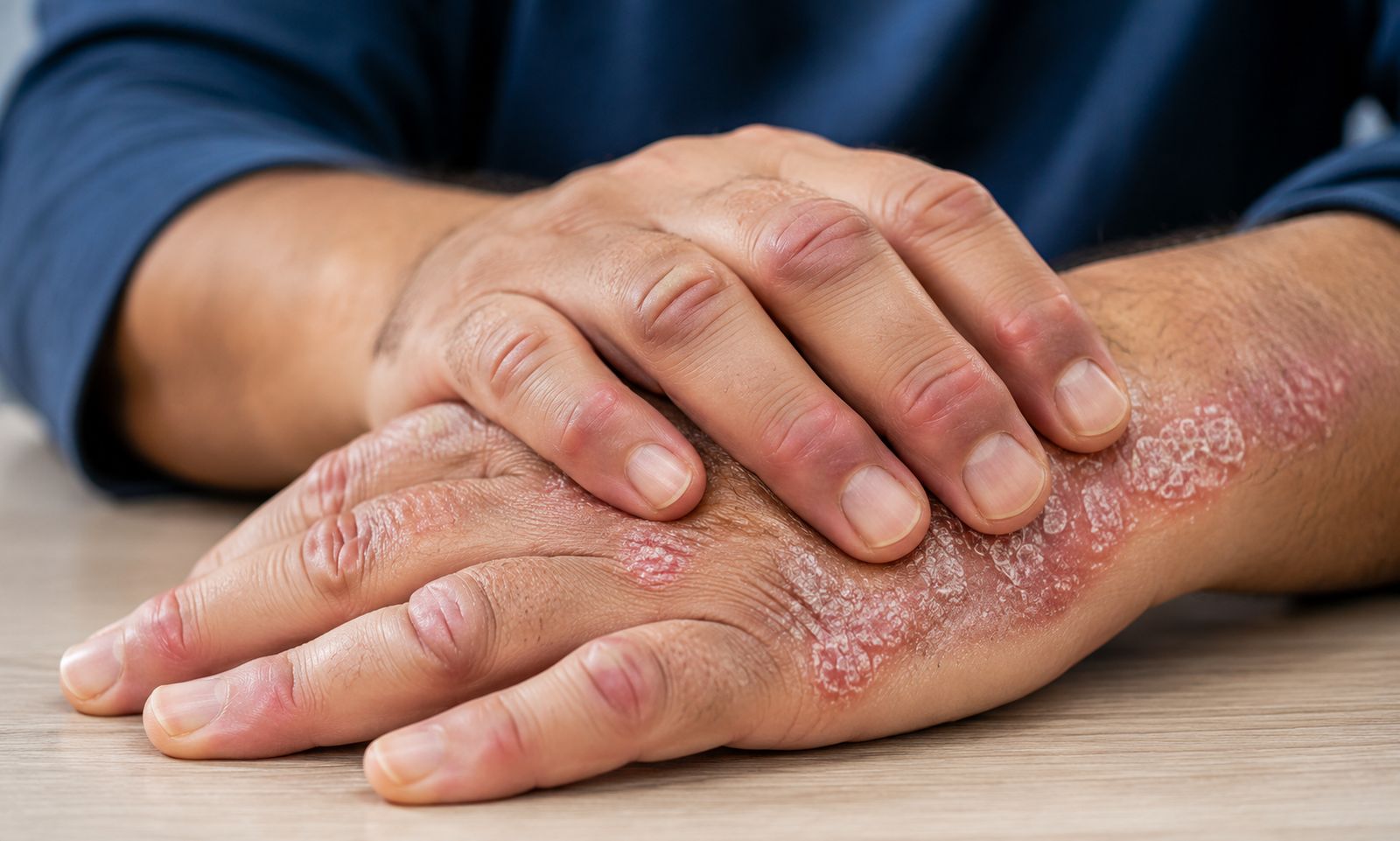
Psoriasis is more than a skin condition - for some patients, it's the first sign of joint disease to come.
Psoriasis gets dismissed as "just dry skin" more often than it should. Up to 30% of psoriasis patients go on to develop psoriatic arthritis, a joint disease that can start quietly and progress fast.
The Skin-Joint Connection Most People Miss
Psoriasis isn't only a skin condition - it's an immune-driven disease, and that same immune activity can attack joints. When it does, it's known as psoriatic arthritis. The skin symptoms often show up years before joint symptoms do, which is exactly why patients and even some clinicians miss the connection until damage is already underway.
This is why a skin rash and joint pain showing up together should never be treated as two unrelated problems. When both appear at the same time - even mildly - it's one of the clearest signals that the disease has moved from the skin into the joints, and it's worth getting checked rather than waiting to see if it settles on its own.
Early Warning Signs of Psoriatic Arthritis
Watch for these signs, especially if you already have a psoriasis diagnosis:
- Nail pitting - small dents or ridges in the nails
- Dactylitis - fingers or toes swelling into a "sausage" shape
- Morning stiffness that eases as the day goes on
- Heel pain from enthesitis (inflammation where tendons attach to bone)
None of these are minor annoyances - they're the disease's earliest, most treatable stage.
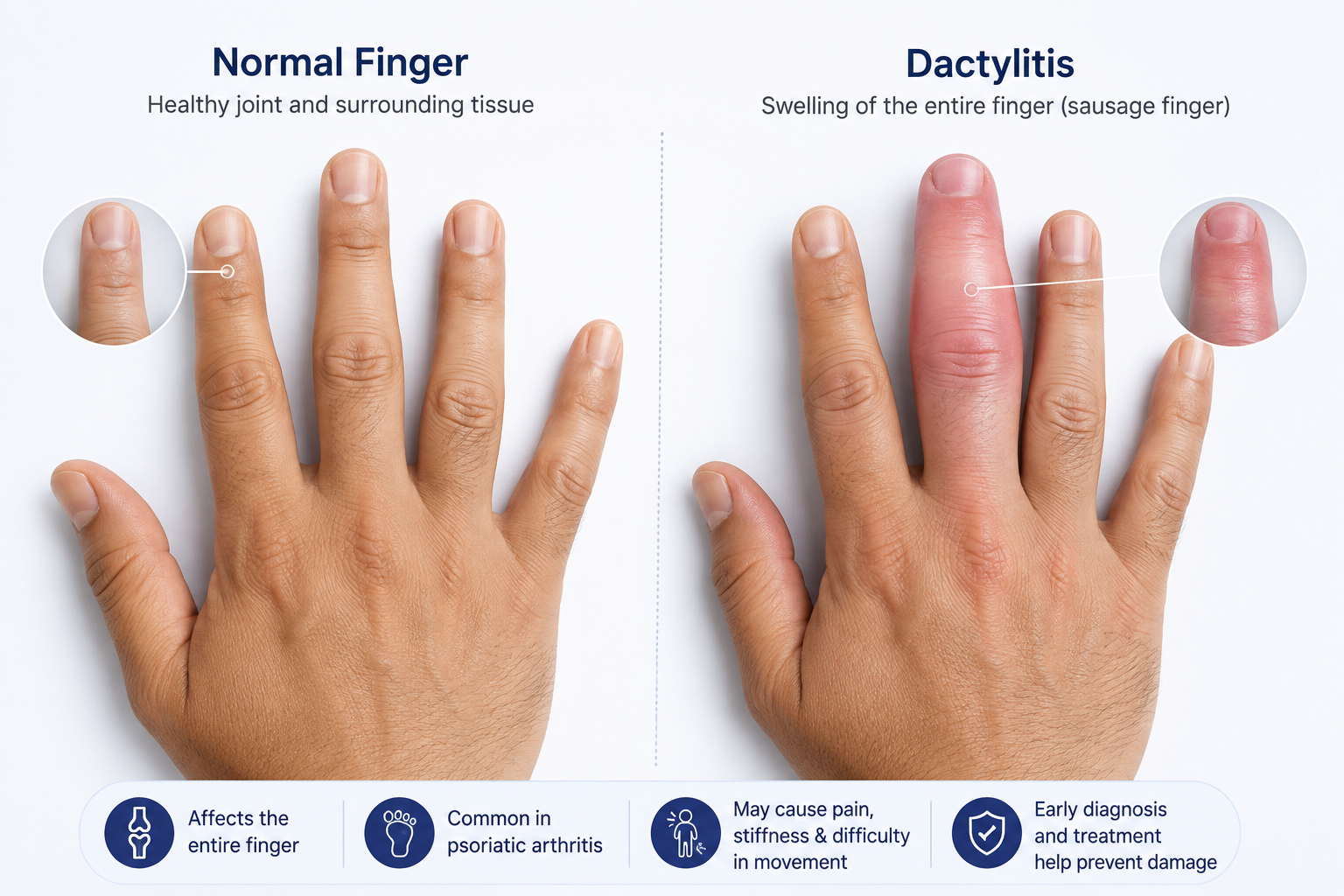
Why Dermatologist-Only Treatment Isn't Enough
A dermatologist can manage the skin side of psoriasis well, but joint inflammation is outside that scope. If nail changes, swollen digits, or stiffness show up alongside psoriasis, the case needs a rheumatologist involved - someone trained to catch and treat the joint component before it advances.
Why Waiting Costs You Joint Function
This is the part that makes early diagnosis urgent: joint damage from psoriatic arthritis is often irreversible once it sets in. Unlike skin flares, which can improve with treatment, eroded joint tissue doesn't regenerate. The window to prevent permanent damage is early, and it closes quietly.
High-Risk Reminder
If you already live with a psoriasis diagnosis and now notice a skin rash and joint pain together, nail changes, or swollen fingers/toes, treat it as a rheumatology issue - not just a dermatology one. Early diagnosis is what protects your joint function long-term.
Treatment Options: Matching the Approach to the Stage
Topical therapy works for mild skin-only psoriasis but does nothing for joint inflammation. Systemic medications treat inflammation throughout the body and are typically the next step once joints are involved. Biologics target specific immune pathways and are usually reserved for moderate to severe cases or when other treatments haven't controlled the disease. Which approach fits depends on how far the disease has progressed, which is why an accurate diagnosis matters before treatment starts.
When Topical Care Stops Being Enough
| Treatment | Best For | Addresses Joint Symptoms |
|---|---|---|
| Topical therapy | Mild, skin-only psoriasis | No |
| Systemic medication | Moderate psoriasis with early joint involvement | Yes |
| Biologics | Moderate to severe disease, inadequate response to other treatment | Yes |
Specialist Rheumatology Care, Now Available in Kutch
Until recently, patients in Kutch with suspected psoriatic arthritis had to travel out of the district for specialist rheumatology care - a real barrier when early diagnosis is what protects joint function. Dr. Devansh J Khandol is the only full-time rheumatologist practicing in Kutch, which means that specialist opinion is now local.
If you have psoriasis and notice nail changes, swollen fingers or toes, or unexplained stiffness - or simply a skin rash and joint pain appearing around the same time - book a consultation with rheumatology care before the joint symptoms progress further.
Don't Wait for Joint Damage to Confirm the Diagnosis
Dr. Devansh J Khandol is the only full-time rheumatologist in Kutch, offering local, specialist psoriatic arthritis care at Swasthya Hospital, Gandhidham.
Book a Rheumatology ConsultationFrequently Asked Questions
Can psoriasis really turn into a joint disease?
Yes. Up to 30% of psoriasis patients develop psoriatic arthritis, where the same immune activity that causes skin symptoms also attacks the joints. Skin symptoms usually appear first, sometimes years before joint involvement starts.
What are the earliest signs of psoriatic arthritis?
Nail pitting, sausage-like swelling in fingers or toes (dactylitis), morning stiffness, and heel pain (enthesitis) are the most common early signs. Catching these early is what makes treatment most effective.
I have a skin rash and joint pain together - what does that mean?
A skin rash and joint pain appearing together, especially if the rash looks like psoriasis, is one of the strongest early indicators of psoriatic arthritis. It shouldn't be treated as two separate issues - a rheumatologist can confirm whether the joint symptoms are linked to the skin condition and start treatment before damage sets in.
Can my dermatologist treat psoriatic arthritis?
A dermatologist manages the skin side of psoriasis, but joint inflammation needs a rheumatologist. If joint symptoms appear alongside psoriasis, that's the point to bring in specialist rheumatology care.
Is joint damage from psoriatic arthritis reversible?
No, joint damage is often permanent once it occurs, unlike skin flares which can improve with treatment. This is why early diagnosis and treatment matter more than they might seem to at first.
What treatment options exist for psoriatic arthritis?
Options range from topical therapy for skin-only cases to systemic medication and biologics for joint involvement. The right approach depends on disease severity and how far it's progressed, which a specialist can assess.
Do I need to travel outside Kutch for a rheumatologist?
Not anymore. Dr. Devansh J Khandol is the only full-time rheumatologist practicing in Kutch, offering local specialist care for psoriatic arthritis and other rheumatology conditions.