

How to Make ORS at Home - The WHO Formula, Dosage, and When to Stop
Two ingredients, one litre of water, and the right timing can prevent a dehydration emergency. Here is exactly how.
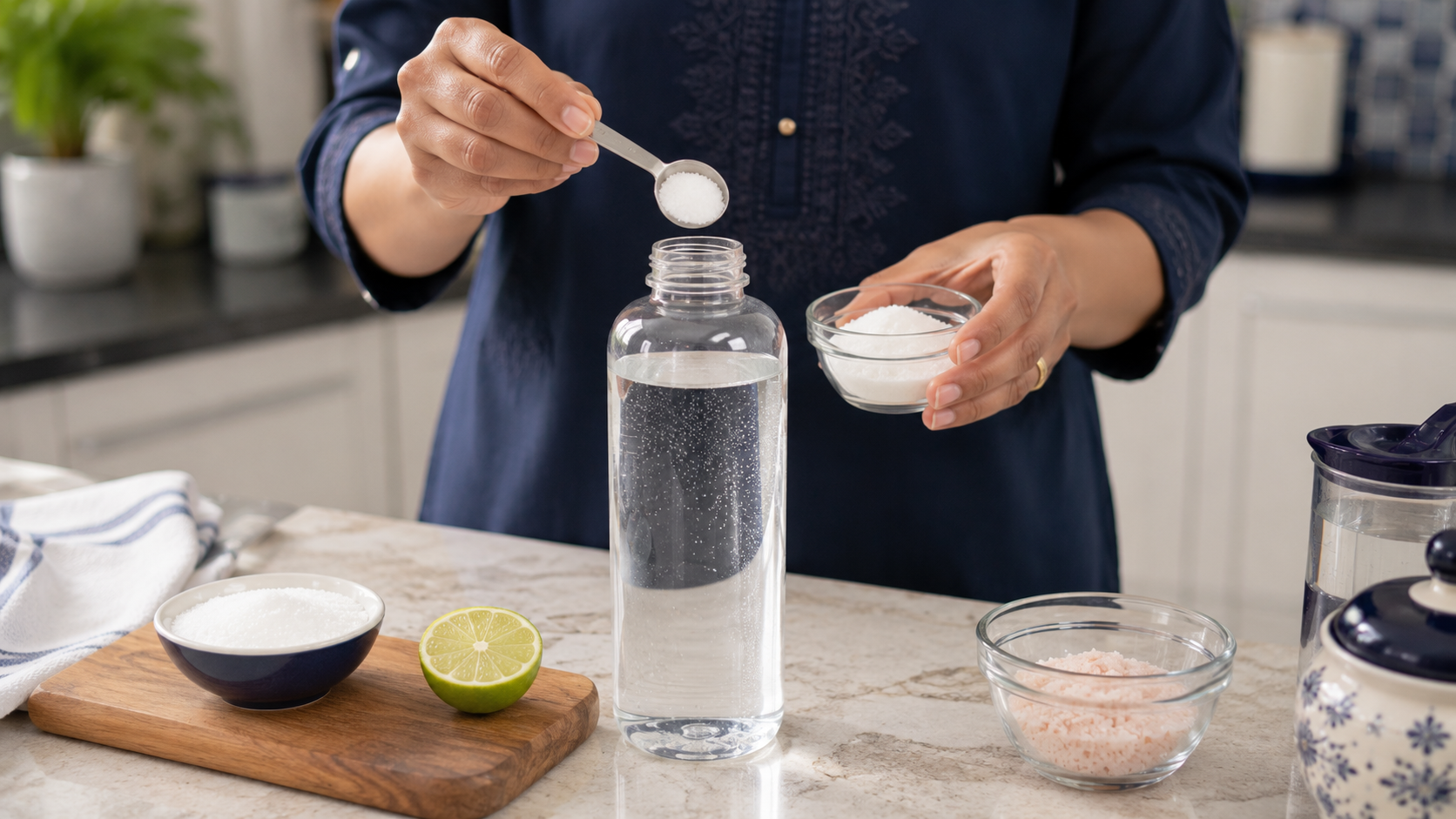
Knowing how to make ORS at home is one of the most practical pieces of medical knowledge any household in India can have - especially during monsoon season, when gastroenteritis, diarrhea, and vomiting cases spike significantly across Kutch and Gandhidham. Oral rehydration solution replaces the water, salt, and sugar the body loses rapidly through loose stools and vomiting. When prepared correctly and given at the right time, it prevents mild to moderate dehydration from becoming a hospital emergency. Made incorrectly, it can make things worse.
What ORS Is and Why It Works
ORS is not just salted water. The specific ratio of glucose to sodium in the solution activates a co-transport mechanism in the intestinal wall that pulls water back into the bloodstream - a process that plain water alone cannot trigger efficiently during active diarrhea. The glucose carries the sodium across the gut lining, and water follows. This is why a correctly prepared ORS works when water alone fails to rehydrate, and why the ratio matters as much as the ingredients.
How to Make ORS at Home - The WHO Formula
You Will Need
- 1 litre of clean drinking water (boiled and cooled is best)
- 6 level teaspoons of sugar (approximately 20g)
- 1/2 level teaspoon of common salt (approximately 3.5g)
Preparation
- Measure exactly 1 litre of clean water into a clean container.
- Add 6 level teaspoons of sugar - use a standard teaspoon, filled level (not heaped).
- Add half a level teaspoon of salt.
- Stir until both are completely dissolved.
- Taste the solution - it should taste like slightly salty tears. If it tastes saltier than that, discard and remake it.
- Use the solution within 24 hours. Discard any unused portion after 24 hours and make a fresh batch.
Important
If a pre-packaged ORS sachet is available from a pharmacy, use that - the electrolyte composition is more precise. The home recipe is for situations where sachets are not immediately available.
How to Use ORS for Diarrhea at Home - Dosage by Age
Making the solution correctly is only half the task. Giving the right amount matters equally.
| Who | How Much Per Loose Stool | How to Give |
|---|---|---|
| Adults | 200–400 ml | Sip steadily over 30–60 minutes |
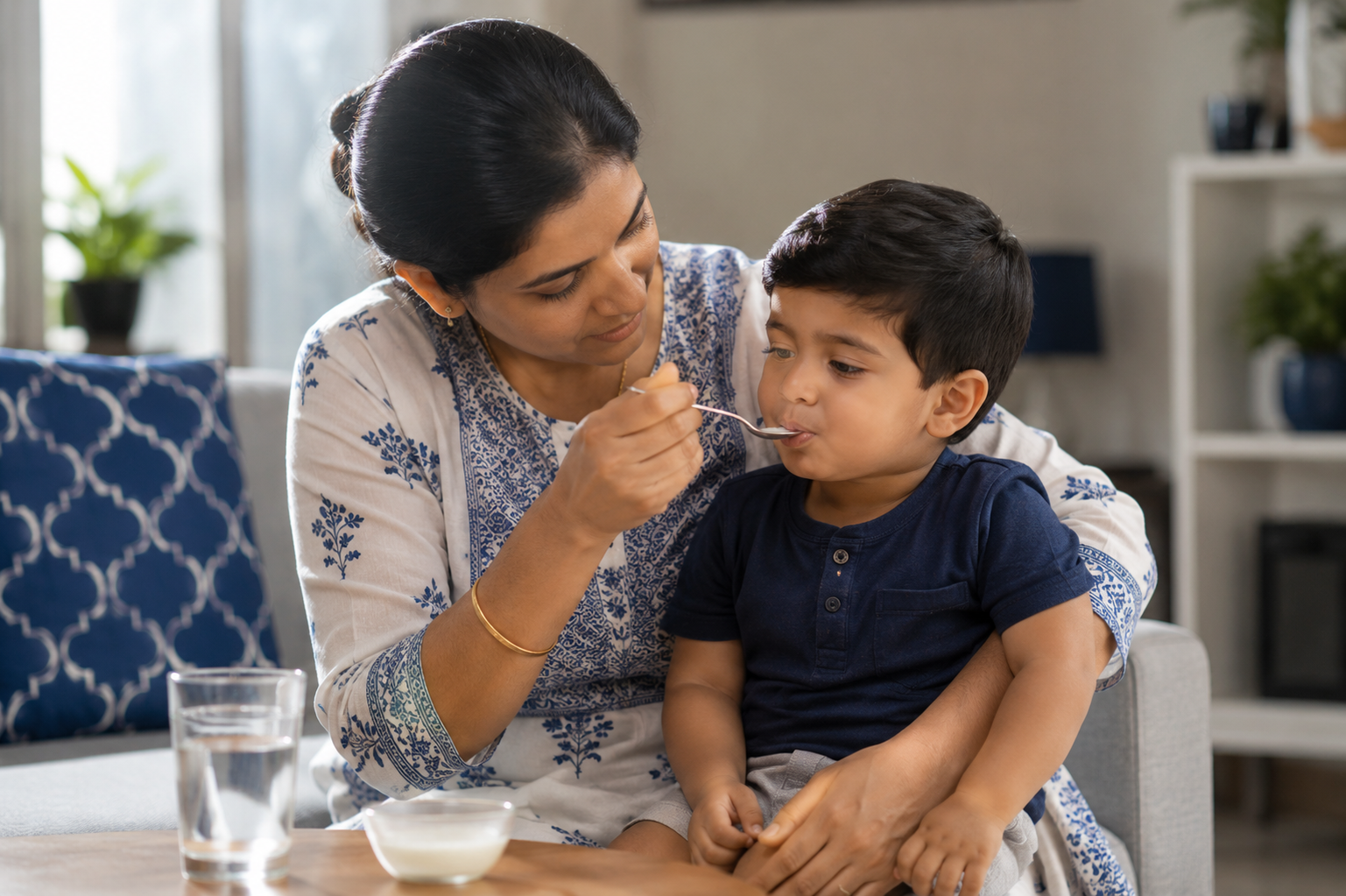
| Children (2–10 years) | 100–200 ml | Small sips every few minutes |
| Children under 2 | 50–100 ml | Teaspoon by teaspoon if needed |
| Infants under 6 months | Continue breastfeeding, consult a doctor | Do not replace feeds with ORS alone |
If the person is vomiting, do not stop ORS - give smaller amounts more frequently. Even a few teaspoons every five minutes adds up and keeps hydration from falling further.
ORS vs Electrolyte Drinks - Not the Same Thing
Sports drinks, coconut water, and commercial electrolyte beverages are not substitutes for ORS during diarrhea. Sports drinks contain far more sugar and far less sodium than the therapeutic ratio requires - the glucose-to-sodium balance in ORS is specific to the gut transport mechanism described above. Coconut water provides potassium but lacks the sodium concentration needed for active rehydration during illness. During a diarrhea episode, use properly prepared ORS or a pharmacy sachet - not a sports drink, not juice, not sweet tea.
Signs of Severe Dehydration - When ORS Is Not Enough
Home ORS management works for mild to moderate dehydration. Stop home treatment and go to hospital immediately if any of the following are present:
Seek Immediate Medical Care If You See:
- Blood or mucus in the stool
- Vomiting so frequent that the person cannot keep ORS down for more than 30 minutes
- No urination for 6 or more hours in adults, 4 hours in children
- Sunken eyes or dry mouth despite taking ORS
- Extreme weakness, confusion, or difficulty staying conscious
- Fever above 39°C (102°F)
- Diarrhea continuing beyond 3 days in adults or 24 hours in a child under 2
These signs indicate that intravenous fluids and medical evaluation are needed - ORS alone will not be sufficient, and continued reliance on it risks worsening diarrhoeal disease outcomes. Swasthya Hospital's Infectious Diseases and Gastroenterology departments manage dehydration, gastroenteritis, and related monsoon illnesses in Gandhidham.
When Home ORS Is Not Enough - Swasthya Hospital, Gandhidham
If dehydration is severe, if vomiting prevents oral intake, or if diarrhea has lasted more than three days, hospital-grade rehydration and a clinical evaluation are needed. Contact Swasthya Hospital's Infectious Diseases or Gastroenterology department in Gandhidham.
Book a Consultation at Swasthya Hospital