
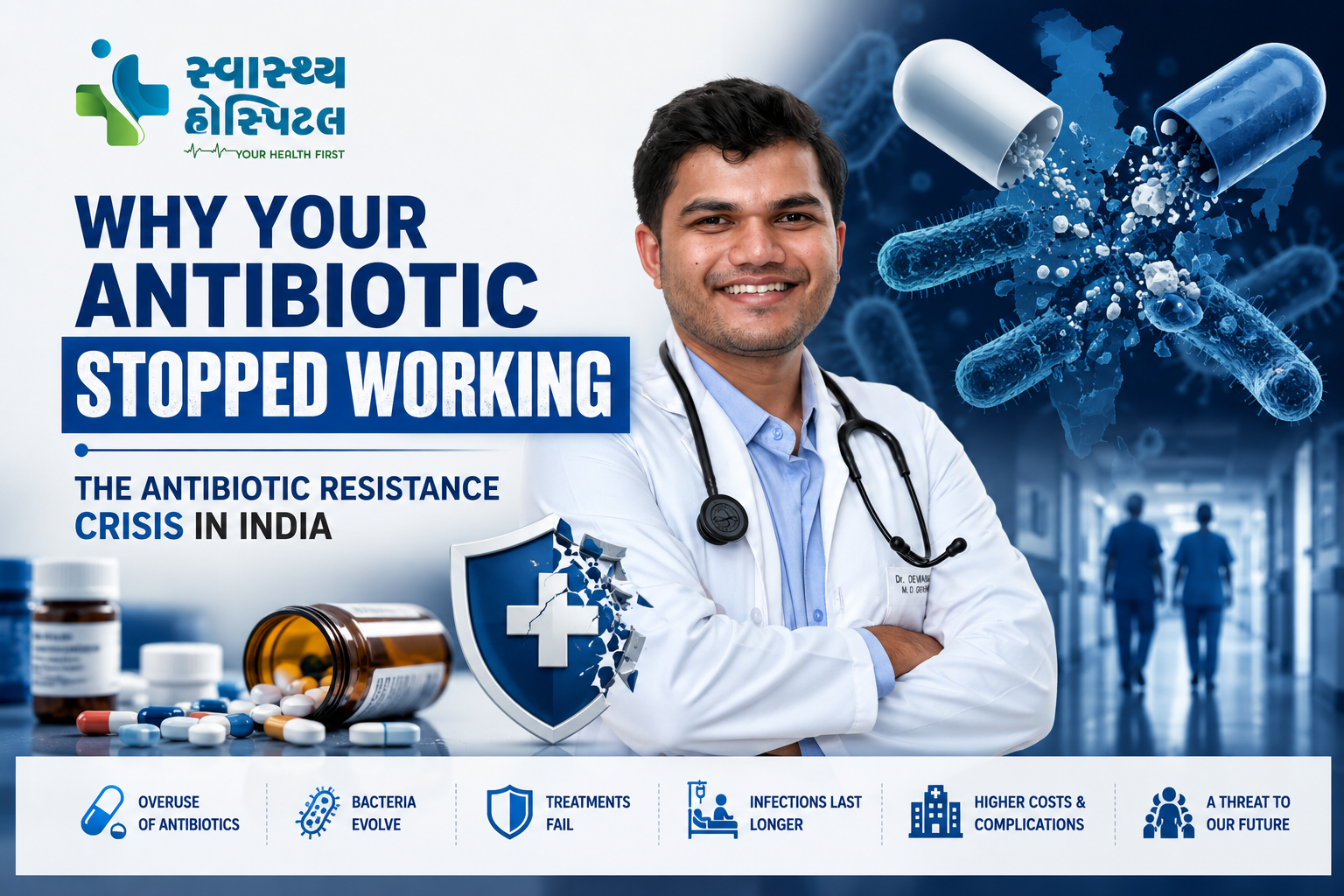
Why Your Antibiotic Stopped Working - The Antibiotic Resistance Crisis in India
India is one of the world's largest consumers of antibiotics. That is directly connected to why they are failing more often.

Antibiotic resistance in India is not a future problem - it is already shaping how infections behave in hospitals, clinics, and homes across the country, including in Kutch. When a patient takes an antibiotic for a fever that turns out to be viral, or stops a course three days in because they feel better, or buys amoxicillin from a chemist without a prescription, they are participating in a process that makes bacteria stronger and medications weaker. This article explains the mechanism clearly, describes what happens when antibiotics stop working, and identifies when a recurring or treatment-resistant infection needs specialist evaluation rather than another round of the same drug.
How Antibiotic Resistance Actually Develops
Bacteria reproduce rapidly - a single bacterium can divide millions of times in 24 hours. In any large bacterial population, some individuals carry random genetic mutations that make them slightly harder to kill. When an antibiotic is introduced, it kills the susceptible bacteria but leaves the resistant ones alive. Those survivors reproduce, passing resistance to their offspring. Repeat this cycle across millions of patients taking incomplete antibiotic courses or using the wrong antibiotic for the wrong infection, and you progressively breed a population of bacteria that the standard drug cannot eliminate.
This is not a failure of the medication - it is evolution responding to selective pressure, a mechanism described in detail by the CDC's explanation of how resistance develops and spreads. And India, with its combination of high antibiotic availability without prescription, widespread self-medication, and high infection burden, provides near-ideal conditions for that pressure to build.
Why Antibiotic Overuse in India Is a Specific Problem
India consumes more antibiotics than any other country by total volume. Several structural factors drive this. Antibiotics are available without prescription at most retail pharmacies - a regulatory gap that allows patients to self-diagnose and self-treat without a culture test or clinical assessment. Doctors under time pressure sometimes prescribe broad-spectrum antibiotics as a precaution rather than waiting for a pathogen-specific result. Patients expect an antibiotic for every fever, sore throat, or loose stool - and discontinue the course once they feel better, which is precisely when resistant survivors are left to multiply.
The result is that India now carries a significant burden of multi-drug resistant (MDR) infections - bacterial infections that do not respond to first-line or even second-line antibiotics and require expensive, limited, and sometimes toxic alternatives.
Signs an Antibiotic Is Not Working
Recognising a treatment failure early matters. Watch for these signs after starting a course:
Warning Signs of Antibiotic Treatment Failure
- Fever that does not begin to reduce after 48–72 hours of the correct antibiotic
- Symptoms that initially improved but returned while still on the course
- New symptoms developing - a spreading skin infection, worsening cough, or increased pain
- A second round of the same antibiotic producing less effect than the first
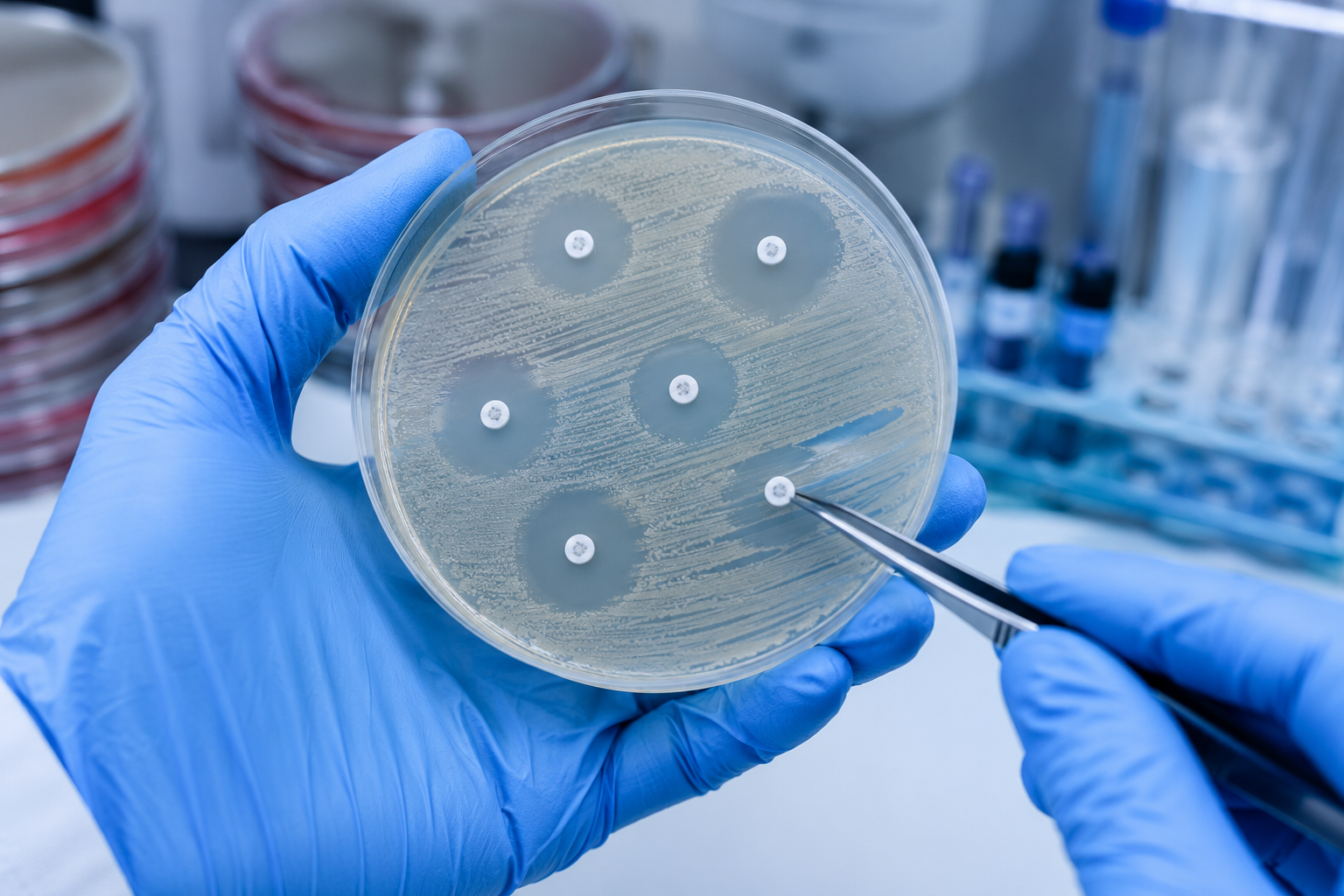
- A laboratory culture result showing resistance to the prescribed drug
None of these mean the infection is untreatable - they mean the chosen antibiotic is not the right one for the organism causing the infection. A culture and sensitivity test (C&S) identifies which drug will actually work, replacing guesswork with a specific answer.
The Viral Infection Trap - The Most Common Source of Antibiotic Overuse
The majority of respiratory infections in India - colds, most sore throats, most coughs, most episodes of fever without a localised bacterial source - are caused by viruses. Antibiotics have no effect on viruses whatsoever, a point Mayo Clinic highlights as one of the most common forms of antibiotic misuse. Taking an antibiotic for a viral illness does not shorten the illness, does not prevent complications in most cases, and does contribute to resistance.
This is the single most common driver of antibiotic overuse in India: treating viral infections with antibiotics because "it might help" or "to prevent it getting worse." It does not help. It does create antibiotic-resistant bacteria in the gut and airways, which become a problem when a bacterial infection actually occurs later.
What Happens When Antibiotics Don't Work - The Real Consequences
When a standard antibiotic fails, treatment options narrow significantly. Second and third-line antibiotics are more expensive, less available, have more side effects, and some require intravenous administration in a hospital setting. For certain resistant organisms - carbapenem-resistant bacteria, for instance, which are increasingly reported across Indian hospitals - treatment options are extremely limited and outcomes are poor.
At the individual level, this means longer illness, higher treatment cost, hospital admission for infections that would once have been managed at home, and in severe cases, death from an infection that was theoretically treatable a decade ago. At the population level, it means infectious disease specialists spending an increasing proportion of their practice managing infections that were once straightforward.
What Correct Antibiotic Use Actually Looks Like
Using antibiotics correctly is not complicated - it requires following a few principles consistently:
Rules for Responsible Antibiotic Use
- Take antibiotics only when prescribed by a doctor following a clinical assessment.
- Complete the full course even if you feel better - stopping early leaves resistant survivors.
- Never use leftover antibiotics from a previous illness.
- Never share antibiotics with a family member.
- Do not request antibiotics for a cold, flu, or viral fever - ask your doctor whether the infection is bacterial before accepting a prescription.
- When an antibiotic is prescribed, ask whether a culture test is needed to confirm the organism and its sensitivity.
When to Seek Specialist Care
For patients in Gandhidham and Kutch with recurring infections, treatment failures, or infections that are not responding to standard antibiotics, a specialist consultation at Swasthya Hospital's Infectious Diseases department can identify the pathogen, guide appropriate therapy, and avoid the cycle of escalating antibiotic use.
Antibiotic Resistance in India - When to See an Infectious Disease Specialist
If an infection has returned after treatment, if antibiotics have repeatedly failed, or if you are unsure whether your current illness actually needs an antibiotic, a proper clinical assessment and culture-based approach makes a significant difference. Swasthya Hospital's Infectious Diseases department in Gandhidham provides pathogen-specific evaluation and evidence-based antibiotic management for complex and recurring infections across Kutch.
Book an Infectious Disease Consultation