
Diwali Sweets, Salt and Blood Pressure: How to Enjoy the Festival Safely
At Diwali the bigger blood pressure risk is often the salty snack box, not the mithai. Keep portions small, watch the namkeen and never skip your tablets.
When it comes to Diwali sweets and blood pressure, the salty snacks in your gift box can matter as much as the sweets. Sweets add sugar and calories, which affect weight and diabetes. Salt, from namkeen, sev, gathiya, chakri, chivda, papad, pickles and packaged farsan, pushes blood pressure up directly. The WHO recommends under 5 g of salt a day. Here is where the hidden salt is, how sweets fit in, and how to enjoy the festival without losing control of your blood pressure.
How Does Salt Raise Blood Pressure?
The WHO calls sodium "a well-established cause of raised blood pressure and increased risk of cardiovascular disease". It recommends adults eat less than 2,000 mg of sodium a day, which is under 5 g of salt, roughly a level teaspoon (WHO, 2026). Indian dietary guidelines also advise keeping added salt to about 5 g a day (ICMR-NIN, 2024).
Most people with high blood pressure feel nothing. The WHO estimates that around 44% of adults with hypertension do not know they have it (WHO, 2025). That makes a festive week of salty food easy to miss until a routine check or a headache gives it away.
Which Diwali Snacks Are Hidden Salt Traps?
Diwali food comes in many forms, and a small handful of salty farsan can add up fast. Exact salt content varies by brand and recipe, so use this as a general guide.
| Snack | Why it is a problem | An easier choice |
|---|---|---|
| Sev, gathiya, chakri, chivda | Salted and deep-fried | Roasted chana, roasted makhana, unsalted nuts |
| Papad and pickles | Very high in salt | Keep to a small piece, or skip |
| Packaged namkeen and gift boxes | Salt, oil and preservatives | Read the label for sodium, choose lower-sodium options |
| Ghughra and samosa | Salt and frying | Baked or air-fried at home with less salt |
| Salted nuts | Salt added | Plain or lightly roasted nuts |
| Chaat and street food with chutneys | Salt in sauces and spices | Fresh fruit chaat with a squeeze of lemon |
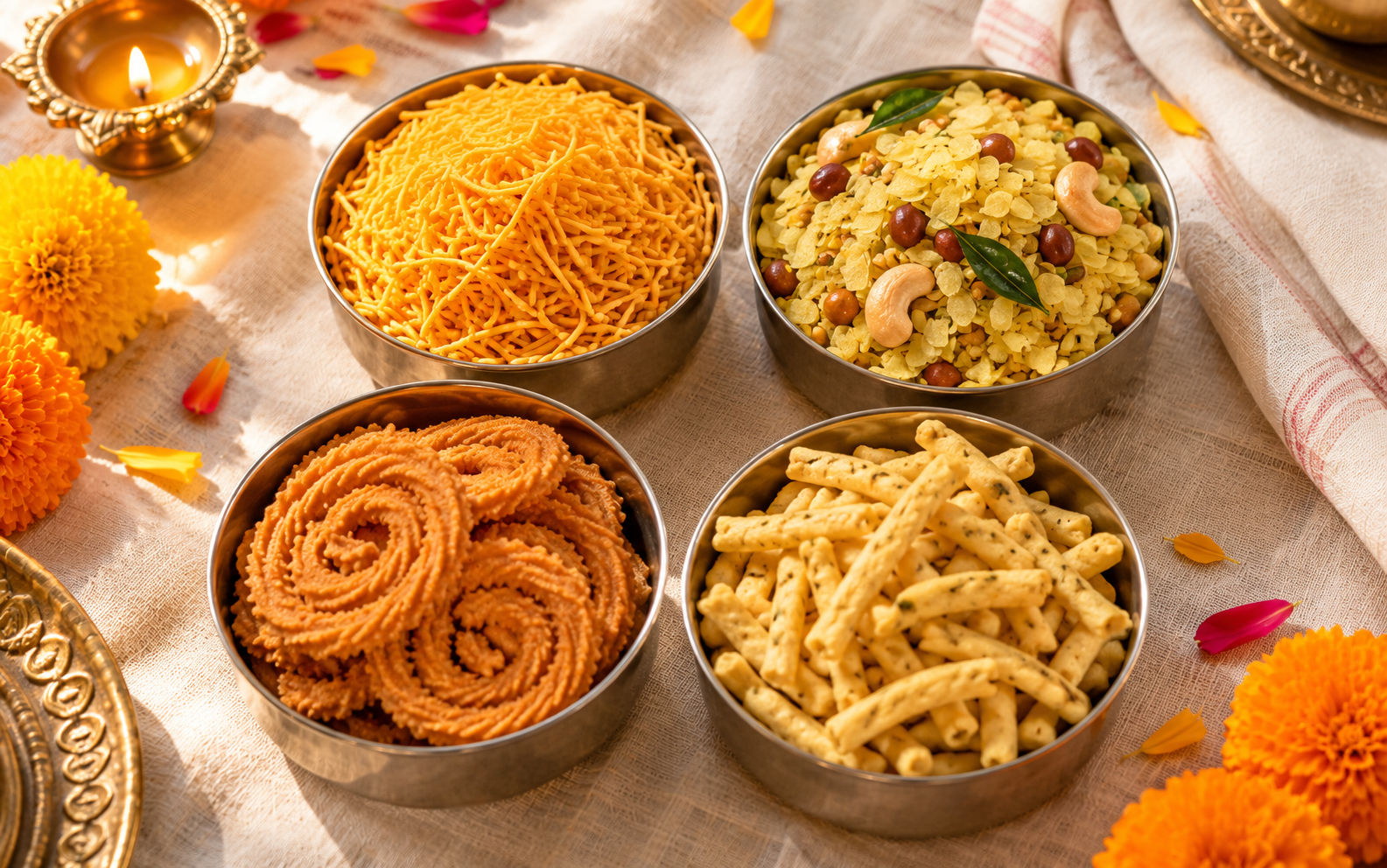
Illustration generated with AI.
Are Diwali Sweets Bad for Blood Pressure?
Sweets do not raise blood pressure as directly as salt, but they matter in other ways:
- Weight gain. Extra weight is a major driver of high blood pressure, and the WHO lists losing weight if overweight as part of managing it (WHO, 2025).
- Blood sugar. If you have diabetes or prediabetes, large portions of mithai can send sugar high. Diabetes and high blood pressure often occur together. See our diabetes risk assessment and endocrinology department.
- Fat and calories. Many sweets are made with ghee, cream and fried dough.
- "Sugar-free" is not a free pass. Sugar-free sweets can still be high in fat and calories, and some cause stomach upset. Treat portions the same way.
You do not need to give up sweets. A small portion, eaten slowly after a proper meal, is a sensible plan for most people. If you have diabetes, ask your doctor what is right for you.
How Can You Enjoy Diwali With High Blood Pressure?
- Eat a normal meal first. Arriving hungry at a table of snacks leads to overeating.
- Use a small plate. Pick two or three favourites and leave the rest.
- One salty snack at a time. Don't graze from the namkeen bowl all evening.
- Read labels. Look at sodium in milligrams and choose lower-sodium options.
- Make some snacks at home with less salt and oil, such as roasted makhana, roasted chana, or baked mathri.
- Drink water rather than sugary or salted drinks.
- Walk for 10 to 15 minutes after meals. The WHO recommends at least 150 minutes of moderate activity a week (WHO, 2025).
- Avoid alcohol and tobacco.
- Keep taking your BP tablets. A festival is not a reason to skip them.
Should You Check Your Blood Pressure During Festive Days?
If you have a home monitor, checking once a day at about the same time is reasonable. Sit quietly for five minutes first, and keep your arm at heart level. Write down the readings. Ask your doctor what your personal target is, and what reading should make you call. If your readings are higher than usual for several days, or you have headaches, swelling or breathlessness, see a doctor rather than waiting for the festival to end. Persistent swelling of the feet can be linked to salt and other causes; read our guide to pedal oedema.
Painkillers can matter too. Anti-inflammatory tablets (NSAIDs) taken for aches or headaches after a heavy week can raise blood pressure. Ask your doctor first if you have high blood pressure.
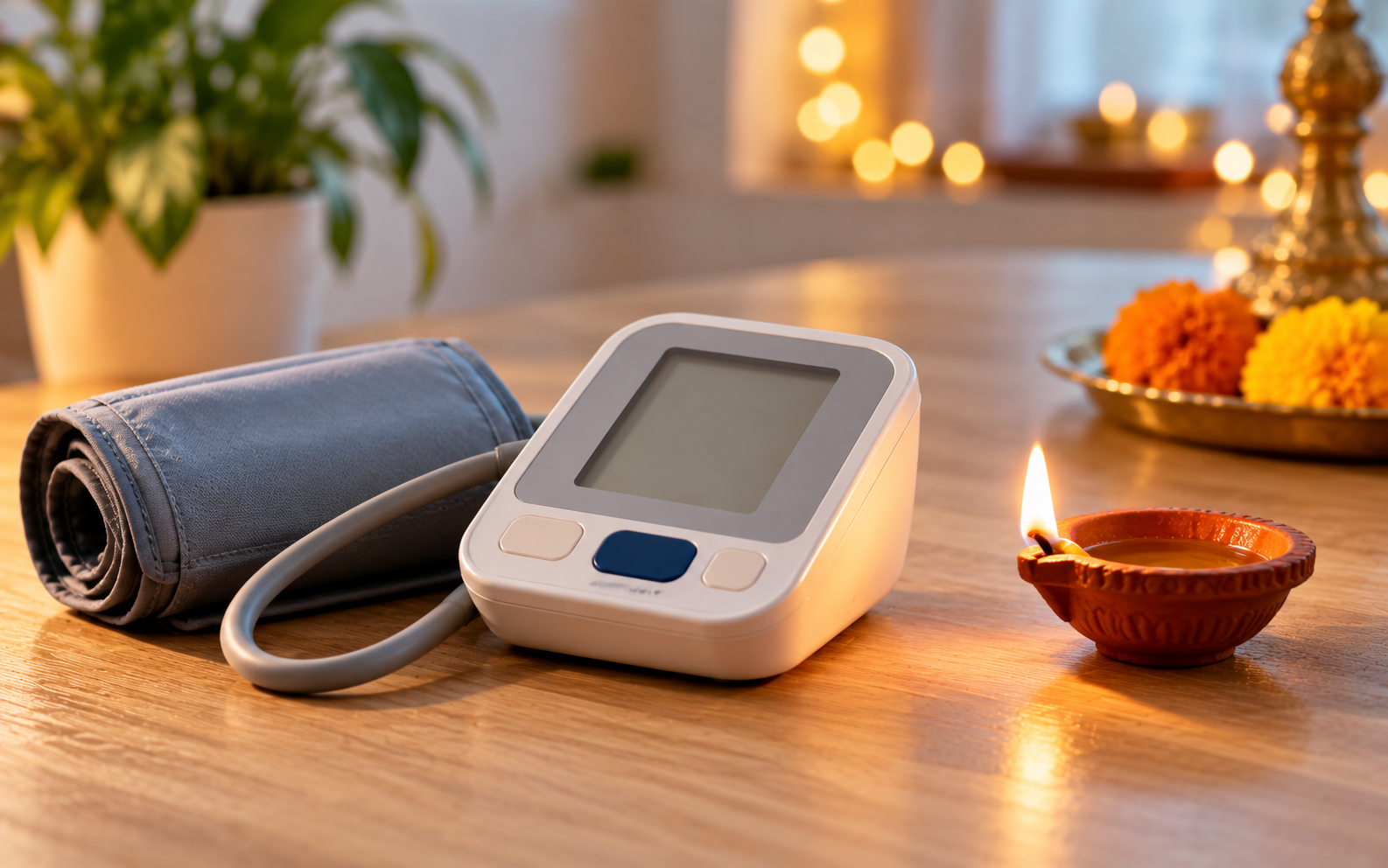
Illustration generated with AI.
Which Warning Signs Mean You Should Not Wait?
Get emergency help (108 or 112) if you have
- Chest pain, pressure or tightness, especially with sweating or breathlessness. See does every chest pain need an ECG.
- A sudden severe headache, confusion, or trouble speaking.
- Weakness or numbness in the face, arm or leg on one side. These can be stroke signs; read about stroke warning signs.
- Severe breathlessness or fainting.
Frequently Asked Questions
Can I eat sweets if I have high blood pressure?
In small portions, yes, for most people. The bigger risks are usually salt, weight and, if you have diabetes, sugar. Ask your doctor about your own limit.
Is rock salt better than table salt at Diwali?
No. It is still sodium chloride. What matters is how much salt you eat in total.
Should I skip my BP tablet if I feel fine during the festival?
No. Feeling fine does not mean your blood pressure is controlled. Keep taking your tablets as prescribed.
How much salt is too much in a day?
The WHO recommends under 5 g a day. Pickles, papad, namkeen and packaged foods can use up much of that quickly.
Questions About Blood Pressure?
If your readings are high or you have symptoms, speak to a doctor. Our cardiology department can advise. The hospital is open 24x7 in Gandhidham.
Contact the HospitalLearn more about our cardiology department. Related reading: Navratri fasting with high BP or heart medication.
- World Health Organization. Salt reduction (fact sheet), 11 May 2026. https://www.who.int/news-room/fact-sheets/detail/salt-reduction
- World Health Organization. Hypertension (fact sheet), 25 September 2025. https://www.who.int/news-room/fact-sheets/detail/hypertension
- ICMR-National Institute of Nutrition. Dietary Guidelines for Indians, 2024 edition. https://nutritionconnect.org/resource-center/dietary-guidelines-indians-2024-edition-icmr-nin