
Knee Pain After Navratri: Why It Happens and When to See a Rheumatologist
Most knee pain after Navratri is overuse and settles within days to about two weeks. Pain that lingers, swells or wakes you at night can mean arthritis that dancing brought to light.
Knee pain after Navratri is usually overuse, and it often settles within a few days to about two weeks with rest and gentle movement. If it is still there after two weeks, if the knee is swollen or warm, or if it hurts at night or stiffens badly in the morning, it may be arthritis or gout that the dancing exposed rather than caused. This guide explains what is likely going on, how to ease it at home, and when a rheumatologist should look at it.
Why Do Your Knees Hurt After Navratri?
After nine nights of Garba and Dandiya, there are a few common reasons:
- Overuse and muscle strain. Muscles around the knee tire, and the joint takes more of the load.
- Irritation at the front of the knee. Repeated bending and bouncing can irritate the area around the kneecap, which feels like an ache when you climb stairs or stand up from a chair.
- Tendon strain. The tendons around the knee can become sore after repeated, unaccustomed activity.
- A flare of existing osteoarthritis. If the cartilage was already worn, hours of impact can set off pain and swelling.
- A first sign of inflammatory arthritis or gout. These conditions can show up for the first time after a burst of activity, a fast or dehydration.
If you want the prevention side, read our guide to protecting your knees while dancing Garba.
How Long Should Knee Pain Last After Garba?
There is no exact rule, because it depends on the cause and on your health, but this is a practical guide:
| Time since the last night | What is usually expected | What to do |
|---|---|---|
| First 2 to 3 days | General soreness, stiffness after sitting | Rest, gentle walking, cold pack |
| Up to about 2 weeks | Gradual improvement | Keep moving gently, avoid heavy impact |
| More than 2 weeks, or getting worse | Not typical for simple strain | See a doctor |
| Any time | Swollen, hot or red knee, fever, can't bear weight | Seek medical care promptly |
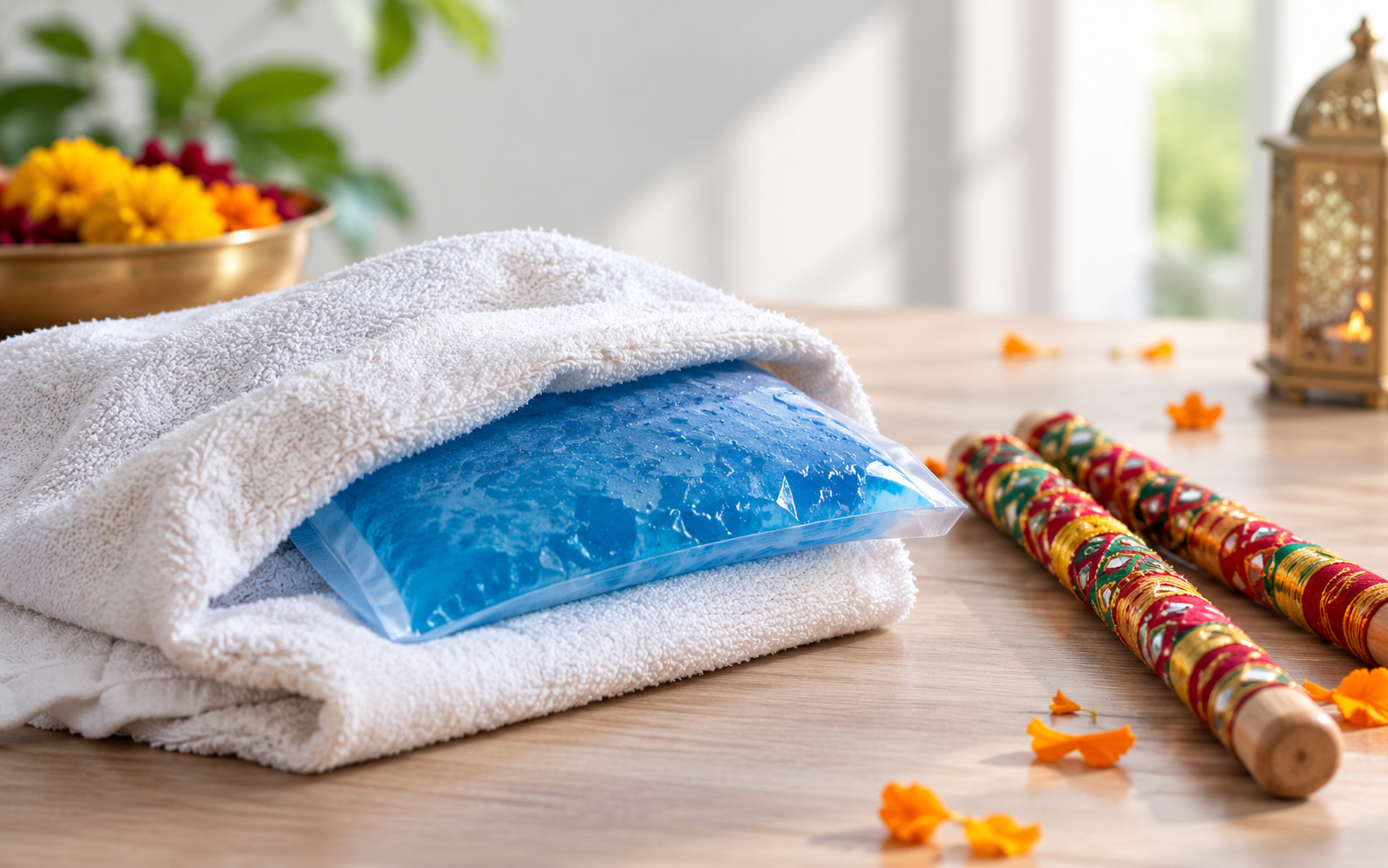
Illustration generated with AI.
What Can You Do at Home to Ease Knee Pain?
For simple overuse, these steps help:
- Relative rest. Skip dancing, running and deep squats for a few days. Keep walking gently so the knee does not stiffen. Movement is usually better than complete rest: a 2024 Cochrane review found that exercise likely reduces pain and improves function in people with knee osteoarthritis, although the certainty of the evidence is low to moderate (Lawford et al., 2024).
- Cold pack. Wrap it in a cloth and apply for 15 to 20 minutes a few times a day if the knee is sore or puffy.
- Supportive footwear. Avoid slippers or high heels while it settles.
- Take stairs one at a time, and sit on a higher chair so you do not have to push up from deep seats.
- Be careful with painkillers. Anti-inflammatory tablets (NSAIDs) can raise blood pressure and irritate the stomach and kidneys. Check with a doctor if you have high blood pressure, kidney disease or acidity, and do not take them for days without advice.
- Stay hydrated. Dehydration and fasting can bring on gout attacks in people who are prone to them.
Could It Be Arthritis or Gout?
Sometimes. The pattern often gives a clue:
| Pattern | More likely cause | Clues |
|---|---|---|
| Ache around the knee after unaccustomed activity, easing over days | Overuse or muscle strain | Gets better with rest, no real swelling |
| Pain deep in the joint, stiffness after sitting, swelling that comes and goes | Osteoarthritis flare | Often in people over 40, past injury or overweight |
| Several joints swollen, morning stiffness lasting long, fatigue | Inflammatory arthritis such as rheumatoid arthritis | Symmetrical joints, stiffness that improves with movement |
| Sudden, very painful, hot, swollen joint, often after fasting or heavy meals | Gout | Often the big toe, but can affect the knee |
| Psoriasis with joint pain or swollen fingers | Psoriatic arthritis | See our guide to psoriasis and psoriatic arthritis |
This table is for understanding, not diagnosis. Many conditions overlap, and a doctor needs to examine you. The World Health Organization notes that the knee is the joint most often affected by osteoarthritis (WHO, 2023).
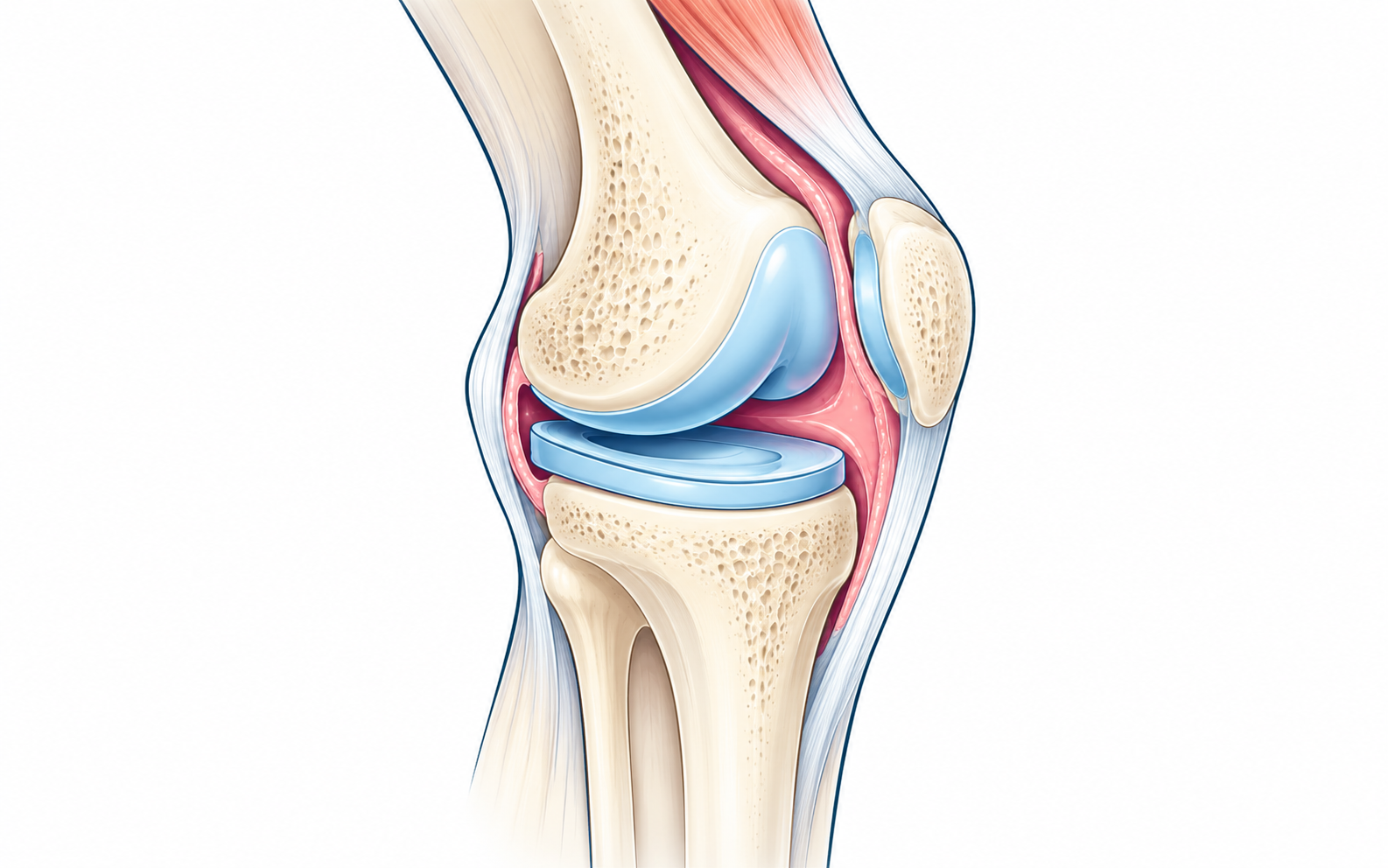
Illustration generated with AI.
When Should You See a Rheumatologist?
Get medical care promptly if
- The knee is hot, red and very swollen, especially with fever.
- You cannot put weight on the leg or the knee locks or gives way.
- You have a sudden, severe painful swollen joint.
- Your calf is swollen, painful and warm on one side.
See a rheumatologist if:
- Pain or swelling lasts more than about two weeks.
- Morning stiffness lasts a long time (longer than about 30 to 60 minutes).
- More than one joint is affected, or both knees or hands are swollen.
- You have fatigue, fever, rash or weight loss along with joint pain.
- The pain wakes you at night or limits everyday activities.
- You have had repeated attacks of a painful swollen joint.
Early assessment matters because inflammatory arthritis responds best when treated early. You can read more about how joints flare with weather and season.
What Happens at a Rheumatology Visit?
A first consultation usually includes:
- A conversation about your symptoms, when they began, what makes them better or worse, and your medicines.
- A joint examination: swelling, warmth, movement and stability.
- Tests if needed, such as blood tests (for example uric acid or markers of inflammation) and an X-ray or ultrasound.
- A plan: exercise and physiotherapy advice, medicines if needed, and follow-up.
Not every visit needs many tests. Sometimes the answer is reassurance and a plan to strengthen the knee.
Frequently Asked Questions
Can dancing cause arthritis?
Dancing does not cause arthritis in most people. But it can make an existing, unnoticed joint problem start to hurt.
Is it safe to keep exercising with sore knees?
Gentle walking is usually fine. Avoid high-impact activity until pain and swelling settle, and see a doctor if they don't.
Should I get an X-ray for knee pain after Garba?
Not always. A doctor decides after examining you. An X-ray is usually considered if pain persists, after an injury, or if arthritis is suspected.
Is knee pain after Navratri an emergency?
Rarely. But a hot, swollen knee with fever, or being unable to bear weight, needs prompt medical care.
Knee Pain That Is Not Settling?
Our rheumatology department can assess persistent knee pain or swelling. The hospital is open 24x7 in Gandhidham.
Contact the HospitalLearn more about our rheumatology department.
- World Health Organization. Osteoarthritis (fact sheet), 14 July 2023. https://www.who.int/news-room/fact-sheets/detail/osteoarthritis
- Lawford BJ, Hall M, Hinman RS, et al. Exercise for osteoarthritis of the knee. Cochrane Database of Systematic Reviews. 2024;(12):CD004376. doi:10.1002/14651858.CD004376.pub4. https://doi.org/10.1002/14651858.CD004376.pub4