
Rheumatology Department – Swasthya Hospital, Gandhidham
Assessment and long-term care for arthritis, gout, back pain and autoimmune conditions at Swasthya Hospital, Gandhidham. Dr. Devansh J. Khandol also visits Bhuj, Bhachau and Rapar, and consults online for patients across Kutch.
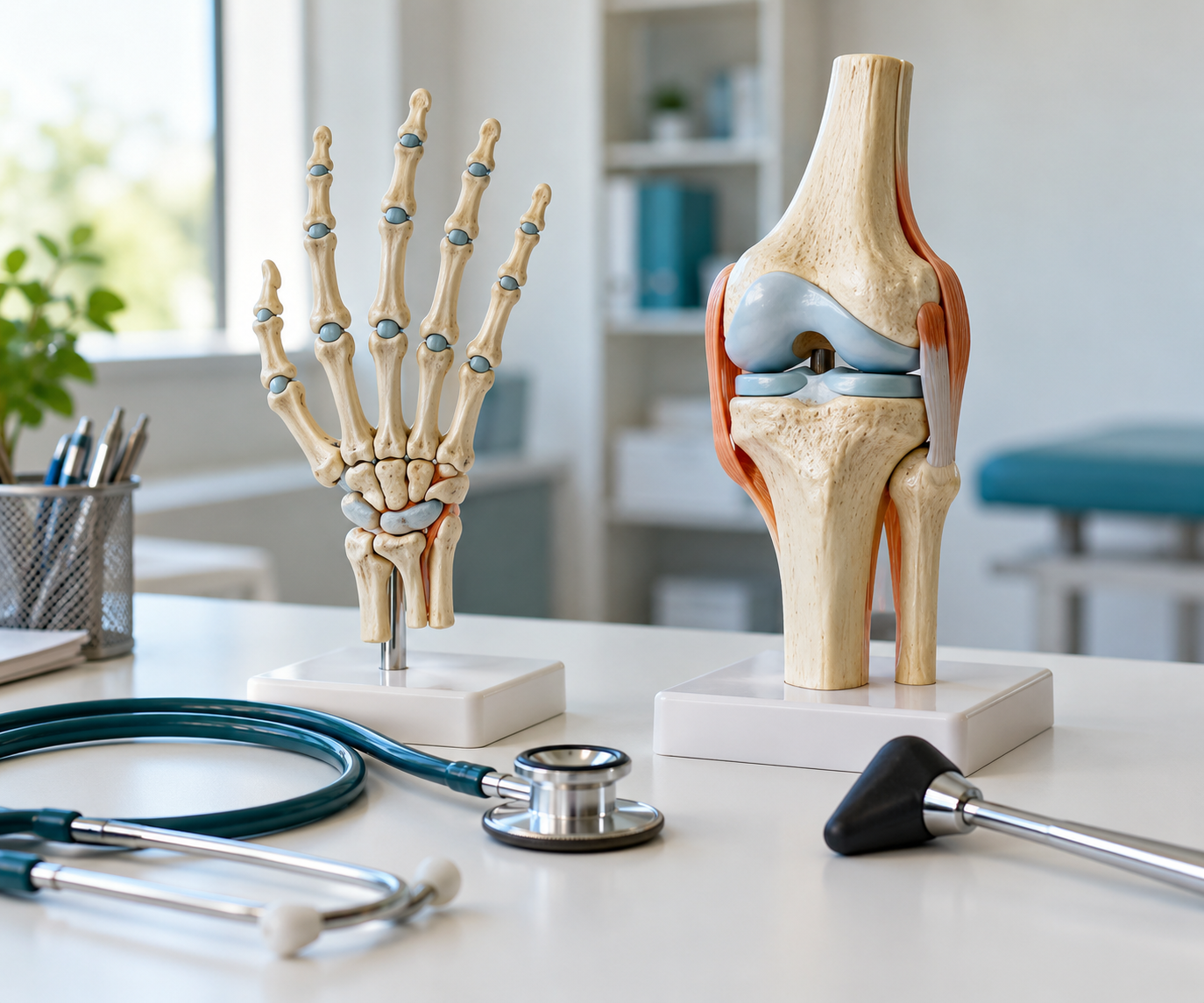
Illustration generated with AI.
Medically reviewed by Dr. Devansh J. Khandol, MBBS, MD, FICC, FIGE, Reg. No. PG/G-39523 (Gujarat Medical Council) · Last updated 23 October 2026
What We Treat
Conditions the Rheumatology Department Treats
Swasthya Hospital's rheumatology department in Gandhidham checks and treats conditions that cause joint pain, swelling and stiffness, from rheumatoid arthritis and gout to back pain in young adults and autoimmune diseases such as lupus. Persistent joint pain deserves a proper diagnosis rather than months of over-the-counter painkillers. The department works from a 5-bed, 24×7 multispecialty hospital in Sector 1/A, Gandhidham, where Dr. Devansh J. Khandol is based. He also visits partner hospitals in Bhuj, Bhachau and Rapar, and patients from anywhere in Kutch can consult him in Gandhidham or online through Eka Care.
Rheumatoid Arthritis
Autoimmune joint inflammation causing pain, swelling and morning stiffness, often in the hands and feet.
Osteoarthritis
Wear-related joint changes, especially in the knees, hips and hands.
Gout
Sudden, painful joint swelling caused by uric acid crystals, often in the big toe.
Ankylosing Spondylitis
Inflammation of the spine and pelvic joints causing back pain and stiffness, usually starting in young adults.
Psoriatic Arthritis
Joint inflammation in people with psoriasis, sometimes with swollen fingers or toes.
Lupus (SLE)
An autoimmune disease that can affect the joints, skin, kidneys and other organs.
Sjögren's Syndrome
An autoimmune condition causing dry eyes, dry mouth and joint pain.
Fibromyalgia
Widespread muscle and joint pain with fatigue and poor sleep.
Vasculitis
Inflammation of blood vessels, with joint and whole-body symptoms.
Reactive Arthritis
Joint inflammation that follows an infection.
Choosing the Right Specialist
Rheumatologist or Orthopaedic Doctor: Who Should You See?
See a rheumatologist when joint pain may be caused by inflammation or the immune system: swelling in several joints, long morning stiffness, gout attacks, or joint pain with rashes or fever. See an orthopaedic doctor for injuries, fractures and structural problems that may need surgery. Many people need both at different stages.
A rheumatologist looks after
- Inflammatory and autoimmune causes of joint pain
- Diagnosis through examination, blood tests and imaging
- Treatment mainly with medicines, exercise advice and monitoring
- Long-term follow-up of chronic conditions
An orthopaedic doctor looks after
- Injuries, fractures, ligament and tendon problems
- Structural joint damage
- Procedures and surgery such as joint replacement
- Rehabilitation after surgery
Warning Signs
Signs It Is Time to See a Rheumatologist
Joint pain after a long day usually settles. These patterns are worth a specialist assessment:
- Joint stiffness in the morning that lasts longer than 30 minutes (NHS, 2023)
- Pain and swelling in the same joints on both sides of the body, often the small joints of the hands and feet (NHS, 2023)
- A suddenly hot, swollen and very painful joint, such as the big toe (NHS, 2023)
- Back pain and stiffness that began when you were a teenager or young adult (NHS, 2023)
- Swollen fingers or toes, or nail pitting, if you have psoriasis (NHS, 2023)
- Joint pain together with fever, rashes, mouth ulcers or unexplained weight loss
Diagnosis
How a Rheumatology Diagnosis Works
History and examination
The doctor asks when the pain started, which joints are involved, how long morning stiffness lasts and about skin, eye, bowel or other symptoms, then examines the joints.
Blood tests
Depending on the picture: ESR and CRP (inflammation), rheumatoid factor and anti-CCP, ANA and anti-dsDNA, uric acid and a complete blood count. Samples can be collected at the hospital, or at home in Gandhidham, Adipur and Anjar.
Imaging and joint fluid
X-ray, ultrasound or MRI is arranged by referral when needed, and joint fluid may be tested where indicated, for example to confirm gout.
A treatment plan
Results are interpreted together with your history, not in isolation, and you leave with a plan for medicines, exercise and follow-up.
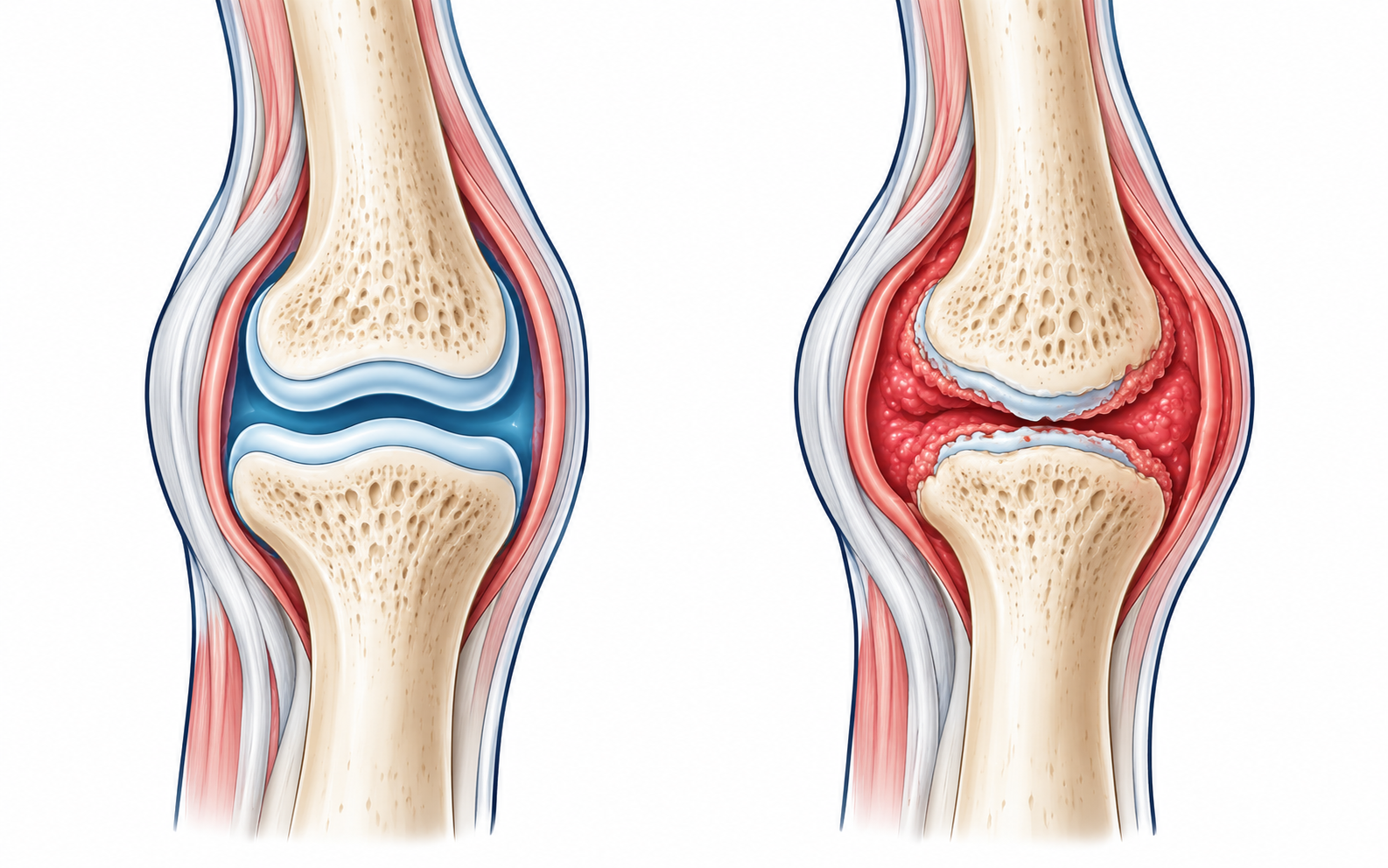
Illustration generated with AI.
Treatment
Treatment and Long-Term Follow-Up
Many rheumatic conditions are long-term, so the aim is to control inflammation early and protect the joints. For rheumatoid arthritis, disease-modifying medicines (DMARDs) such as methotrexate ease symptoms and slow the disease, but it can take a few months to notice them working, and methotrexate needs regular blood tests because it can affect blood cells and the liver (NHS, 2023).
Painkillers bought over the counter can hide symptoms without treating the cause. Anti-inflammatory painkillers (NSAIDs) can occasionally cause serious side effects, including stomach bleeding and kidney problems, and are not recommended together with some other medicines (NHS, 2026). Ask a doctor before taking them regularly.
For osteoarthritis, exercise and a healthy weight are central, and the WHO recommends reducing overuse of joints as part of prevention (WHO, 2023). Follow-up can be in person at the hospital, at a visiting OPD, or by online consultation.
Qualifications
Who Runs the Rheumatology Clinic
The rheumatology clinic is run by Dr. Devansh J. Khandol, a physician at Swasthya Hospital, Gandhidham. His qualifications and registration:
- MBBSGCS Medical College, Hospital & Research Centre, Ahmedabad (2020)
- MD, General MedicineDr. D. Y. Patil Medical College, Hospital & Research Centre, Pune (2025)
- FellowshipsClinical Cardiology (Indian Association of Clinical Cardiologists); Gastroenterology; 2D Echocardiography (Sahyadri Hospital)
- Rheumatology trainingObservership in Rheumatology, SVP Hospital, Ahmedabad
- RegistrationReg. No. PG/G-39523, Gujarat Medical Council
Areas We Serve
Rheumatology Care Across Kutch
The department works from the hospital in Gandhidham and holds visiting OPDs at partner hospitals in Bhuj, Bhachau and Rapar.
| Town | Where | When |
|---|---|---|
| Gandhidham | Swasthya Hospital, Sector 1/A (Dr. Khandol's own hospital) | Monday to Sunday, 9 AM-9 PM; hospital open 24×7 |
| Bhuj | MMPJ Hospital (visiting OPD) | 1st Friday, 9 AM-12 PM |
| Bhachau | Vagad Welfare Hospital (visiting OPD) | 1st & 3rd Wednesday, 12-2 PM |
| Rapar | Sushrusha Hospital (visiting OPD) | 1st & 3rd Wednesday, 9-11 AM |
| Anywhere in Kutch | Online consultation through Eka Care | By appointment |
One number for appointments at every location: +91 81607 10208.
Visit the Department
Where to Find Swasthya Hospital
Questions About Rheumatology
Frequently Asked Questions
Do I need a referral to see the rheumatology department?
How long does rheumatoid arthritis treatment take to work?
Are pharmacy painkillers safe for long-standing joint pain?
Can gout be treated at Swasthya Hospital?
Can I consult online?
Which towns does the department serve?
Questions About Joint Pain?
Contact the hospital to ask about rheumatology consultations for patients across Kutch: timings and visiting-OPD dates, or consult Dr. Khandol online through Eka Care. One number for every location.
- NHS. Rheumatoid arthritis: symptoms. Page last reviewed 8 March 2023. https://www.nhs.uk/conditions/rheumatoid-arthritis/symptoms/
- NHS. Rheumatoid arthritis: treatment. Page last reviewed 8 March 2023. https://www.nhs.uk/conditions/rheumatoid-arthritis/treatment/
- NHS. Gout. Page last reviewed 24 August 2023. https://www.nhs.uk/conditions/gout/
- NHS. Ankylosing spondylitis. Page last reviewed 5 January 2023. https://www.nhs.uk/conditions/ankylosing-spondylitis/
- NHS. Psoriatic arthritis. Page last reviewed 6 September 2023. https://www.nhs.uk/conditions/psoriatic-arthritis/
- World Health Organization. Osteoarthritis (fact sheet), 14 July 2023. https://www.who.int/news-room/fact-sheets/detail/osteoarthritis
- NHS. NSAIDs. Page last reviewed 28 April 2026. https://www.nhs.uk/medicines/nsaids/