
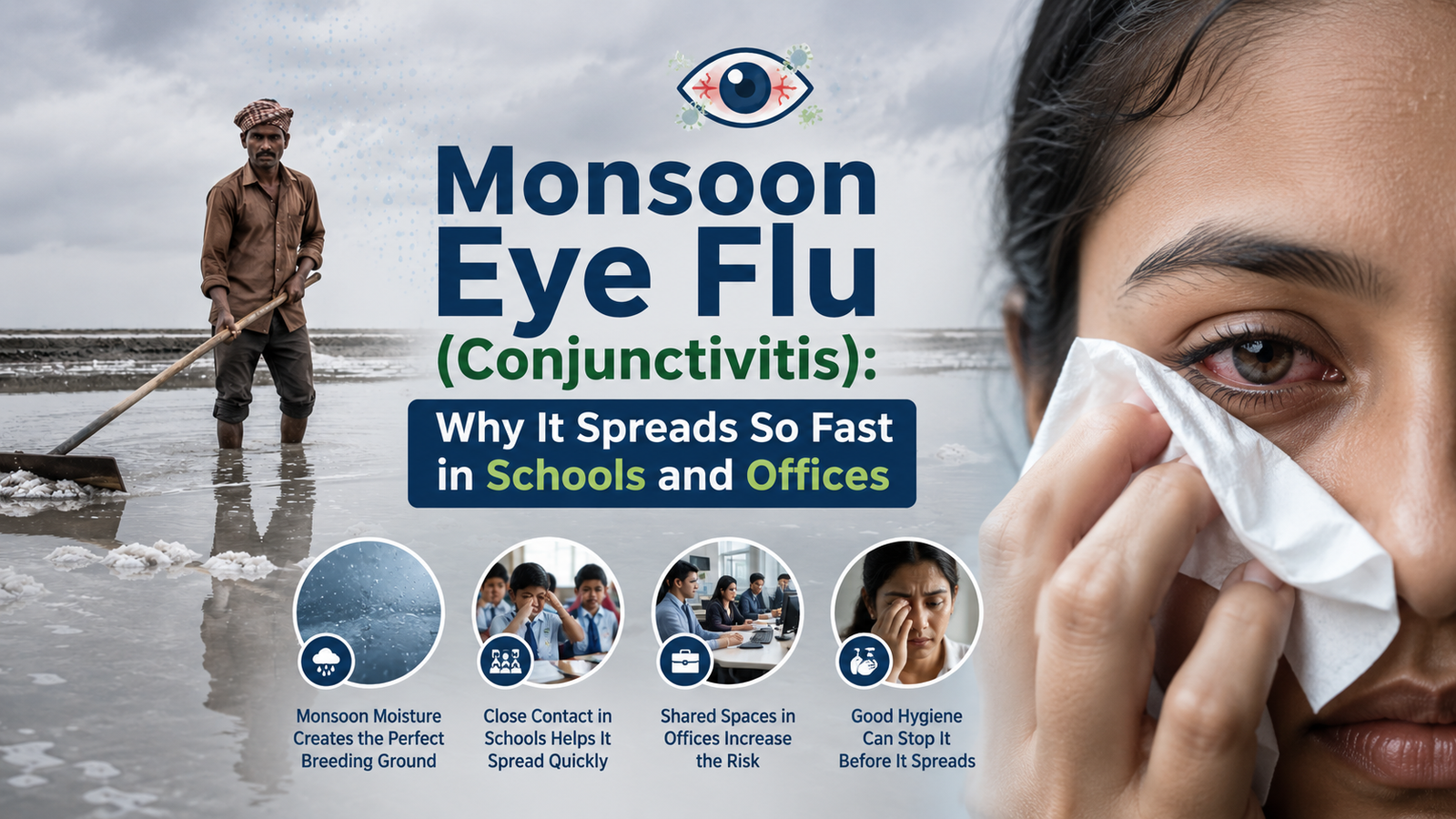
Monsoon Eye Flu (Conjunctivitis): Why It Spreads So Fast in Schools and Offices
Eye flu spreads through contaminated hands and shared items, not eye contact. Know the symptoms, home care basics, and when to see a doctor.

Eye flu cases climb every monsoon, and schools and offices are exactly the settings where it spreads fastest. Understanding how it actually transmits is the difference between containing it and passing it around for weeks.
What's Actually Happening: Viral Conjunctivitis
Eye flu is typically viral conjunctivitis, an inflammation of the thin membrane covering the white of the eye and inner eyelid. Humid, crowded indoor settings like classrooms and offices create ideal conditions for it to move from person to person quickly, especially where surfaces and shared items get touched throughout the day.
Recognizing the Symptoms
Redness, watering, a gritty or sandy sensation, discharge, and eyelid swelling are the hallmark signs. Symptoms usually start in one eye and often spread to the other within a day or two.

How It Actually Spreads (And What Doesn't Cause It)
Eye flu spreads through contact with contaminated surfaces, hands touching the eyes after touching something infected, and shared items like towels or pillows. It does not spread through eye contact or simply looking at someone — a common myth that leads to unnecessary anxiety without addressing the real transmission routes.
Eye Flu: Myth vs. Fact
| Transmission Route | Does It Spread Eye Flu? |
|---|---|
| Touching contaminated surfaces, then the eyes | Yes |
| Sharing towels or pillows | Yes |
| Eye contact / simply looking at an infected person | No — common myth |
Home Care vs. When to See a Doctor
Mild cases often improve with basic home care: cold compresses, avoiding eye rubbing, and frequent hand-washing. See a doctor if there's severe pain, changes in vision, or sensitivity to light — these go beyond typical eye flu and need proper evaluation rather than home management.
Household Reminder
Children and elderly household members are most likely to pick up eye flu through shared towels, pillows, or touched surfaces at home. Once one person in the household is infected, treat shared items as a transmission risk for everyone else, not just the person showing symptoms.
Preventing Spread at Home and Work
- Frequent hand-washing
- Avoiding shared towels or pillows
- Disinfecting commonly touched surfaces
- Keeping infected individuals home from school or work until symptoms clear
In shared spaces like offices and classrooms, these basics matter more than any single treatment.
Why Random Eye Drops Can Make It Worse
Self-medicating with whatever eye drops are on hand, especially steroid drops, can worsen viral conjunctivitis or mask a more serious underlying issue. Steroid drops in particular are not something to self-prescribe for eye flu — they require a doctor's evaluation first.
Don't Guess Your Way Through Eye Flu
If your symptoms include severe pain, vision changes, or light sensitivity, or if home care isn't improving things within a few days, it's time to see a doctor rather than try another over-the-counter drop. Swasthya Hospital's infectious disease team can evaluate what's actually going on and guide the right treatment. Book a consultation if eye flu in your household isn't clearing up on its own.
Eye Flu Not Clearing Up on Its Own?
Swasthya Hospital's infectious disease team offers evaluation and treatment guidance for eye flu in Gandhidham, Kutch.
Book an Infectious Disease ConsultationFrequently Asked Questions
What causes eye flu during monsoon?
Eye flu is usually viral conjunctivitis, and humid, crowded indoor settings like schools and offices accelerate its spread. Contaminated surfaces and shared items are the main transmission routes during outbreaks.
Can you catch eye flu just by looking at someone?
No, this is a common myth. Eye flu spreads through contact with contaminated surfaces or hands touching the eyes, not through eye contact or proximity alone.
What are the main symptoms of eye flu?
Redness, watering, a gritty sensation, discharge, and eyelid swelling are the typical signs. Symptoms often start in one eye and spread to the other within a day or two.
When should I see a doctor for eye flu instead of treating it at home?
See a doctor if you have severe pain, vision changes, or light sensitivity, or if home care isn't improving symptoms within a few days. These signs go beyond a typical case and need evaluation.
Is it safe to use steroid eye drops for eye flu?
No, not without a doctor's evaluation. Self-medicating with steroid drops can worsen viral conjunctivitis or mask a more serious problem instead of treating it correctly.
How do I stop eye flu from spreading at home or work?
Frequent hand-washing, avoiding shared towels or pillows, disinfecting commonly touched surfaces, and staying home while symptomatic all meaningfully reduce spread in shared spaces.