
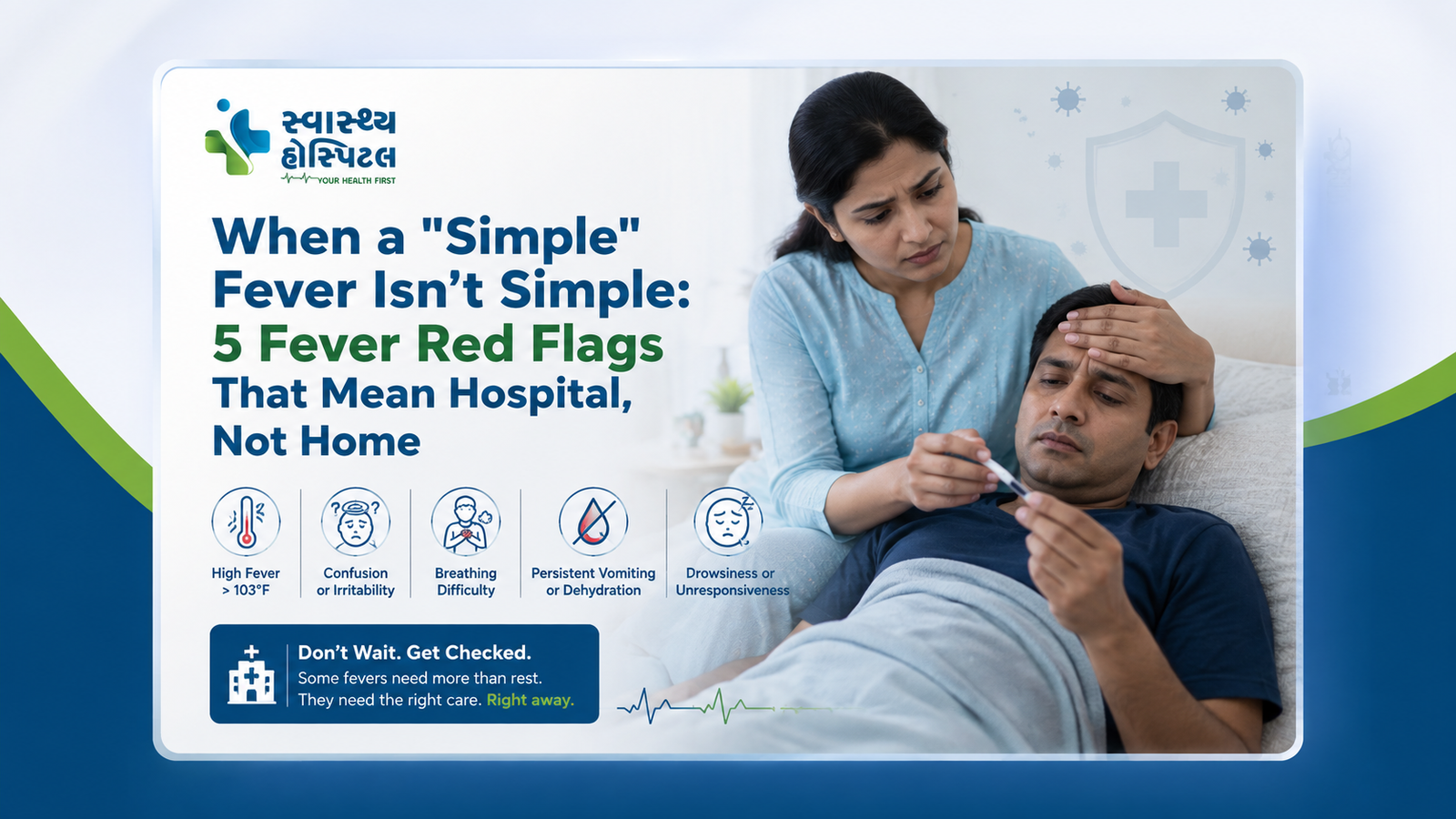
When a "Simple" Fever Isn't Simple: 5 Fever Red Flags That Mean Hospital, Not Home
Not every fever is simple. Learn the 5 fever red flags for dengue, malaria, typhoid, and leptospirosis that mean it's time for hospital care.

Most fevers are viral, self-limiting, and fine to ride out at home. These five fever red flags are the exceptions — and they show up across dengue, malaria, typhoid, and leptospirosis, all of which are common during monsoon season.
Why "It's Just a Fever" Isn't Always True
A typical viral fever eases within a couple of days with rest and fluids. Dengue, malaria, typhoid, and leptospirosis can all start the exact same way, which is why the first few days of any fever deserve real attention rather than automatic reassurance.
The 5 Fever Red Flags You Shouldn't Ignore
1 Fever Lasting More Than 3 Days Without Improvement
Most viral fevers peak and start easing within 48 to 72 hours. A fever that's still climbing or unchanged past day three is a signal to get evaluated rather than wait it out further.
2 Severe Abdominal Pain, Persistent Vomiting, or Can't Keep Fluids Down
This combination raises dehydration risk fast and can point to typhoid or a dengue complication. Inability to keep fluids down isn't something to manage at home past the first attempt.
3 Bleeding, Bruising, or Blood in Urine or Stool
This is a specific dengue warning sign, linked to dropping platelet counts. Any unexplained bleeding or bruising alongside fever needs same-day evaluation, not observation.
4 Severe Muscle Pain with Red Eyes or Yellowing Skin
This combination points toward leptospirosis, especially with recent floodwater exposure. Muscle pain concentrated in the calves, paired with red eyes or jaundice, is not typical viral fever behavior.
5 Confusion, Extreme Drowsiness, Difficulty Breathing, or a Drop in Urine Output
These are signs the body is struggling at an organ level, whether from severe dengue, typhoid complications, or leptospirosis affecting the kidneys or lungs. None of these should be monitored at home.

Fever Red Flags at a Glance
| Red Flag | Possible Cause |
|---|---|
| Fever lasting more than 3 days | Typhoid, dengue, or malaria |
| Severe abdominal pain, persistent vomiting | Typhoid or dengue complication |
| Bleeding, bruising, blood in urine/stool | Dengue (dropping platelets) |
| Severe muscle pain with red eyes or jaundice | Leptospirosis |
| Confusion, breathing difficulty, low urine output | Organ involvement (severe dengue, typhoid, leptospirosis) |
Why These Signs Mean Hospital, Not Home Care
None of these five red flags are things a wait-and-see approach handles well. Each one points to a specific complication, from dehydration to organ involvement, where the gap between early treatment and delayed treatment often determines how serious things get. If even one applies to you, that's the signal to stop self-managing.
Know the Disease Behind the Fever
Fever with the right combination of red flags usually points to a specific cause. If you're seeing bleeding or bruising alongside fever, read our breakdown of dengue vaccine approval and dengue risk in India. If you've had recent floodwater exposure with muscle pain and red eyes, see our detailed guide on leptospirosis symptoms and risk.
If a Red Flag Applies to You, Act Now
Fever red flags exist because some fevers genuinely can't wait. If you're seeing any of the five signs above, don't spend another day monitoring at home — get to Swasthya Hospital's infectious disease team for evaluation. Early assessment is what keeps a serious fever from becoming a hospital admission for something worse.
Fever Not Improving Past Day 3?
Swasthya Hospital's infectious disease team offers same-day evaluation for fever red flags in Gandhidham, Kutch.
Book an Infectious Disease ConsultationFrequently Asked Questions
How long should a normal fever last before I worry?
Most viral fevers ease within 2 to 3 days. A fever lasting longer than 3 days without improvement is one of the key fever red flags that warrants evaluation.
Is vomiting with a fever always serious?
Not always, but persistent vomiting or inability to keep fluids down raises dehydration risk quickly and can signal typhoid or a dengue complication. This combination needs same-day medical attention.
What does bleeding or bruising with a fever usually mean?
It's a specific warning sign associated with dengue, often linked to a drop in platelet count. Any unexplained bleeding or bruising alongside fever should be evaluated the same day.
Why do muscle pain and red eyes together matter?
This combination, especially with recent floodwater exposure, points toward leptospirosis rather than a typical viral fever. It's one of the clearest red flags tied to a specific, treatable cause.
What does confusion or difficulty breathing during a fever indicate?
These are signs the body is struggling at an organ level, which can occur with severe dengue, typhoid, or leptospirosis complications. This red flag always warrants immediate hospital care.
Should I go to the hospital if I only have one red flag?
Yes. Even one fever red flag is enough reason to seek evaluation rather than wait to see if others develop. Early assessment is what prevents complications from progressing further.