

Isabgol Benefits: Who Should Take It, How Much, and When?
Isabgol eases constipation for most adults when taken correctly - but it isn't right for everyone, and taking more when it "isn't working" can make things worse.
Isabgol - the husk of the Plantago ovata seed, also called psyllium husk - is a soluble fibre supplement that works well for most adults with occasional or mild chronic constipation, hemorrhoids, or IBS with constipation, provided it's taken with enough water and at a sensible dose. It is not right for everyone, though, and simply taking more when it "isn't working" can sometimes make symptoms worse rather than better. Here's who should take isabgol, how much, when to take it, and when to stop self-treating and get checked instead.
What Is Isabgol and How Does It Work in the Gut?
Isabgol is made from the outer husk of psyllium seeds - a crop grown almost entirely in North Gujarat, where Sidhpur and Unjha together supply the majority of the world's psyllium husk. That makes isabgol a genuinely local product for a Kutch-based reader, not just an imported wellness trend.
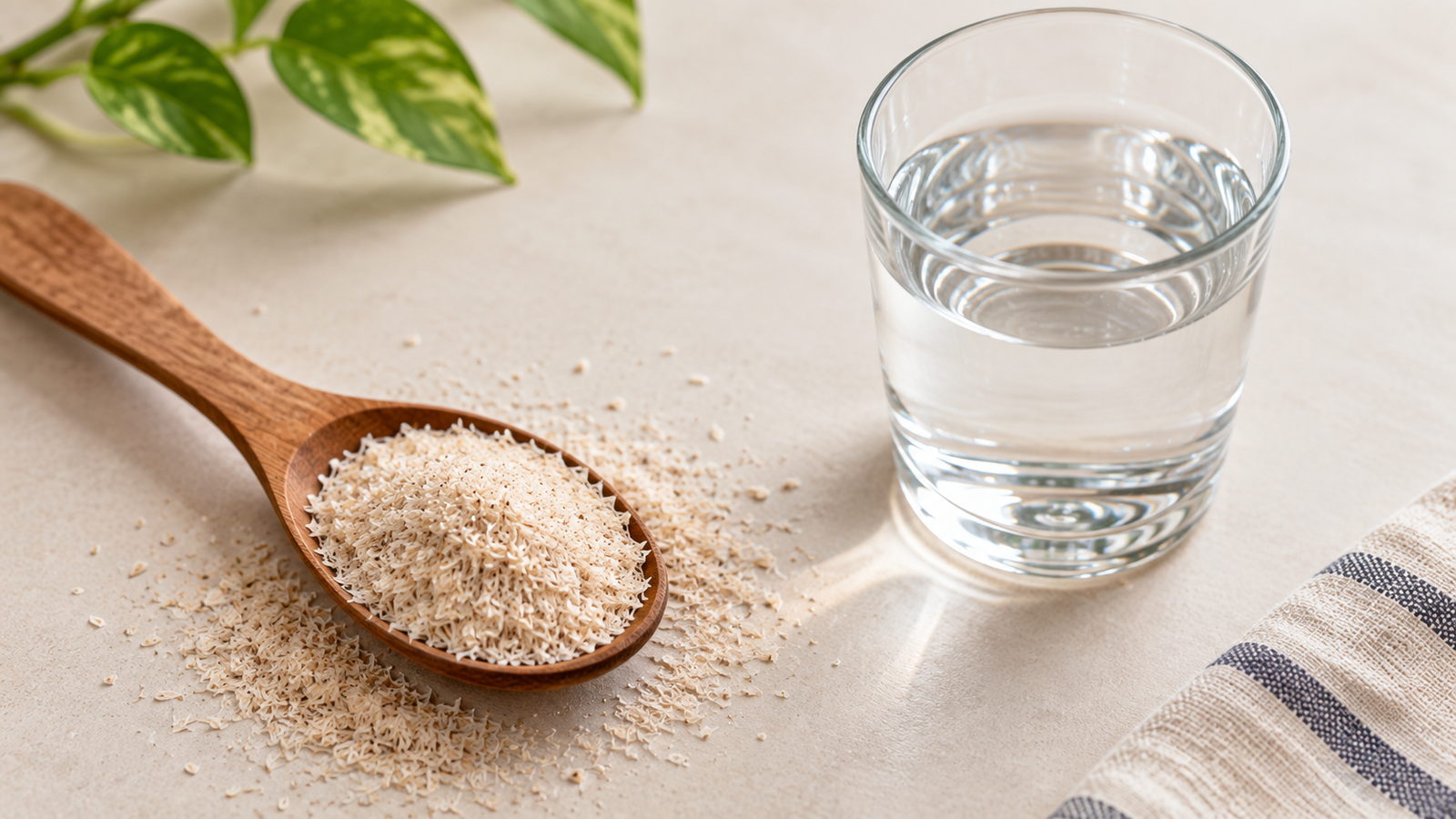
Isabgol is a soluble fibre. When it meets water in the gut, it absorbs many times its own weight and forms a soft, gel-like mass. This bulks and softens stool, making it easier to pass, and also slows the rate at which sugar and cholesterol are absorbed from a meal - which is why isabgol shows up in both constipation remedies and general "fibre supplement" guidance. It doesn't ferment as aggressively as some other fibres, which is one reason it tends to cause less gas and bloating than certain other bulking agents.
Who Should Take Isabgol?
Isabgol Benefits These Common Digestive Complaints
- Occasional constipation - from travel, dietary changes, or low fibre intake
- Chronic functional constipation - as a first-line, non-drug option before stronger laxatives
- IBS with constipation (IBS-C) - soluble fibre can ease straining and irregular bowel movements
- Hemorrhoids (piles) - a condition our gastroenterology department treats regularly; softer, bulkier stool reduces straining, which is one of the main triggers for piles flare-ups
- Mild support for cholesterol and blood sugar - as an adjunct to diet, not a replacement for medication, in people managing borderline cholesterol or blood sugar levels
Who Should Avoid or Use Isabgol With Caution?
Isabgol isn't automatically safe for every situation. Avoid it, or use it only under medical advice, if any of the following apply to you:
Check With a Doctor First If Any of These Apply
- Suspected bowel obstruction - adding bulk to a blocked or narrowed bowel can worsen the blockage and cause a medical emergency
- Difficulty swallowing - psyllium can swell in the throat or oesophagus if not washed down with enough water, creating a choking risk
- You take other medications - isabgol can bind to and reduce the absorption of some drugs; take it at least two hours apart from other medicines
- Pregnancy or breastfeeding - generally considered low-risk, but confirm the right dose with your doctor first
- Children - only under medical guidance, at an adjusted dose
- Known allergy to psyllium or Plantago species - stop immediately if you notice itching, rash, or breathing difficulty after taking it
How Much Isabgol Should You Take, and When?
A sensible isabgol routine looks like this:
- Start low. Begin with roughly 5 grams (about one level teaspoon) once daily rather than jumping straight to a full dose.
- Mix into a full glass of water - at least 200–250 ml - and drink it immediately. Never swallow isabgol dry or with too little liquid.
- Increase gradually to 5–10 grams once or twice a day if needed, based on how your body responds over several days.
- Time it sensibly - many people find taking it at night, an hour or two after dinner, works well for a morning bowel movement; others prefer it with a meal. Consistency matters more than the exact hour.
- Keep drinking water through the day, not just with the dose - isabgol needs ongoing fluid to work as intended and to avoid worsening constipation rather than relieving it.
- Give it 2–3 days before judging whether it's helping - isabgol is not an instant fix.
What If Isabgol Doesn't Fix the Problem?
Isabgol is meant to ease occasional or mild constipation - not to be increased indefinitely when the underlying problem doesn't budge. Persistent constipation is sometimes just diet, but it can occasionally point to something that needs a proper look, and repeatedly increasing a fibre dose can delay that diagnosis.
Get Evaluated Instead of Increasing the Dose If You Notice
- Constipation persisting beyond two to three weeks despite adequate fibre and water
- Blood in your stool, or black or tarry stools
- Unexplained weight loss
- Severe abdominal pain
These can be reasons for a stool test - for occult blood or H. pylori - or diagnostic tests like endoscopy to check for an underlying cause that fibre alone won't fix.
Common Mistakes People Make When Taking Isabgol
- Not drinking enough water - this is the single biggest reason isabgol fails to work, or even worsens constipation.
- Taking it dry or with too little liquid - beyond being ineffective, this creates a genuine choking and swallowing risk.
- Expecting overnight results - isabgol works over days, not hours; judging it too soon leads people to abandon it or overdose it.
- Combining it with other laxatives without advice - stacking remedies without medical guidance can cause cramping, dependency, or electrolyte issues.
- Taking it at the same time as other medications - reducing your other medicines' effectiveness by not spacing doses apart.
Frequently Asked Questions
Can isabgol be taken daily long-term?
For most healthy adults, yes - isabgol is considered safe for regular daily use as a fibre supplement. If you've been taking it for weeks with no improvement, that's worth discussing with a doctor rather than continuing indefinitely.
Is isabgol safe for diabetics?
Isabgol is generally considered safe and can modestly help blood sugar control as part of a balanced diet, but diabetics on medication should check timing and dosage with their doctor, since fibre can affect how quickly some drugs are absorbed.
Does isabgol help with piles?
Yes - by softening stool and reducing straining, isabgol is a commonly recommended first step for mild hemorrhoids. It won't resolve advanced piles on its own, which may need a clinical evaluation.
Can isabgol be taken with milk?
Isabgol can be mixed with milk instead of water, though water is generally preferred since it doesn't add extra calories or the potential for a mild laxative-plus-dairy stomach upset in people who are lactose-sensitive.
Constipation Not Improving? Get Evaluated at Swasthya Hospital
If constipation persists for more than two to three weeks despite dietary fibre like isabgol, or if you notice any warning signs above, it's worth getting checked rather than adjusting the dose yourself.
Book a Consultation in GandhidhamSource: McRorie JW, McKeown NM. "Understanding the Physics of Functional Fibers in the Gastrointestinal Tract: An Evidence-Based Approach to Resolving Enduring Misconceptions about Insoluble and Soluble Fiber." Journal of the Academy of Nutrition and Dietetics. 2017;117(2):251-264. PMID: 27863994.