
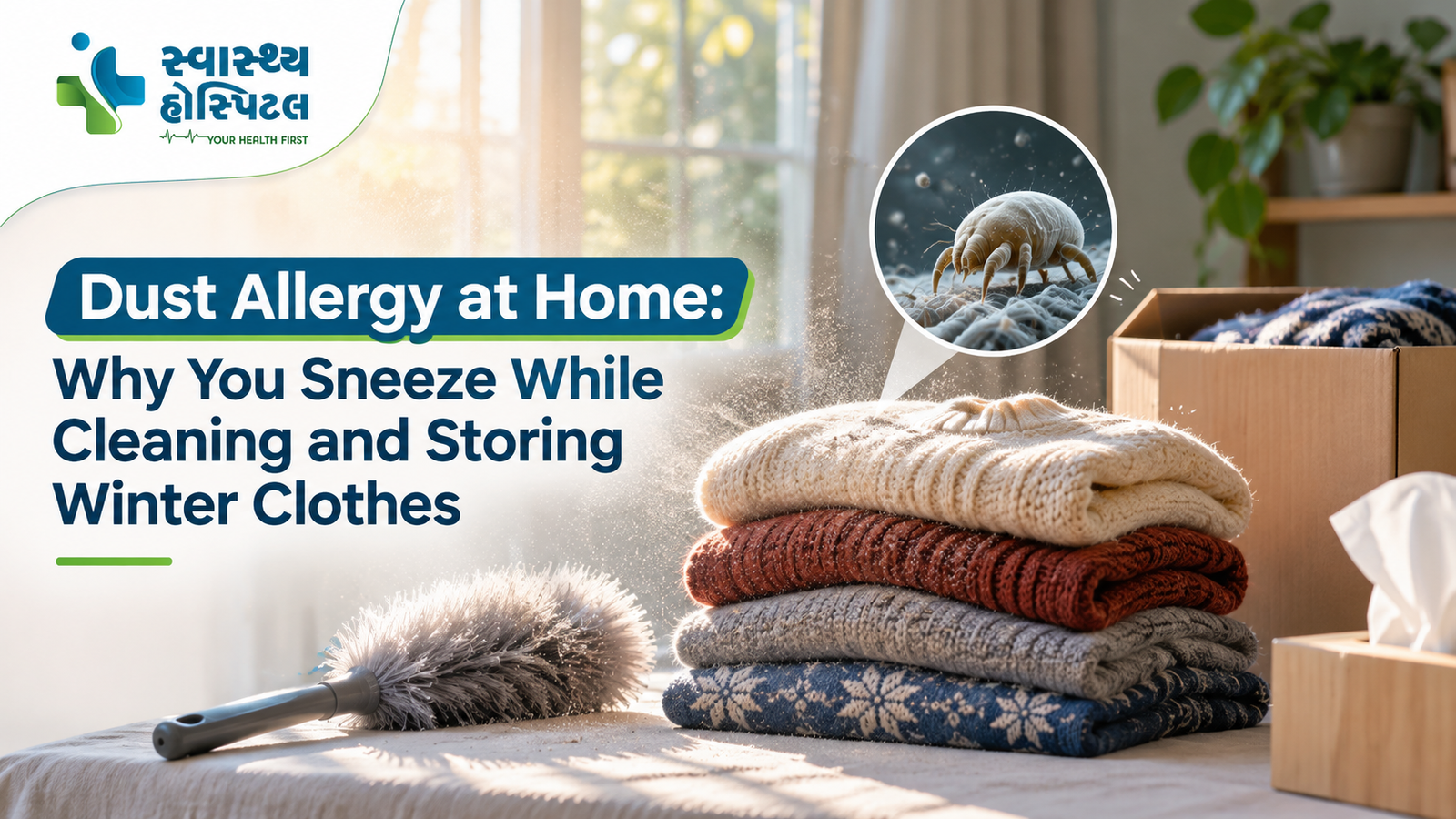
Dust Allergy at Home: Why You Sneeze While Cleaning and Storing Winter Clothes
Cleaning stirs up dust-mite and mould particles that settle in bedding, blankets and closed cupboards. A few changes to how you clean and store winter clothes can cut the sneezing.
Dust allergy at home flares during cleaning because dusting, sweeping and shaking out blankets throw tiny allergen particles into the air you breathe. House dust mites, mould and animal dander are among the most common triggers of allergic rhinitis, which causes sneezing, an itchy runny nose and itchy, watery eyes. Blankets, quilts and sweaters that have been stored since last winter collect these particles. Here is where household dust hides, how to clean without setting off symptoms, and how to take out and store winter clothes more safely.
Why Does Cleaning Make You Sneeze?
House dust mites are tiny creatures that live in bedding, mattresses, carpets and soft furnishings. Along with mould and flakes of animal skin, they are among the most common triggers of allergic rhinitis. Its symptoms are sneezing, an itchy nose, a runny or blocked nose, itchy red watery eyes and sometimes a cough (NHS, 2026).
Most of the time these particles sit in fabrics and settle on floors. Cleaning disturbs them, and they hang in the air for a while afterwards. That is why the person doing the cleaning often sneezes most. Guidance from National Jewish Health is that a person with dust-mite allergy should not vacuum, or even stay in the room while it is being vacuumed (National Jewish Health).
Where Does Household Dust Hide?
| Place | Why it collects allergens | What helps |
|---|---|---|
| Mattress and pillows | Dust mites live in bedding | Zipped, dust-proof covers on the mattress and pillows (National Jewish Health) |
| Bed sheets and pillow covers | Mites and skin flakes build up within days | Wash weekly in hot water, about 54°C (130°F) (National Jewish Health) |
| Razais, quilts and blankets stored since last winter | Months of settled dust; sometimes damp from the monsoon | Wash covers in hot water if the fabric allows; air thick quilts outdoors before use |
| Closed cupboards and trunks | Damp after the monsoon can let mould grow | Empty, wipe dry and leave doors open to air before storing clothes again |
| Bedroom carpets and rugs | Hold dust and mites deep in the fibres | Remove carpet from the bedroom and use small washable rugs (National Jewish Health) |
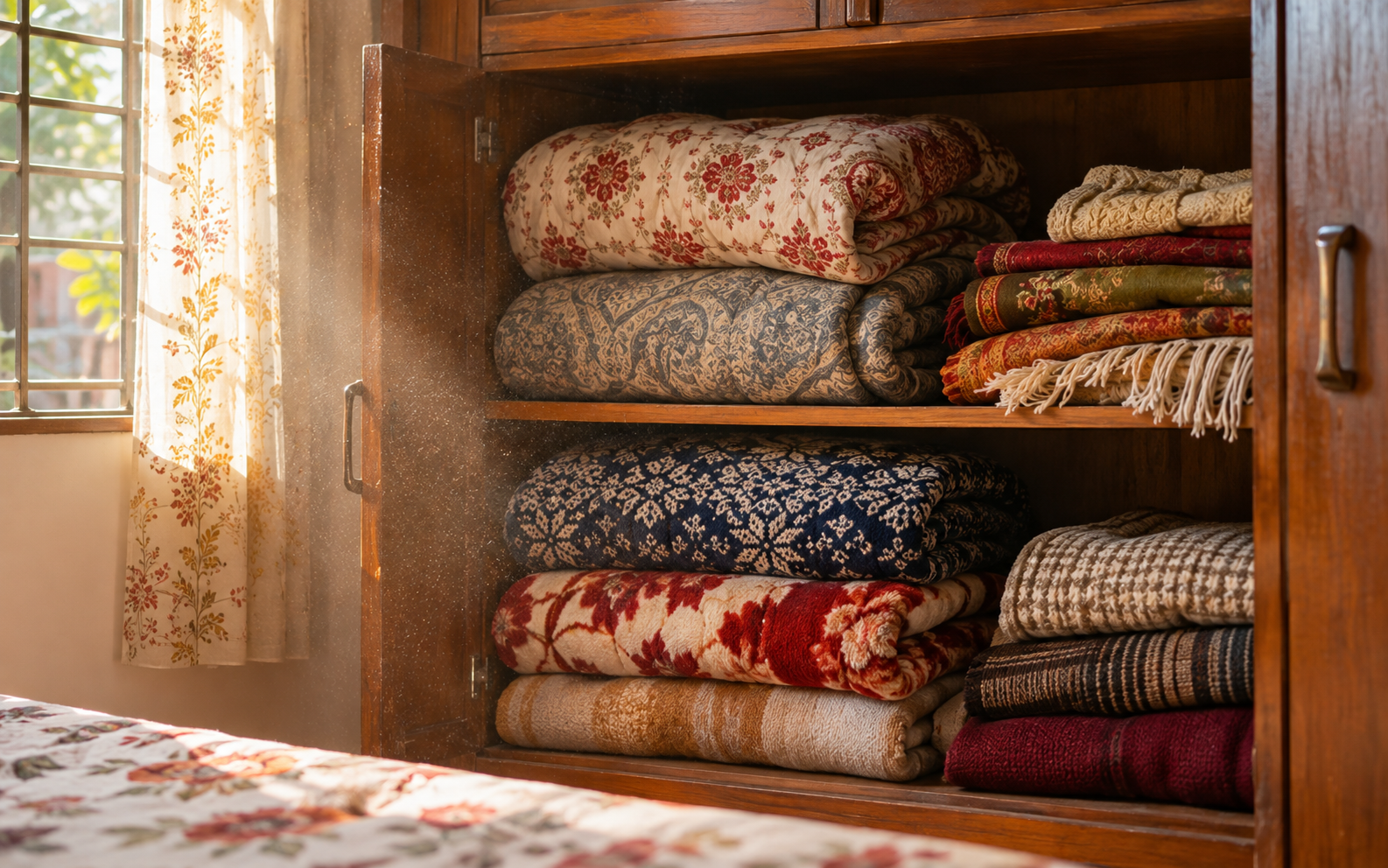
Illustration generated with AI.
How Can You Clean Without Triggering Symptoms?
- Let someone without the allergy do the dusting and vacuuming if possible, and stay out of the room while they do it (National Jewish Health).
- Use a damp cloth or mop instead of dry dusting or sweeping, which throws dust into the air.
- Wear a well-fitting mask if you have to clean yourself, and open windows afterwards to let the dust clear.
- Wash bedding weekly in hot water and use dust-proof covers on mattresses and pillows (National Jewish Health).
- Avoid humidifiers. Dust mites thrive in humid air; the ideal indoor humidity is 30 to 40% (National Jewish Health). Kutch's winter air is usually dry already, but bathrooms and cupboards can stay damp.
How Should You Store and Take Out Winter Clothes?
Sweaters, shawls and blankets come out of storage just as the weather turns, often straight from a trunk or the top of a cupboard. A little preparation helps:
- Take stored woollens and blankets outdoors and shake them out there, ideally by someone without the allergy.
- Wash or air them before use. Bedding that can take hot water should be washed hot.
- When winter ends, store clothes only once they are clean and fully dry, in sealed bags or lidded boxes rather than open shelves.
- Check cupboards for damp or a musty smell after the monsoon, because mould is a common allergy trigger (NHS, 2026).
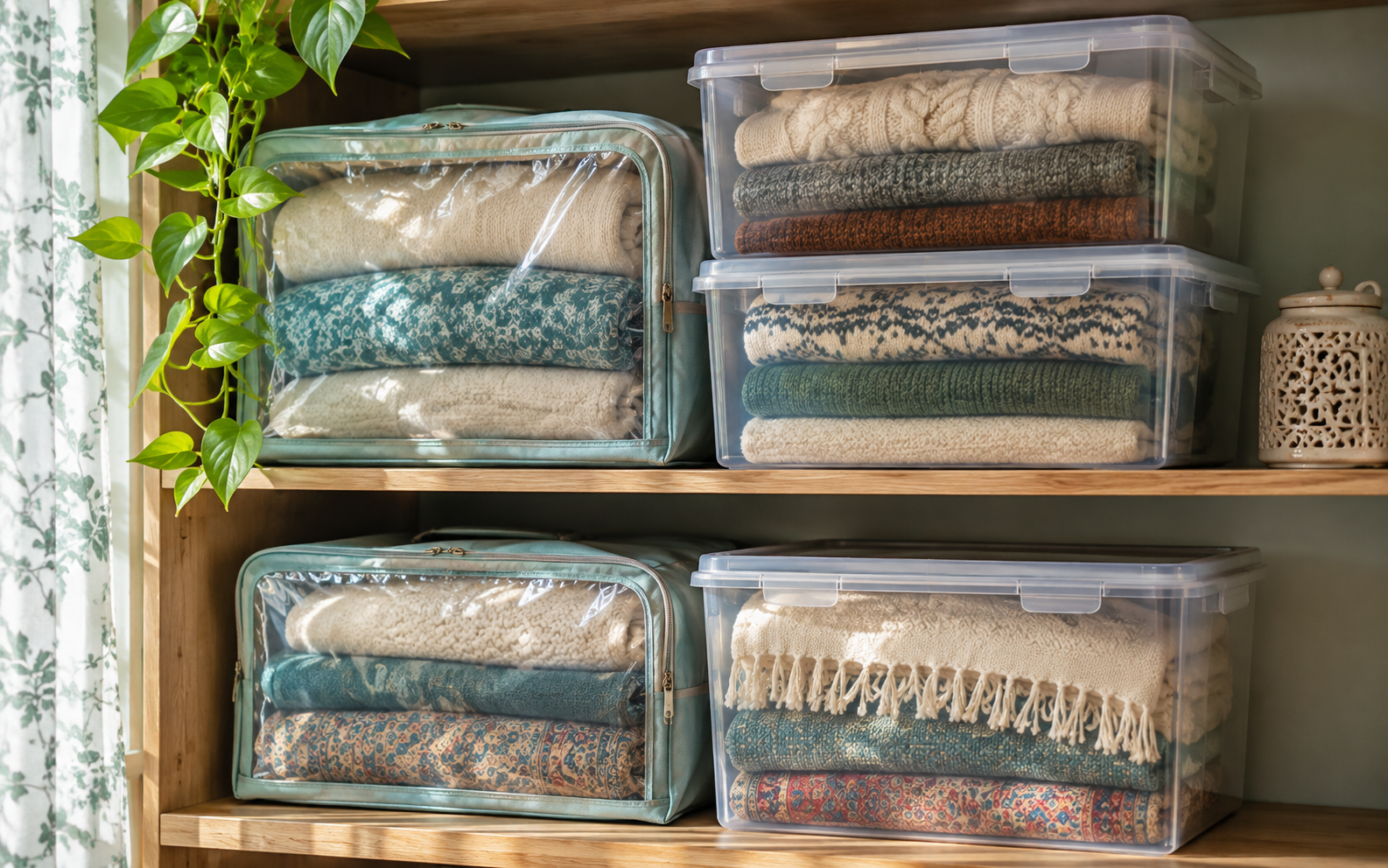
Illustration generated with AI.
Can Dust at Work Cause the Same Symptoms?
Yes. Allergic rhinitis can also be triggered by wood dust, flour dust and latex (NHS, 2026). That matters for people who work in carpentry and furniture workshops, bakeries and flour mills, or in healthcare. If your sneezing is worse on working days and better on holidays, tell your doctor about your job; it can point straight to the trigger.
At work, ask whether dust extraction, ventilation or a suitable mask is available, and wash work clothes separately so dust is not carried home onto bedding.
When Should You See a Doctor for Dust Allergy?
See a doctor if
- You have wheezing, chest tightness or breathlessness around dust. Dust is a common asthma trigger (NHS, 2025)
- Your nose is blocked most days, or symptoms disturb your sleep
- Pharmacy medicines are not controlling your symptoms
- You are not sure what you are reacting to. Allergy tests such as skin prick or blood tests can help identify triggers (NHS, 2026)
If your sneezing comes every morning rather than mainly while cleaning, our guide to early morning sneezing in Gandhidham covers other local triggers.
Frequently Asked Questions
Does sun-drying blankets kill dust mites?
Airing blankets in the sun freshens them and dries out damp, but the measures with the clearest support are hot washing (about 54°C) and dust-proof covers. Use sun-drying as an extra step, not the only one.
Do air purifiers help with dust allergy?
They may reduce some particles floating in the air, but dust mites live mainly in bedding and soft furnishings. Covers, hot washing and careful cleaning come first.
Can dust allergy lead to asthma symptoms?
Dust is a common trigger for people who already have asthma. If dust makes you wheeze or feel tight-chested, see a doctor rather than just treating the sneezing.
Will I have dust allergy for life?
It varies. Many people manage well by reducing exposure at home and using medicines a doctor recommends.
Sneezing Every Time You Clean?
If dust allergy is affecting your sleep, work or breathing, a doctor can help confirm the trigger and plan treatment. The hospital is open 24x7 in Gandhidham.
Contact the HospitalRelated reading: early morning sneezing in Gandhidham, lung and allergy care, immune and allergy evaluation.
- NHS. Allergic rhinitis. Page last reviewed 8 January 2026. https://www.nhs.uk/conditions/allergic-rhinitis/
- National Jewish Health. Dust mite: reduce exposure. Reviewed 1 November 2016. https://nationaljewish.org/conditions/allergy/overview/allergens/dust-mite/reduce-exposure
- NHS. Asthma: causes. Page last reviewed 7 April 2025. https://www.nhs.uk/conditions/asthma/causes/
- NHS. Allergies. Page last reviewed 5 March 2026. https://www.nhs.uk/conditions/allergies/