
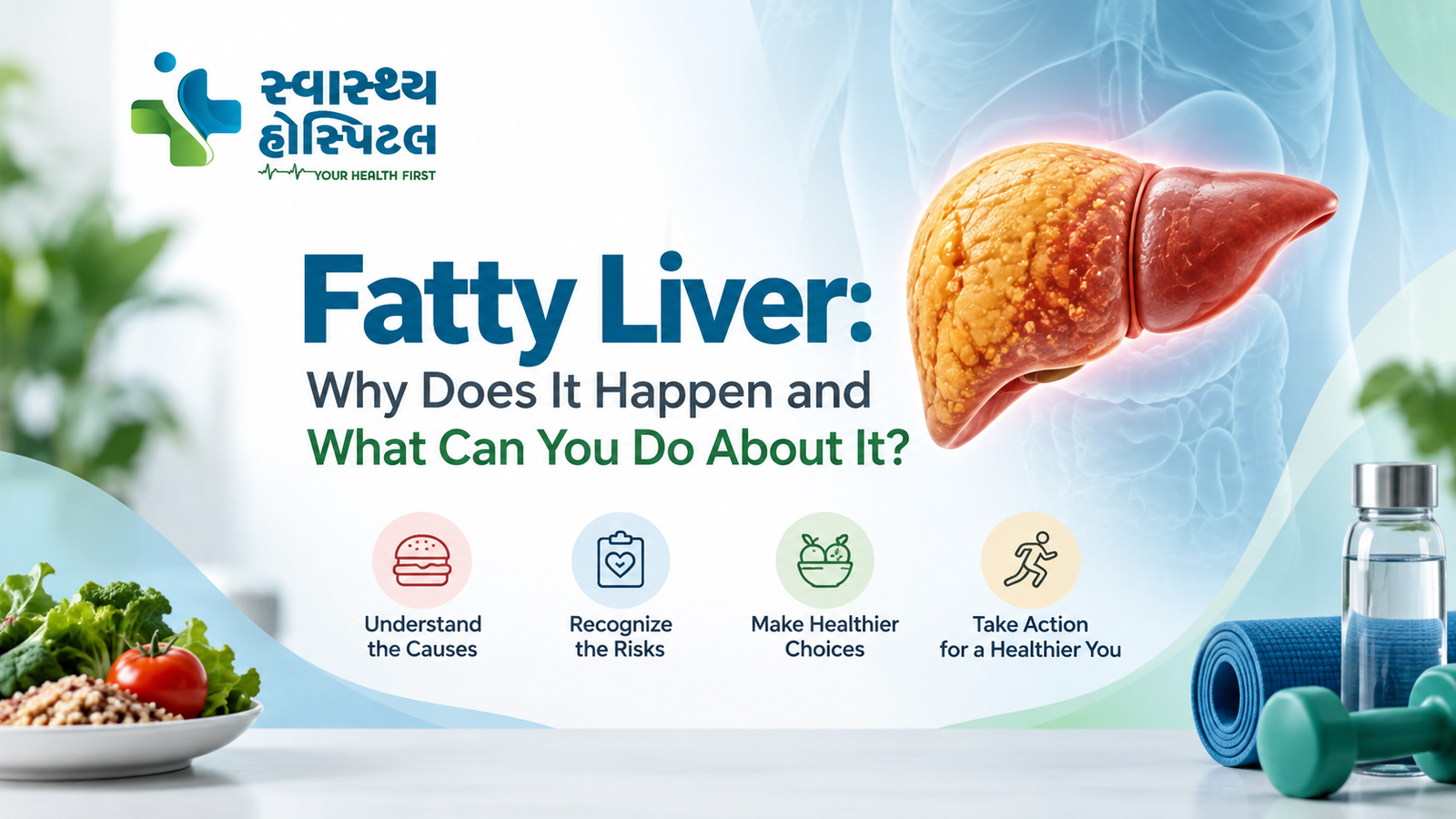
Fatty Liver: Why Does It Happen and What Can You Do About It?
Fatty liver usually causes no symptoms until it's advanced, but in its early stages it's frequently reversible once the underlying cause is addressed.
Fatty liver happens when your liver stores more fat than it can process - usually because of excess body weight, insulin resistance or type 2 diabetes, high triglycerides, or heavy alcohol use, either alone or in combination. It's extremely common, often found by accident on a routine ultrasound or blood test, and in its early stages it's frequently reversible with the right changes. Here's why it actually happens, the warning signs to watch for, and what genuinely helps.
What Is Fatty Liver, Exactly?
Fatty liver disease means excess fat has built up inside liver cells - normal liver tissue contains very little fat, so anything beyond a small amount is considered abnormal. There are two broad types: non-alcoholic fatty liver disease (NAFLD), which is not related to drinking, and alcohol-related fatty liver disease, caused by sustained heavy alcohol use. NAFLD is far more common today and is closely tied to weight, blood sugar, and cholesterol - which is why it's increasingly seen even in people who don't drink at all.
Why Does Fatty Liver Happen?
At its core, fatty liver happens because the liver takes in or produces more fat than it can burn or export, and the extra fat accumulates inside liver cells. Two pathways drive most cases. The first is metabolic: obesity, type 2 diabetes, and high triglycerides all push more fat toward the liver and make liver cells more resistant to processing it efficiently - this cluster of risk factors is why fatty liver is now considered as much a metabolic condition as a liver one. The second is alcohol: sustained heavy drinking overwhelms the liver's capacity to metabolise fat, causing it to accumulate even without any underlying metabolic disease.
Fatty liver's scale in India is not a minor concern - a 2022 systematic review and meta-analysis of Indian population data estimated pooled NAFLD prevalence at roughly one in three adults overall, rising higher still among people who are overweight or have diabetes (Shalimar et al., Journal of Clinical and Experimental Hepatology, 2022). That makes it one of the most common liver conditions a doctor in Gujarat will see, not a rare diagnosis.
What Are the Warning Signs of Fatty Liver?
Fatty liver usually causes no symptoms at all in its early stages - this is precisely why it's so often found incidentally on a scan done for something else. When signs do appear, they tend to show up later and include:
Signs to Watch For
- Persistent fatigue or low energy
- A dull ache or discomfort in the upper right side of the abdomen, where the liver sits
- Unexplained weight change
- Mild, vague nausea or loss of appetite
- In more advanced cases: yellowing of the skin or eyes (jaundice), which needs prompt medical attention
Because early fatty liver is silent, don't wait for symptoms before asking about it if you have known risk factors.
Who Is Most at Risk in Gujarat and Kutch?
Certain everyday patterns in this region raise fatty liver risk more than people often realise. Traditional Gujarati and Kutchi meals can be oil-heavy, with generous use of ghee and fried snacks alongside sizeable portions of rice, rotli, and sweets - a combination that, over years, contributes to weight gain and insulin resistance. Sedentary desk jobs and shop-floor work with long sitting hours add to this. Layered on top is the region's rising rate of type 2 diabetes and obesity, both of which are the strongest known drivers of fatty liver - meaning many people at risk here are dealing with two connected problems, not one.
How Is Fatty Liver Diagnosed?
Diagnosing fatty liver typically starts with two straightforward tests, both of which our gastroenterology team uses routinely:
- Liver function tests (LFT) - a blood test that checks liver enzyme levels; mildly elevated enzymes are often the first clue that prompts further investigation
- Ultrasound of the abdomen - the most common way fatty liver is actually confirmed, since it can directly show fat deposits in liver tissue
These two tests together are usually enough to establish a fatty liver diagnosis and get a sense of its severity, without needing more invasive investigation in most cases. If your doctor suspects a more complex digestive or liver issue alongside fatty liver, further liver and digestive diagnostics such as endoscopy may be recommended.

What Can You Do About It?
The encouraging part of a fatty liver diagnosis is that early-stage fatty liver can often improve with lifestyle change, though results vary by individual and improvement should be tracked, not assumed. Steps that genuinely help include:
- Aim for gradual weight loss - losing 5–10% of body weight, achieved slowly, is associated with meaningful improvement in liver fat in many people.
- Cut back on added sugar and fried food - these directly drive the metabolic pathway that deposits fat in the liver.
- Limit or stop alcohol - even where fatty liver isn't alcohol-related, alcohol adds further strain to a liver that's already under load.
- Build in regular physical activity - even brisk walking most days improves insulin sensitivity and helps reduce liver fat over time.
- Monitor with repeat liver function tests - periodic LFTs, guided by your doctor, are how you and your clinician actually track whether these changes are working, rather than guessing.
These are lifestyle first steps, not a substitute for a clinical management plan - how aggressively to pursue each one depends on your specific test results and risk factors.
When Should You See a Doctor About Fatty Liver?
See a doctor if you have persistent fatigue or upper-abdominal discomfort that doesn't go away, if you have known diabetes or obesity alongside abnormal liver function test results, or if you have a family history of liver disease. Fatty liver found incidentally on a scan is also worth a proper follow-up conversation rather than being dismissed as unimportant - early evaluation is what keeps a reversible condition reversible.
Frequently Asked Questions
Can fatty liver be reversed?
In many cases, yes - especially in earlier stages, where weight loss, dietary change, and reduced alcohol intake can meaningfully reduce liver fat. It's not guaranteed for everyone, and progress should be confirmed with follow-up tests rather than assumed.
Does fatty liver always come from alcohol?
No. Non-alcoholic fatty liver disease (NAFLD) - linked to obesity, diabetes, and high triglycerides - is now more common than alcohol-related fatty liver in most populations, including India.
Can a thin person have fatty liver?
Yes. While excess weight is the strongest risk factor, fatty liver can occur in people with a normal body weight, particularly if they have insulin resistance, high triglycerides, or a strong family history.
Is fatty liver dangerous if it doesn't cause symptoms?
It can still progress silently. Untreated fatty liver can, over years, advance toward inflammation and scarring in some people, which is why a diagnosis is worth acting on even without symptoms.
Been Told You Have Fatty Liver? Get a Clear Plan
If you've been told you have fatty liver, or you're concerned about your risk given your weight, blood sugar, or family history, our gastroenterology and liver care team can help you understand where you stand - a stressed, disrupted gut often overlaps with liver strain, so our gut and digestive health guide is a useful companion read.
Contact us todaySource: Shalimar, Elhence A, Bansal B, et al. "Prevalence of Non-alcoholic Fatty Liver Disease in India: A Systematic Review and Meta-analysis." Journal of Clinical and Experimental Hepatology. 2022;12(3):818-829. PMID: 35677499.