
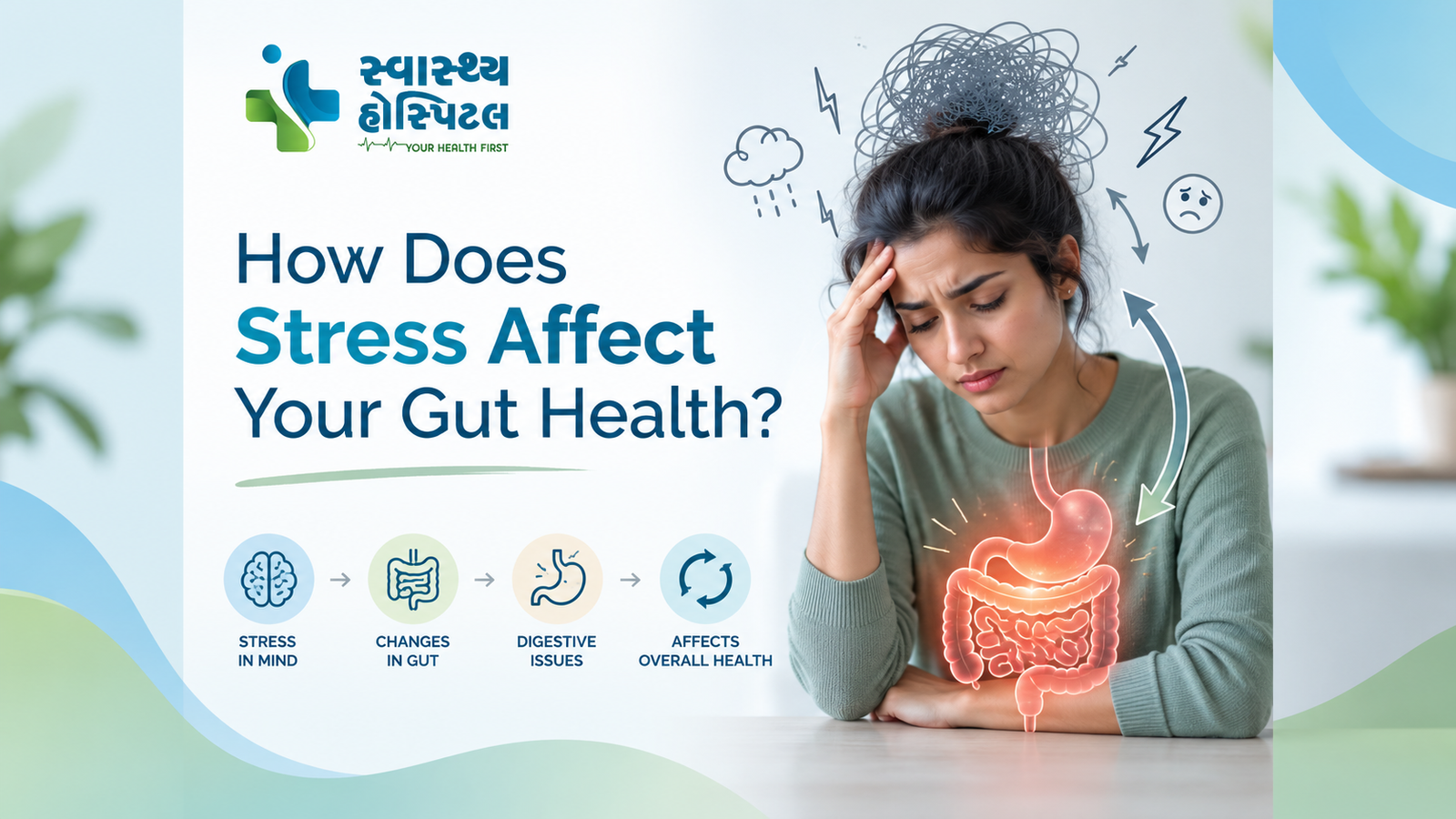
How Does Stress Affect Your Gut Health?
Anxious, overworked weeks show up in your body as bloating, acidity, and sudden changes in bowel habits - here's the mechanism behind it, and what to do about it.
Stress doesn't stay in your head - it travels straight to your digestive system. When you're anxious or overworked, your brain sends signals through the gut-brain axis that slow or speed up digestion, disturb your gut bacteria, and make the lining of your intestines more permeable. This is why stressful weeks so often come with bloating, acidity, or a sudden change in bowel habits, and why conditions like IBS and GERD tend to flare when stress is high.
What Is the Gut-Brain Connection?
Your gut and brain are in constant two-way conversation through what doctors call the gut-brain axis. The vagus nerve - a long nerve running from your brainstem to your abdomen - carries signals in both directions, while the enteric nervous system (sometimes called the "second brain") controls digestion largely on its own. When your brain registers stress, it doesn't just affect your mood; it changes how fast food moves through your gut, how much acid your stomach produces, and how your gut bacteria behave. This is also why digestive issues can, in turn, affect mood and anxiety levels - the relationship runs both ways.
How Does Stress Physically Change Your Digestive System?
When you're stressed, your body releases cortisol and adrenaline, and these hormones act directly on your gut. The main effects are summarised below.
| Effect | What Happens in Your Body |
|---|---|
| Altered gut motility | Stress can speed up digestion (leading to diarrhoea) or slow it down (leading to constipation), depending on how your body responds. |
| Disrupted gut microbiome | A 2018 review in Frontiers in Microbiology found that psychological and physical stressors can measurably shift the composition of gut bacteria, even over a short period of intense stress (Karl et al., 2018). |
| Increased intestinal permeability | Often called "leaky gut," this allows bacteria and irritants to pass through the gut lining more easily, contributing to inflammation. |
| Reduced digestive blood flow | During stress, blood is diverted away from digestion toward muscles and the brain, which can leave food incompletely digested. |
| Excess stomach acid | Stress increases acid production, which is why anxious periods often coincide with heartburn or a burning sensation after meals. |
| Weakened digestive enzyme activity | The body prioritises its stress response over digestion, so meals eaten during high stress are often broken down and absorbed less efficiently, adding to bloating and discomfort. |
None of these changes are permanent on their own. In most people, gut function returns to normal once the stressful period passes - but if stress becomes chronic, these small daily disruptions can add up into a lasting digestive problem.
Can Stress Cause or Worsen IBS, GERD, or Acid Reflux?
Stress rarely causes a digestive condition on its own, but it is one of the most common triggers for flare-ups in people who already have a sensitive gut. In Irritable Bowel Syndrome (IBS), stress hormones make the gut more sensitive to pain and disrupt normal bowel rhythm - read our detailed comparison of IBS vs. IBD symptoms and diagnosis to understand how the two are distinguished. In GERD and acid reflux, stress increases stomach acid and can relax the valve that keeps acid in the stomach, worsening heartburn - see our guide on acidity vs. GERD symptoms if you're unsure which one you're dealing with. If you already manage one of these conditions, a stressful period is often exactly when symptoms return.
Warning Signs Your Gut Is Reacting to Stress
Watch for These Signs During or After a Stressful Period
- Persistent bloating or a feeling of fullness after small meals
- Heartburn or acid reflux that appears only during busy or anxious weeks
- Sudden constipation or diarrhoea with no dietary change
- Appetite swings - eating far more or far less than usual
- Stomach cramping that eases once the stressful period passes
If bloating is a recurring problem for you, our article on why your stomach is always bloated walks through the most common digestive warning signs to watch for.
Post-Monsoon Kutch: Why Stress Makes Seasonal Gut Infections Worse
Late monsoon in Kutch brings its own digestive risks - typhoid, jaundice, and food poisoning all rise as water sources become contaminated. Chronic stress compounds this risk: a weakened gut lining and disrupted gut bacteria make it easier for waterborne pathogens to take hold and harder for your body to recover quickly. If you're already run down from work or personal stress this season, it's worth being extra cautious with food and water hygiene. Our infectious disease department has more on recognising early warning signs of monsoon-related stomach infections in Kutch.
How Can You Manage Stress to Protect Your Gut?
You can't always remove stress from your life, but you can reduce how much it affects your gut:
- Practise slow, diaphragmatic breathing for 5 minutes when symptoms flare - this stimulates the vagus nerve and can calm gut activity almost immediately.
- Protect your sleep - poor sleep raises cortisol and worsens next-day digestion.
- Eat on a regular schedule and avoid skipping meals during busy periods, which can worsen acid reflux.
- Stay hydrated and prioritise fibre - both support regular bowel movements even when stress disrupts routine.
- Move your body daily - even a 20-minute walk lowers stress hormones and supports healthy gut motility.
- Eat mindfully - slow down at mealtimes; eating quickly under stress worsens bloating and indigestion.
- Cut back on caffeine and alcohol during stressful weeks - both increase stomach acid and can worsen the gut symptoms stress already triggers.

These habits won't remove the source of your stress, but they reduce how much it shows up in your digestion - and they're worth building into your routine before symptoms become a regular pattern.
When Should You See a Gastroenterologist for Stress-Related Gut Symptoms?
Most stress-related digestive symptoms ease once the stressful period passes. See a gastroenterologist if you notice any of the following:
Red Flags That Need Evaluation
- Blood in your stool or black, tarry stools
- Unexplained weight loss
- Abdominal pain that lasts more than two weeks despite lower stress
- Persistent vomiting or difficulty swallowing
- Symptoms that keep returning even when you feel calm
These signs suggest something beyond ordinary stress and deserve a proper evaluation rather than home management alone. A gastroenterologist can run basic diagnostics - such as a stool test for H. pylori or occult blood, or a liver function test - to rule out an underlying condition rather than leaving you to guess whether it's "just stress."
Frequently Asked Questions
Can stress alone cause IBS?
Stress alone doesn't usually cause IBS, but it's one of the strongest known triggers for symptom flare-ups in people who are already prone to it.
How long do stress-related gut symptoms last?
Most resolve within a few days to a couple of weeks once the underlying stress eases. Symptoms lasting longer than two weeks should be checked by a doctor.
Does stress cause ulcers?
Stress alone doesn't cause stomach ulcers - most are caused by H. pylori infection or long-term use of painkillers - but stress can worsen ulcer symptoms and slow healing.
Can children get stress-related stomach issues too?
Yes. Children can develop stomach pain, nausea, or appetite changes during stressful periods such as exams or major life changes, similar to adults.
Struggling With Stress-Related Digestive Symptoms? Get Evaluated at Swasthya Hospital
If stress is affecting your digestion and symptoms aren't easing on their own, our gastroenterology department in Gandhidham can help identify what's going on.
Book an Appointment with Dr. Devansh J. KhandolSource: Karl JP, Hatch AM, Arcidiacono SM, et al. "Effects of Psychological, Environmental and Physical Stressors on the Gut Microbiota." Frontiers in Microbiology. 2018;9:2013.