
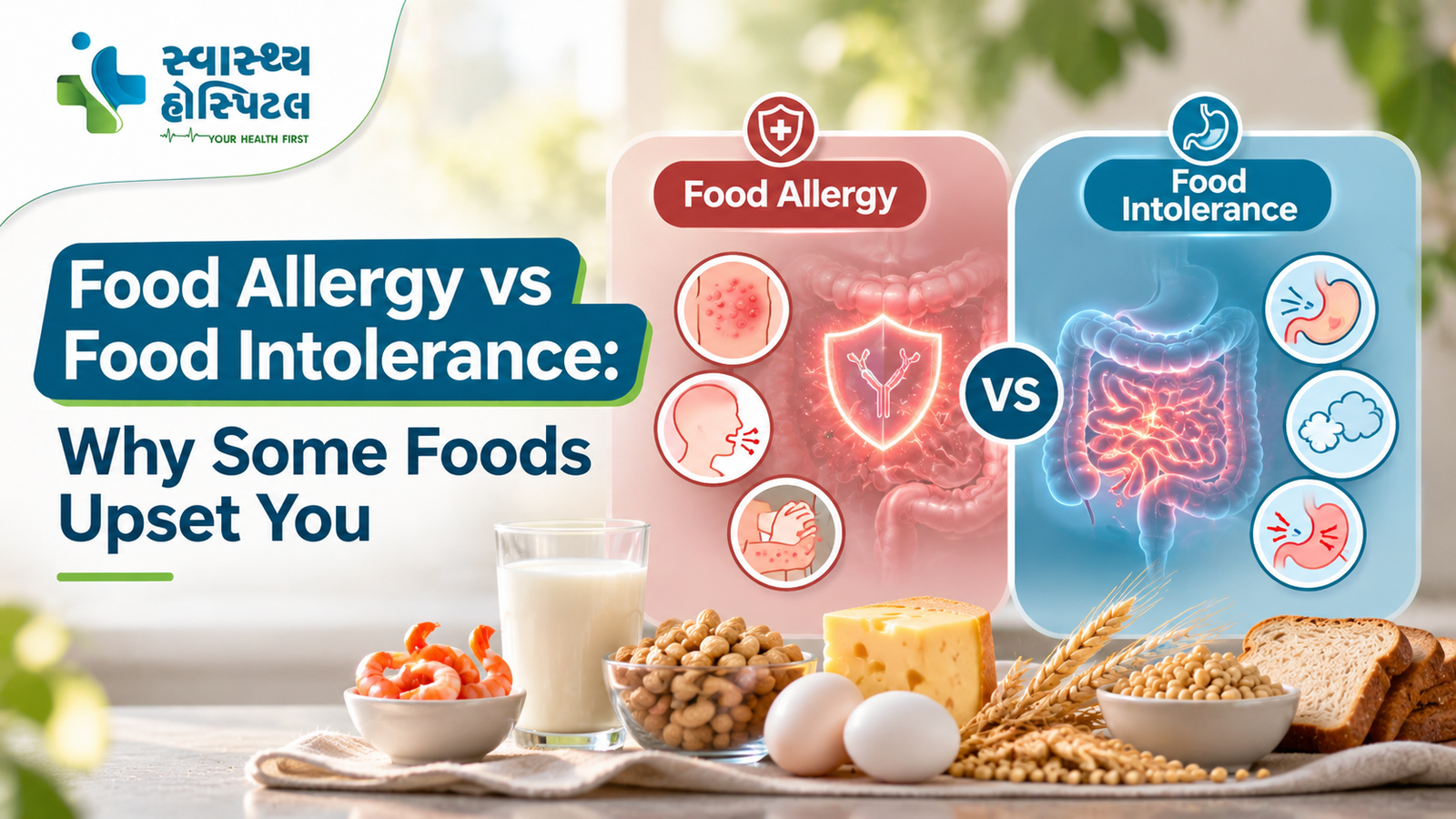
Food Allergy vs Food Intolerance: Why Some Foods Upset You
A food allergy is your immune system overreacting to a food and can be dangerous. A food intolerance is difficulty digesting a food; it brings bloating or tummy pain a few hours later but cannot cause a serious allergic reaction.
The difference between a food allergy and a food intolerance is which part of your body reacts. A food allergy is caused by your immune system overreacting to a food. It can affect any part of the body and can be serious. A food intolerance means you have difficulty digesting a food. It usually causes bloating, wind, diarrhoea or tummy pain a few hours after eating, and it cannot cause a serious allergic reaction. Several common allergy foods, including peanuts, sesame, chickpeas and milk, are everyday ingredients in Gujarati kitchens. Here is how to tell the two apart and how each is diagnosed.
What Is the Difference Between a Food Allergy and a Food Intolerance?
A food allergy is caused by your immune system overreacting to certain types of food (NHS, 2026). A food intolerance is not caused by the immune system: it is difficulty digesting certain foods or ingredients, and it does not carry the risk of a serious allergic reaction (NHS, 2026).
How Do the Symptoms Compare?
| Food allergy | Food intolerance | |
|---|---|---|
| What reacts | The immune system (NHS, 2026) | The digestive system; not the immune system (NHS, 2026) |
| Typical symptoms | Can affect any part of the body, sometimes several parts at once (NHS, 2026) | Diarrhoea, bloating, wind and stomach pain are most common; headache, tiredness and rashes can occur (NHS, 2026) |
| Timing | Straight after eating, or sometimes later (NHS, 2026) | Usually a few hours after eating; can last hours or days (NHS, 2026) |
| Can it be life-threatening? | Yes, a serious allergic reaction is possible | No serious allergic reaction (NHS, 2026) |
| Common culprits | Cows' milk, eggs, peanuts, soybeans, peas and chickpeas, tree nuts, shellfish, wheat; also sesame and mustard (NHS, 2026) | Lactose (milk sugar) is the most common; also gluten, histamine, caffeine, alcohol, sulphites, MSG (NHS, 2026) |
Several allergy foods on that list are staples here: chickpeas in besan and chana, peanuts in farsan, chikki and sabudana, sesame in til ladoo and winter sweets, and mustard seeds in tadka. If a reaction happens after a mixed meal, any of these could be the cause.
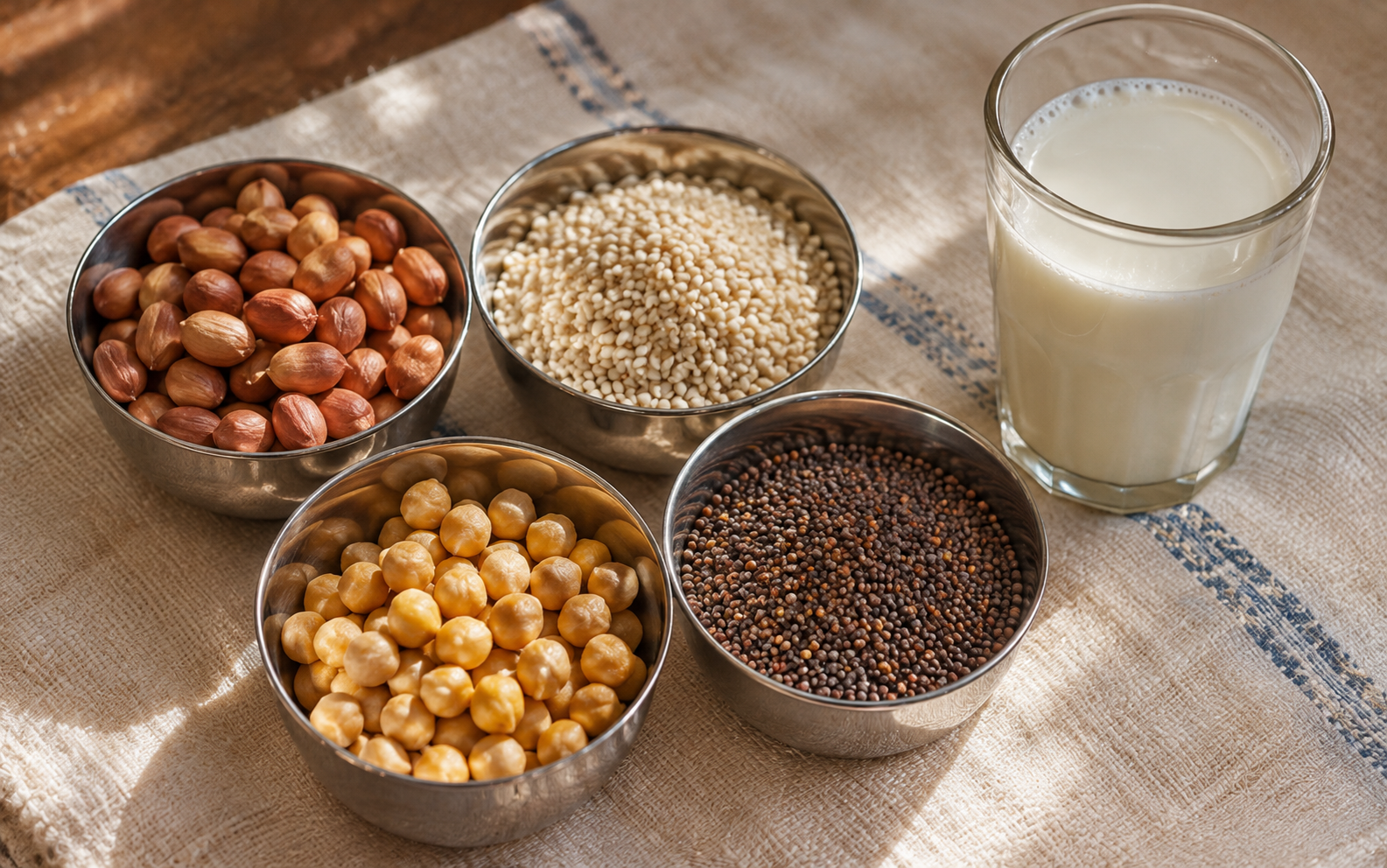
Illustration generated with AI.
What Does a Serious Food Allergy Reaction Look Like?
Call emergency services (108 or 112) if, after eating
- The lips, mouth, throat or tongue suddenly swell
- The throat feels tight, or it is hard to swallow
- The person is breathing very fast or struggling to breathe
- The skin, tongue or lips turn blue, grey or pale
These are signs of a serious allergic reaction. Do not drive yourself to hospital (NHS, 2026). If the person has been prescribed an adrenaline auto-injector, use it as instructed.
What Is Food Intolerance, and Why Is Lactose the Most Common?
Lactose is a sugar found mainly in milk and dairy products, and lactose intolerance is the most common food intolerance (NHS, 2026). It is not the same as a milk allergy: lactose intolerance is a digestion problem with milk sugar, while a milk allergy is an immune reaction to milk proteins.
Intolerance symptoms are uncomfortable but not dangerous. The aim is to find which foods cause trouble without cutting out more of your diet than you need to.
How Are Food Allergy and Food Intolerance Diagnosed?
Food allergy: a doctor may refer you to a specialist for tests. These can include a skin-prick test, blood tests and a supervised elimination diet, and you may be asked to keep a food and symptom diary (NHS, 2026).
Food intolerance: the usual approach is an elimination diet, where you avoid the suspected food to see if symptoms improve and then reintroduce it to see if they return, ideally with a dietitian's help. Blood tests and a breath test (for lactose) may be used. Home testing kits that claim to diagnose food intolerance are not recommended: there is limited evidence that they are accurate, and they may lead you to cut out foods unnecessarily (NHS, 2026).
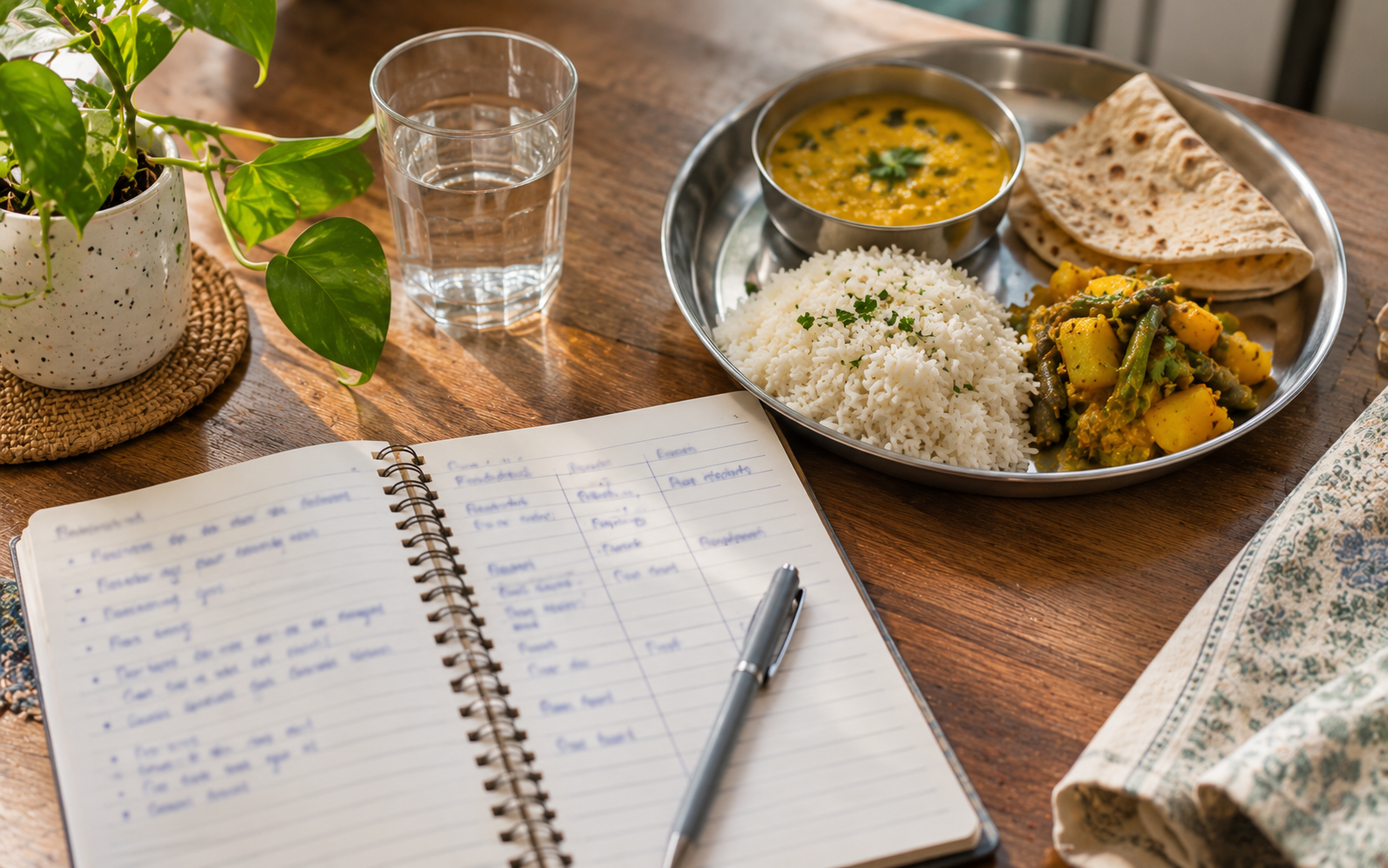
Illustration generated with AI.
How Can You Stay Safe at Weddings, Restaurants and Festivals?
- Tell the host, caterer or restaurant about a food allergy before you eat. Mixed dishes, chutneys and farsan often contain peanuts, sesame or besan that you cannot see.
- Read the ingredient list on packaged snacks and sweets, including festival mithai and chikki.
- Carry any emergency medicine a doctor has prescribed, and make sure someone with you knows how to use it.
- For an intolerance, smaller portions of the trigger food may be manageable. For an allergy, follow the specialist's advice on how strictly to avoid it.
Could Bloating Be Something Else?
Bloating, wind and tummy pain are also common in irritable bowel syndrome (IBS), and stress can affect the gut too. Our guides to the low FODMAP diet for IBS and how stress affects gut health cover these.
See a doctor rather than self-testing if you have unintended weight loss, blood in your stool, diarrhoea that does not settle, vomiting, or symptoms that wake you at night.
Frequently Asked Questions
Is lactose intolerance the same as a milk allergy?
No. Lactose intolerance is difficulty digesting milk sugar and causes tummy symptoms. A milk allergy is an immune reaction to milk and can be serious.
Are home food intolerance test kits reliable?
They are not recommended. There is limited evidence that they are accurate, and they can lead people to cut out foods they do not need to avoid.
Can a tiny amount of food cause an allergic reaction?
In someone with a food allergy, small amounts can cause a reaction. A specialist will advise how strictly the food needs to be avoided.
Should I stop eating wheat or dairy to see if I feel better?
Try this only with a doctor's or dietitian's guidance, and reintroduce the food afterwards to check. Cutting out food groups without a plan can leave gaps in your diet.
Unsure Whether a Food Is Upsetting You?
If you suspect a food allergy or intolerance, a doctor can help you work out the cause safely. For swelling or breathing trouble, call 108 or 112. The hospital is open 24x7 in Gandhidham.
Contact the HospitalRelated reading: low FODMAP diet for IBS, stress and gut health, gastroenterology department.
- NHS. Food allergy. Page last reviewed 20 August 2026. https://www.nhs.uk/conditions/food-allergy/
- NHS. Food intolerance. Page last reviewed 18 June 2026. https://www.nhs.uk/conditions/food-intolerance/