
What Are the Effects of Eating Late at Night on Your Digestion?
Eating close to bedtime can trigger acid reflux and disrupt sleep - most people do best stopping food intake 2–3 hours before bed.
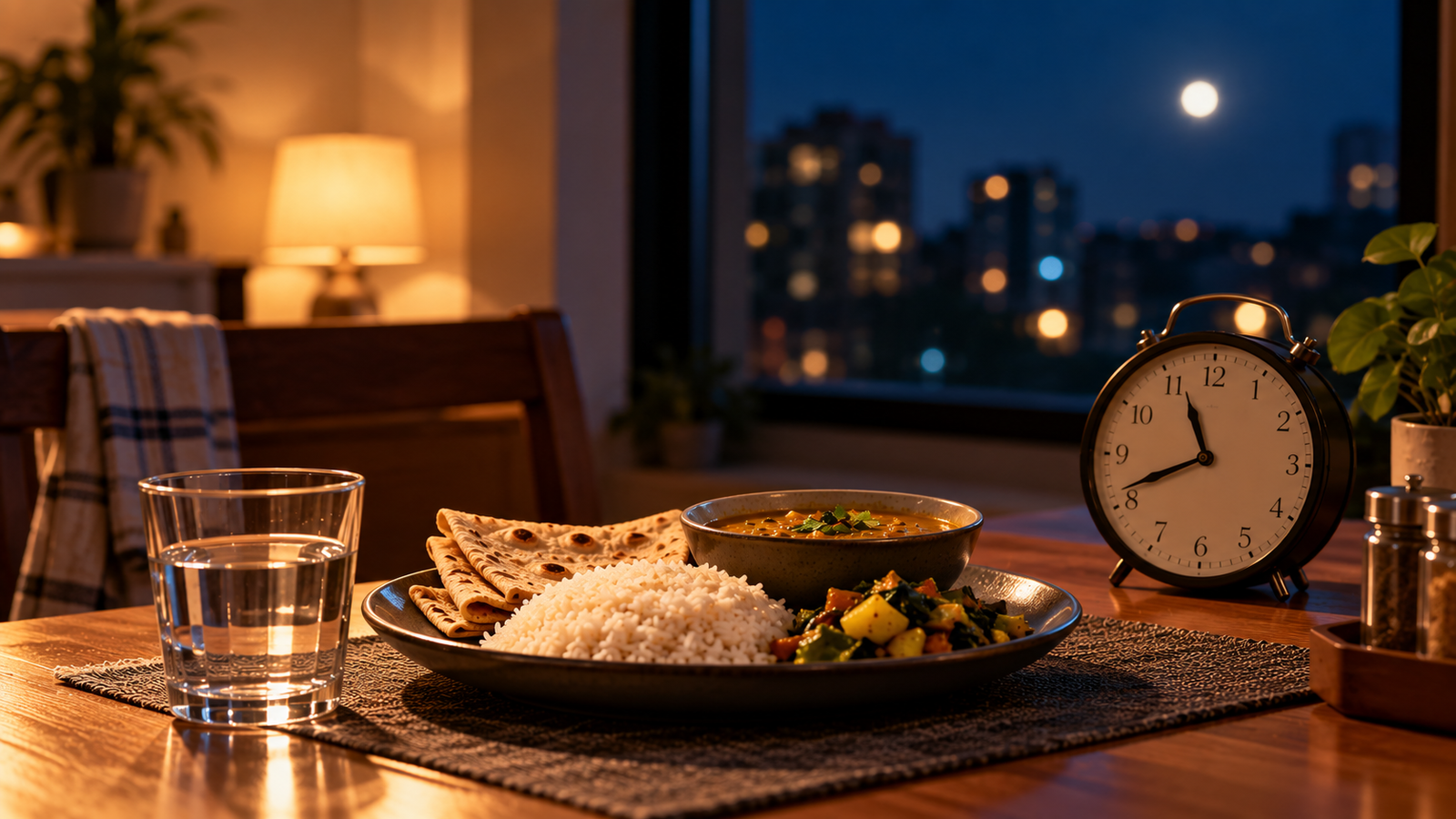
Eating close to bedtime can trigger acid reflux, disrupt sleep, and slow digestion, because lying down soon after a meal makes it easier for stomach acid to move backward into the oesophagus while your body is trying to rest rather than digest. The effects of eating late at night go beyond one restless night - regularly eating large or heavy meals late in the evening is linked to poorer next-morning blood sugar control and, over time, a higher risk of fatty liver. Most people do best stopping food intake 2–3 hours before bed.
What Happens to Your Digestive System When You Eat Close to Bedtime?
Your digestive system doesn't switch off at night, but it does slow down considerably as your body shifts toward rest. Digestion at night relies heavily on your body's internal clock - the same hormonal and enzymatic processes that break down food efficiently during the day are less active in the evening, so a late meal sits in your stomach and intestines longer than the same meal eaten earlier. Lying down soon after eating also removes gravity's normal help in keeping stomach contents down, and the muscles that push food through your gut work less efficiently while you're horizontal and asleep. Together - slower digestion, a fuller stomach, and lying flat - this is why so many people notice heartburn, bloating, or a heavy, unsettled feeling specifically after eating close to bedtime rather than after daytime meals of the same size.
Can Eating Late at Night Cause Acid Reflux or GERD?
Yes - eating late at night is one of the most consistent triggers for acid reflux and GERD flare-ups. When you lie down with a stomach still actively digesting food, stomach acid has an easier path to move upward past the lower oesophageal sphincter - the valve that normally keeps acid where it belongs - and into the oesophagus, causing the burning sensation of heartburn. This effect is stronger with large meals, fatty or fried food, spicy dishes, and alcohol, all of which either increase stomach acid or relax the sphincter itself. If you already have GERD, a late dinner is often the single biggest reason symptoms flare at night rather than during the day. People who eat their largest meal late and go straight to bed are also more likely to experience nighttime coughing, a sour taste on waking, or sleep disrupted by repeated reflux episodes. If reflux symptoms persist despite adjusting meal timing, an endoscopy in Kutch can check for any damage to the oesophagus and confirm what's actually happening.
Does Eating Late Increase Bloating or Indigestion?
Late, heavy meals are also a common cause of bloating and indigestion, independent of reflux. Because digestion slows in the evening, food - especially rich, fatty, or very large portions - spends more time fermenting in the gut before it's fully broken down, which can produce excess gas and a distended, uncomfortable feeling. Eating quickly, which is common late at night after a long day, also means swallowing more air, adding to the bloated feeling. For some people this shows up as general indigestion; for others who already have a sensitive gut, a late meal can trigger cramping or an urgent need to use the bathroom the next morning. Stress and irregular eating both affect digestion in similar ways - see how stress affects your gut health for more on that overlap. Choosing smaller, simpler evening meals and eating slowly rather than rushing reduces how much of this discomfort carries into your sleep and the following day.
Is There a Link Between Late-Night Eating and Fatty Liver?
Yes, and it's a connection most late-night-eating articles miss entirely. Your liver processes the bulk of what you eat, and loading most of your daily calories into a late, heavy dinner - rather than spreading meals evenly through the day - puts a concentrated metabolic burden on the liver right when your body is winding down rather than actively burning energy. Over time, irregular meal timing and evening-heavy eating patterns are associated with poorer blood sugar control and increased fat storage in the liver, both risk factors for non-alcoholic fatty liver disease (NAFLD). A study published in the Journal of Physiological Anthropology found that eating a late supper measurably changed how the body handled dietary carbohydrates the following morning compared to an earlier dinner, and worsened next-day blood sugar response (Yoshida et al., 2013). If you already have - or are at risk of - fatty liver, meal timing is one of the more overlooked factors worth addressing; our guide on why fatty liver happens covers the fuller picture.
How Long Before Bed Should You Stop Eating?
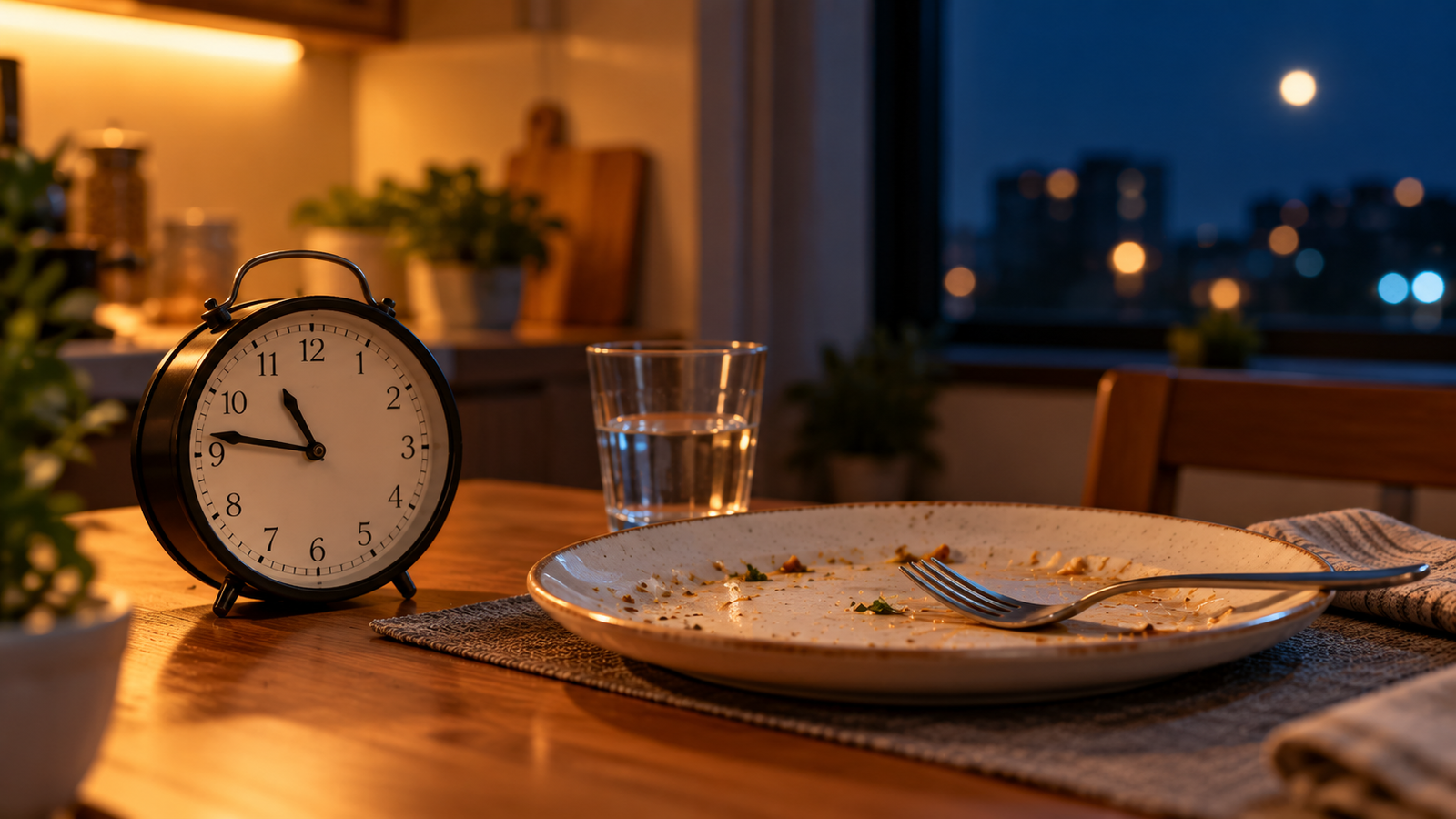
As a general guideline, stop eating at least 2–3 hours before you go to bed. This gives your stomach enough time to empty a meaningful portion of its contents before you lie down, reducing the chance of acid moving backward into the oesophagus and giving your digestive system a head start before it slows down for the night. If you have GERD or are prone to reflux, aim for the longer end of that window - 3 hours or more - and avoid lying down immediately even after a light snack. This isn't a rule that needs military precision every single night, but making it your default habit rather than the exception meaningfully reduces night-time reflux, bloating, and next-morning grogginess for most people.
What Should You Do If You Have to Eat Late?
Sometimes a late dinner is unavoidable - after a late shift, a wedding, or a festival evening. When that happens:
If a Late Dinner Is Unavoidable
- Keep the portion smaller than your usual dinner, even if you're hungry - a lighter meal is easier to digest before bed.
- Avoid fried, very spicy, or heavily oiled food, which take longer to digest and are more likely to trigger reflux.
- Skip or limit alcohol and carbonated drinks, both of which relax the valve that keeps stomach acid down.
- Stay upright for at least 30–45 minutes after eating rather than lying down straight away.
- Choose simpler foods - grilled or steamed over fried, and go easy on rich gravies late in the evening.
None of these fully cancel out the effects of a late meal, but they meaningfully reduce how much you feel it the next morning - genuinely useful during Kutch's festival and wedding season, or for shift workers near Gandhidham and Adipur whose dinner timing isn't always their own choice.
Frequently Asked Questions
Is it okay to eat late occasionally, like at a wedding or festival?
Yes - an occasional late, heavy meal isn't harmful on its own. The concern is a regular pattern of late, large dinners night after night.
Does eating late at night cause weight gain?
Late eating itself doesn't directly cause weight gain, but it's often associated with larger portions, less activity afterward, and disrupted sleep - all of which can contribute over time.
Can drinking water late at night cause acid reflux?
Plain water rarely triggers reflux the way food does, but drinking a large volume right before lying down can still cause discomfort in people already prone to reflux.
How soon after eating can I go to sleep?
Ideally, wait at least 2–3 hours after eating before lying down or going to sleep.
Night-Time Reflux or Bloating Keeps Happening?
If night-time reflux, bloating, or disrupted sleep from late eating keeps happening despite adjusting your meal timing, it's worth having it checked rather than living with it.
Book a ConsultationSource: Yoshida C, Shinohara H, Kagawa Y, et al. "Effects of a Late Supper on Digestion and the Absorption of Dietary Carbohydrates in the Following Morning." Journal of Physiological Anthropology. 2013;32:9. PMCID: PMC3685573.