
What Should You Eat on an Empty Stomach?
Warm water, soaked almonds, banana, or khakhra with chaas are the safest ways to break an overnight fast - cutting chai, citrus, and spicy farsan are the riskiest.
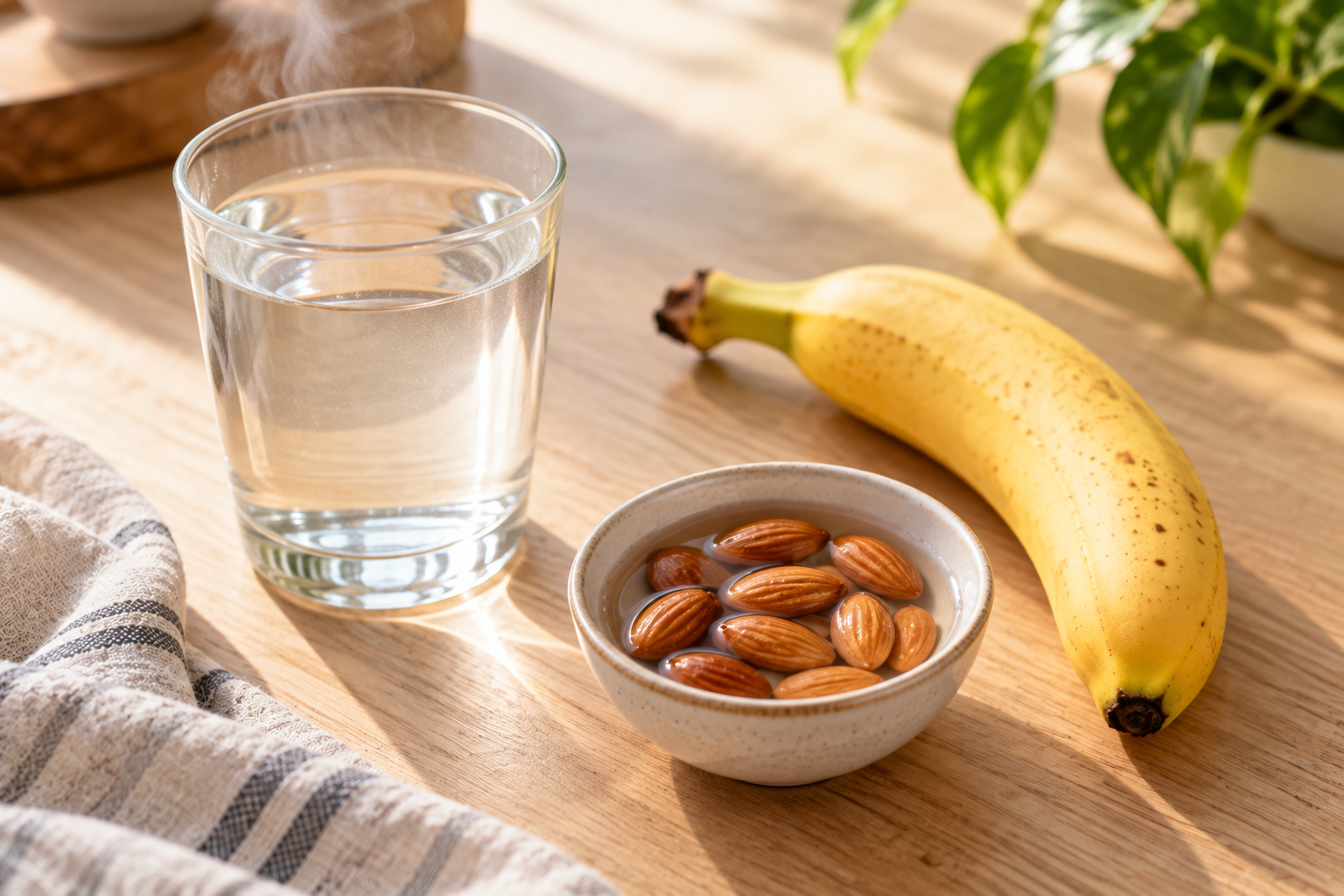
The safest things to eat on an empty stomach are warm water, soaked almonds or walnuts, a ripe banana, papaya, or a light, fibre-rich option like oats, dalia, or khakhra with chaas. What you should avoid first thing is strong tea or coffee, citrus fruit, spicy farsan, carbonated drinks, and raw salad - your stomach's acid levels are at their highest after the overnight fast, and these foods can irritate an already acid-heavy gut. If you already deal with gastritis, acidity, or GERD, what you eat first matters even more.
Why Does the First Thing You Eat Each Morning Matter for Digestion?
After 7–9 hours without food, your stomach isn't inactive - it's producing some of its highest gastric acid levels of the day, primed for the meal it expects. This is a normal part of empty stomach digestion, guided by hormonal signals including ghrelin, the hormone that rises before meals and falls once you've eaten, as described in a landmark review of gastrointestinal appetite regulation (Cummings & Overduin, 2007). If your first meal is mild and easy to digest, this acid does its job without irritating the stomach lining. But if you start the day with something highly acidic, very spicy, or a stimulant like caffeine, you're adding to an already acid-heavy environment - which is exactly why heartburn, bloating, or nausea so often show up specifically in the morning.
What Are the Best Foods to Eat on an Empty Stomach?
When deciding what to eat on an empty stomach, look for something mild, low in acid, and easy to digest:
Gentle, Empty-Stomach-Friendly Choices
- Warm water - gently kick-starts digestion without adding any acid load, and rehydrates you after a night without fluids.
- Soaked almonds or walnuts (4–5 pieces) - soaking overnight softens the skin and makes the natural fats and protein easier to digest than eating them raw.
- A ripe banana - naturally coats the stomach lining and provides quick, gentle energy without the acidity of citrus fruit.
- Papaya - contains the digestive enzyme papain and is gentle enough for most people even before anything else has been eaten.
- Khakhra (plain or methi, not the deep-fried masala variety) - a light, low-fat, easily digestible option that's already a genuine local staple.
- Chaas (buttermilk) - a traditional Gujarati favourite that's mildly probiotic and easier on the stomach than milk for many adults (our guide on whether you actually need prebiotics and probiotics covers this in more depth).
- Oats or dalia (porridge) - fibre-rich and gentle, oats slow digestion down in a good way and keep you full without spiking stomach acid.
Any of these, alone or combined, is a safer way to break an overnight fast than reaching for caffeine or fried food first.
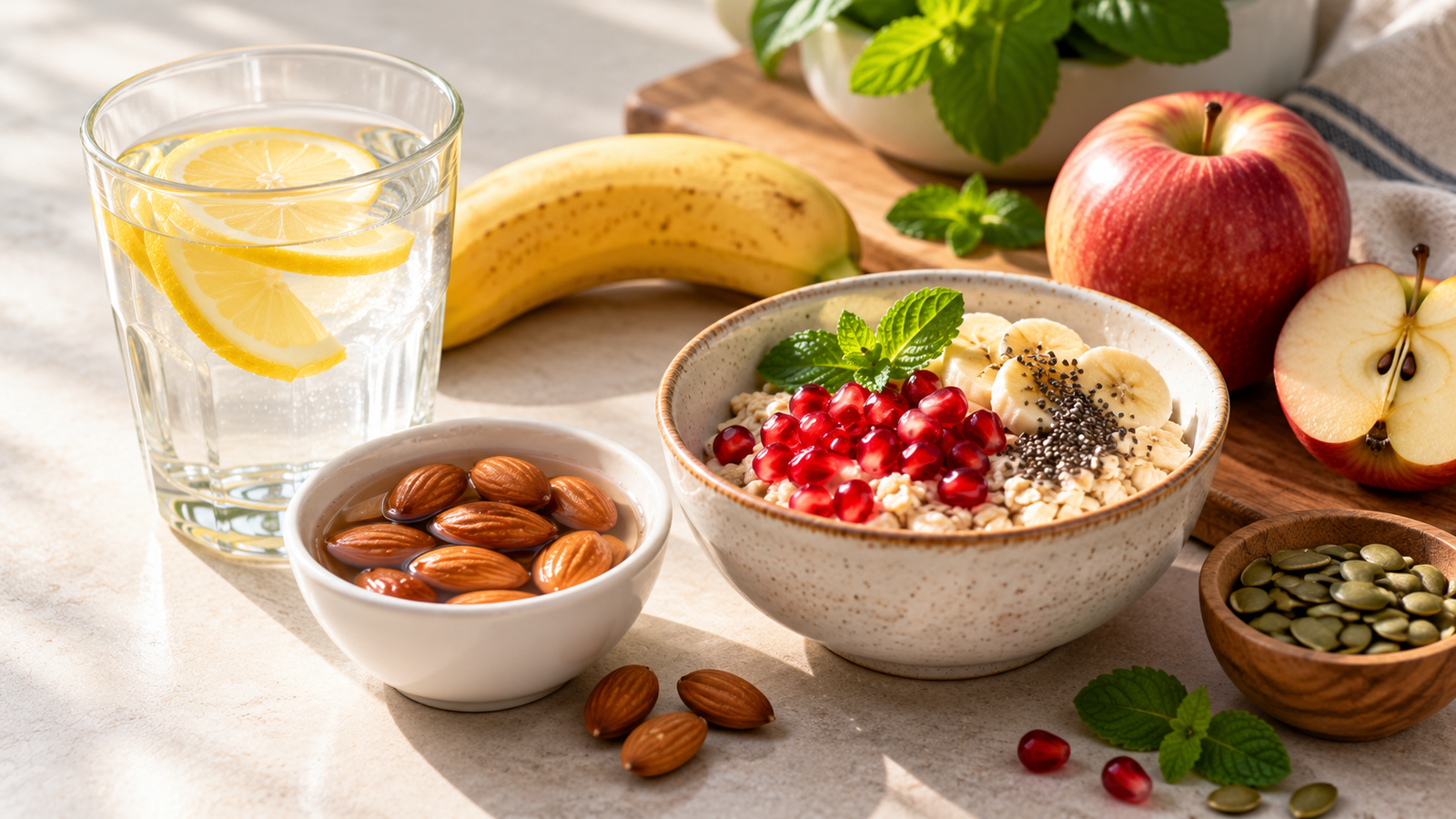
Which Foods Should You Avoid on an Empty Stomach?
Certain foods are more likely to irritate the stomach lining before anything else has gone in:
Best Avoided First Thing in the Morning
- Coffee or strong tea ("cutting chai") - caffeine on an empty stomach stimulates further acid production and can trigger heartburn, jitteriness, or nausea in sensitive people.
- Citrus fruit (orange, undiluted lemon water, pineapple) - the natural acidity adds directly to already-elevated stomach acid and can cause a burning sensation.
- Spicy farsan or fried snacks - chillies and deep-fried food are two of the most common gastritis triggers, and having them before anything else makes the irritation worse.
- Carbonated drinks - the gas distends the stomach and can worsen bloating and reflux before you've eaten anything to buffer it.
- Raw salad or uncooked leafy vegetables - healthy later in the day, but raw fibre first thing can be harder for an empty gut to break down and may cause cramping in sensitive people.
- Alcohol - irritates the stomach lining directly and is best avoided at any time on an empty stomach.
If certain foods reliably trigger cramping or bloating beyond ordinary morning acidity, they may be worth checking against our low-FODMAP diet guide for IBS. If you regularly reach for any of the foods above first thing and notice burning, bloating, or discomfort afterwards, that pattern is worth paying attention to rather than ignoring.
Can the Wrong Foods on an Empty Stomach Trigger Gastritis or Ulcers?
Occasionally having strong tea or spicy food on an empty stomach won't cause lasting damage in most healthy adults. But repeated irritation, day after day, is a genuine risk factor for gastritis - inflammation of the stomach lining - and can aggravate an existing peptic ulcer. The bigger factor behind most ulcers and much chronic gastritis, though, isn't diet alone; it's infection with Helicobacter pylori (H. pylori), a bacterium that damages the stomach's protective lining and makes it far more vulnerable to acid and irritant foods. This is why persistent morning burning, pain, or nausea that doesn't improve with dietary changes needs more than diet advice - it needs testing. At Swasthya Hospital, we run a straightforward H. pylori stool antigen test alongside a liver function test (LFT) to check for related causes, so instead of guessing which food is to blame, you get an actual answer about what's driving your symptoms. Ongoing stress can also affect digestion and worsen acidity, as we cover in how stress affects your gut health.
What Should You Eat First If You Already Have GERD or Acidity?
If you've already been diagnosed with GERD or know you're prone to acid reflux, the empty-stomach rules above matter even more strictly. Stick to warm (not hot or cold) water first, followed by a small portion of banana, oats, or khakhra rather than anything acidic or fried. Avoid citrus, coffee, and carbonated drinks entirely before your first proper meal, and don't skip breakfast altogether - an empty stomach for too long can actually worsen reflux by letting acid build up with nothing to buffer it. Eating a modest breakfast within an hour or two of waking, rather than a large meal several hours later, tends to keep symptoms calmer through the rest of the day. If you're managing GERD alongside other digestive symptoms, our gastroenterology team can help build an eating pattern suited to your specific triggers rather than a generic list.
A Note for Kutch and Gujarat Readers: What Does a Healthy Local Breakfast Look Like?
You don't need to switch to oatmeal and avocado toast to eat well on an empty stomach - several foods already common in Kutch and Gujarati households are genuinely good choices. Plain khakhra, a glass of chaas, soaked chana, or a light bajra rotlo are all gentle, low-acid options that suit an empty stomach far better than the region's other popular morning habit: strong cutting chai taken before anything else, often alongside spicy farsan. If your mornings currently start with tea and farsan and you notice acidity or discomfort by mid-morning, simply swapping the order - food first, tea after - is a small change that can make a real difference.
Frequently Asked Questions
Is it bad to drink tea or coffee first thing on an empty stomach?
Occasional tea or coffee isn't harmful for most people, but daily caffeine before any food can increase acid production and trigger heartburn or nausea, especially if you're prone to gastritis or GERD.
Can I eat fruit on an empty stomach?
Yes - banana and papaya are generally well tolerated on an empty stomach. Citrus fruits like orange or pineapple are more likely to cause irritation because of their acidity.
Is it okay to skip breakfast entirely?
Occasionally, yes, but regularly skipping breakfast can let stomach acid build up unchecked and may worsen acidity or reflux symptoms over time.
How do I know if my morning acidity is something more serious?
If burning, pain, or nausea happens most mornings, doesn't improve with dietary changes, or comes with weight loss or black stools, it's time to get checked rather than keep adjusting your diet on your own.
Morning Acidity or Stomach Pain Keeps Coming Back?
If morning acidity, bloating, or stomach pain keeps coming back despite eating carefully, it's worth getting checked rather than guessing.
Book a Consultation in GandhidhamSources: Cummings DE, Overduin J. "Gastrointestinal Regulation of Food Intake." Journal of Clinical Investigation. 2007;117(1):13-23. PMCID: PMC1716217. ICMR-National Institute of Nutrition. Dietary Guidelines for Indians, 2024 edition.